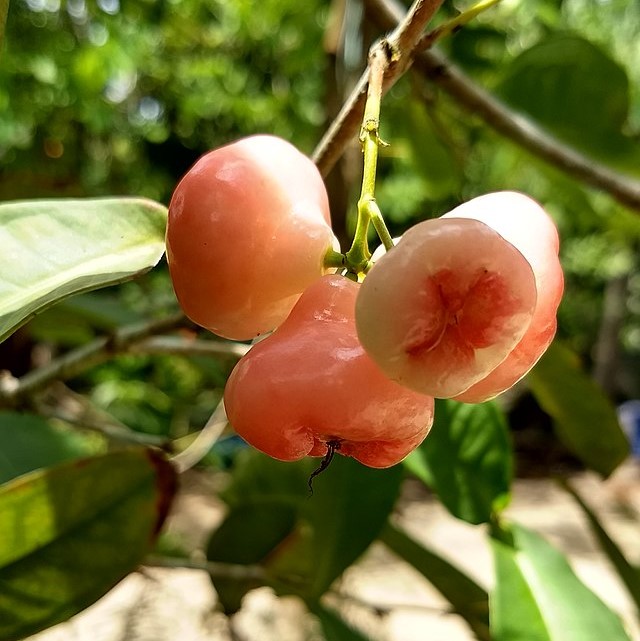
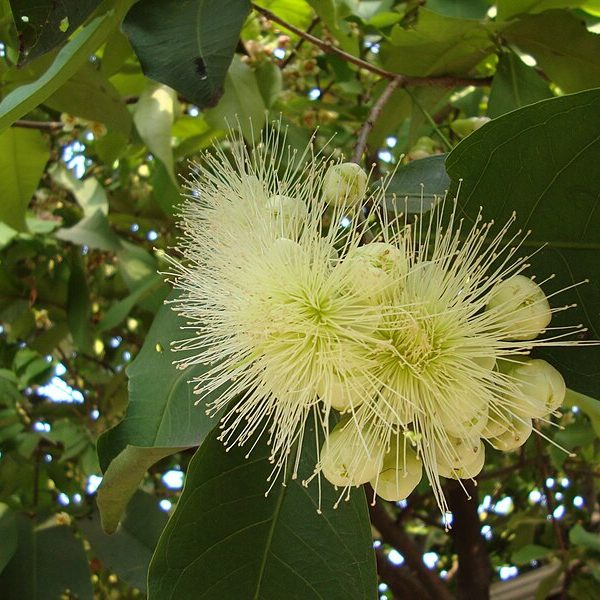
A luscious and invigorating fruit harvested abundantly from the boughs of an elegant, evergreen tree, the Wax Jambu thrives in the subtropical climates of Australia, making it an excellent choice for cultivation. With its distinctive bell-shape, prominent collapsed calyx and a glossy, vibrant skin spanning hues from Pink to Red or White, the Wax Jambu presents an enticing sight. Borne abundantly during the Summer months, this crisp and thirst-quenching fruit offers a delightful respite when savoured chilled on a scorching day, much like Watermelon. Its subtle, refreshing, Apple-like flavour matches well with dishes boasting stronger spicy, sour, or sweet notes. Wax Jambu are often seedless and cut up to remove the prominent calyx. Whether enjoyed fresh as a refreshing treat or incorporated into salads and pickles, the Wax Jambu is a delightful culinary ingredient. The white variety of Wax Jambu is said to be amongst the sweetest, albeit more sensitive to cold temperatures than the red or pink forms. Wax Jambu are undoubtedly one of the finest fruits of the Syzygium genus and more commonly cultivated than its relatives such as the Malay Apple or Bell Apple. Belonging to the Syzygium genus alongside the widely favoured, ornamental Lilly Pilly species, Wax Jambu shares many striking ornamental traits. As a compact, small-medium sized evergreen tree, it possesses glossy, elliptical leaves that release a fragrant aroma when crushed. Its spreading, open crown gracefully shelters a profusion of hidden fruits, though an abundance also grace the outer branches, where the largest fruits tend to grow. The Wax Jambu boasts a splendid inflorescence, showcasing large, fragrant, self-fertile flowers, adorned with elongated white stamens that are a sight to behold. The wide crown lies low to the ground and the large crops of fruit on terminal growth can sometimes result in branches being pulled to the ground with ripe fruits. Originating from the lowland tropics of South East Asia, the Wax Jambu demonstrates remarkable adaptability to diverse environmental conditions. While the Pink and Red varieties exhibit greater resilience to cold, enduring brief temperatures close to freezing, the White variant thrives exclusively in tropical climes, sensitive to colder climates. The Pink and Red varieties can be cultivated as far south as Perth and Sydney, producing handsome crops. Optimal growth conditions for the Wax Jambu include full sun exposure in maturity, accompanied by ample rainfall exceeding 1200mm and a well-draining, fertile loam soil. Shielding these trees from harsh winds proves advantageous for cutting-grown plants without a strong root system. Supplemental watering enhances fruit production, often inducing prolific flowering following brief dry spells. Cultivated widely across Asia, Wax Jambu trees enrich subtropical and tropical gardens alike with their abundant harvests and captivating aesthetic allure, earning them rightful acclaim as stellar additions to backyard landscapes.
Please reach out to us (Contact & Socials) if you come across any broken links, incorrect details, or if you represent an online nursery that sells the products mentioned above.

 Hortiforum