
General Info – Tea
Not only is the Tea Plant the source of the most commonly consumed beverages worldwide, but it also boasts ornamental beauty and surprising cold tolerance.
Tea, in its myriad forms, is ubiquitous globally, with a history of cultivation and consumption spanning thousands of years. Tea is an iconic drink across cultures, enjoyed for the flavourful, aromatic, caffeinated drink that is made from steeping the dried leaves in water. Younger, smaller leaves yield green tea, while mature leaves are used for black tea and buds for white tea. A range of other factors such as variety, climate, oxidation, and processing methods contribute to a diverse spectrum of flavours and will ensure your home-grown tea has its own unique nature.
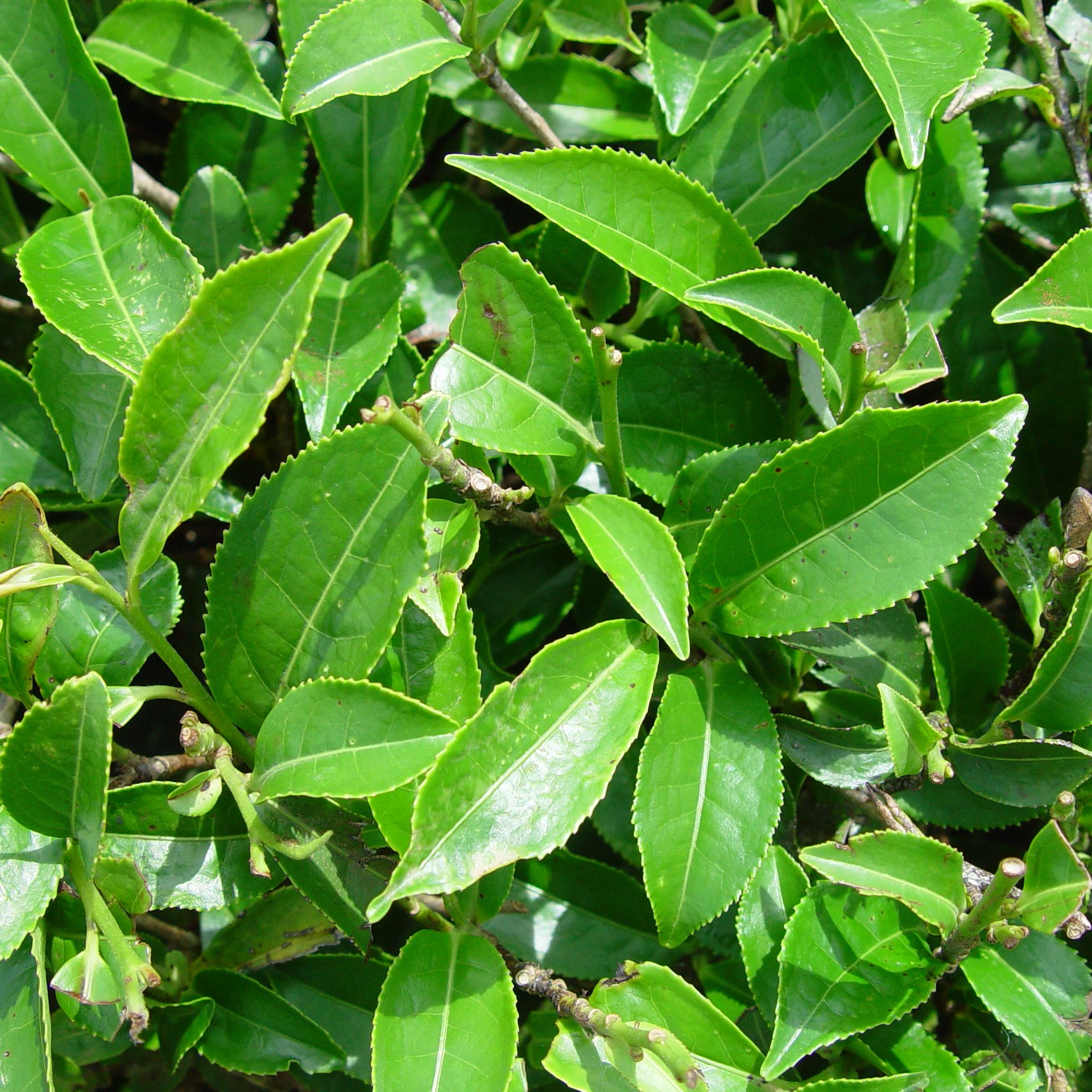
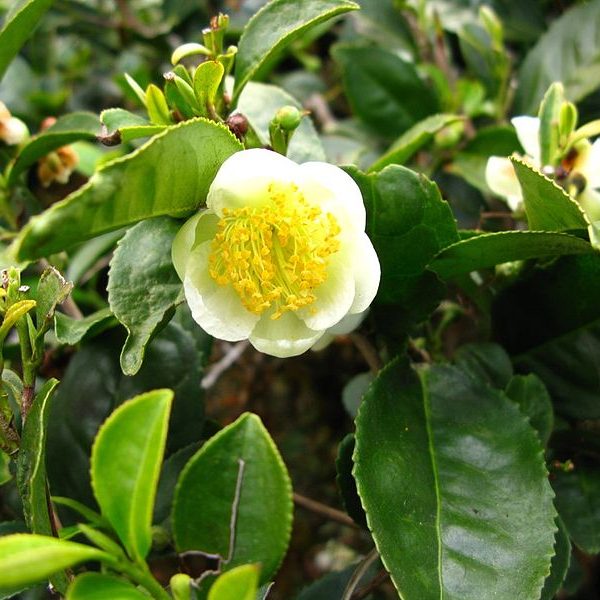
As a member of the Camellia genus, renowned among gardeners for its ornamental nature, the Tea Plant stands out as an attractive addition to any garden. It can serve as a dense, edible hedge that can be maintained through regular harvesting. With its glossy, dark green, toothed leaves, lance-shaped and up to 15cm long, Camellia Sinensis is a handsome specimen in any garden. Its white flowers, akin to other Camellias, exude a delightful fragrance and quaint appearance. Left unpruned, Tea Plants can grow up to 7m tall, but they are best kept below 2m for easy simultaneous harvesting and pruning.
Thriving in a wide range of climates, from subtropical highlands of the Atherton Tablelands to maritime temperate zones like Hobart, Tea Plants endure temperatures as low as -8 degrees without damage and can even withstand colder conditions. They prefer high rainfall climates and acidic, moist, loamy soil for optimal growth. While they tolerate both full sun or partial shade, providing protection from harsh winds and scorching sun is advisable, especially in climates with hot summers. Although Tea Plants can endure moderate drought, their growth may be hindered and production consequently reduced. Tea plants exhibit a remarkable adaptability to a broader spectrum of climates compared to Coffee plants.
With its elegant form and adaptability to diverse climates, the Tea Plant offers gardeners a unique opportunity to cultivate an attractive hedge while enjoying their own homegrown tea variety.
Plant Profile/Properties
| Preferred Climate(s) (info) | Tropical, Subtropical, Warm Temperate, Cool Temperate |
| Marginal Climate(s) | Arid |
| Cold Tolerance when Mature (info) | High (-8) |
| Rainfall (info) | Medium – High |
| Pot Suitability | Yes |
| Sun/Shade Tolerance | Full Sun – Part Shade |
| Preferred Soil (info) | Good Drainage |
| Preferred PH (info) | Slightly Acid (5.5-6.5) |
| Drought Tolerance | Low – Medium |
| Wind Tolerance (info) | Medium |
| Salt Tolerance (info) | No |
| Pests & Diseases | Canker, Root Rot, Anthracnose, Nematodes |
 Hortiforum