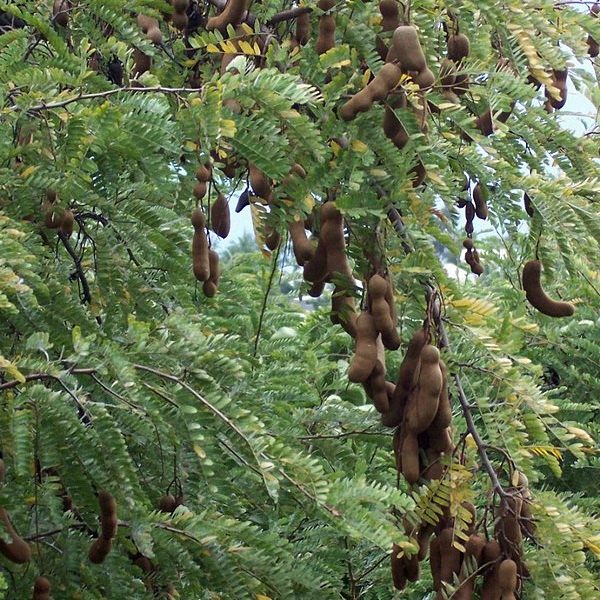
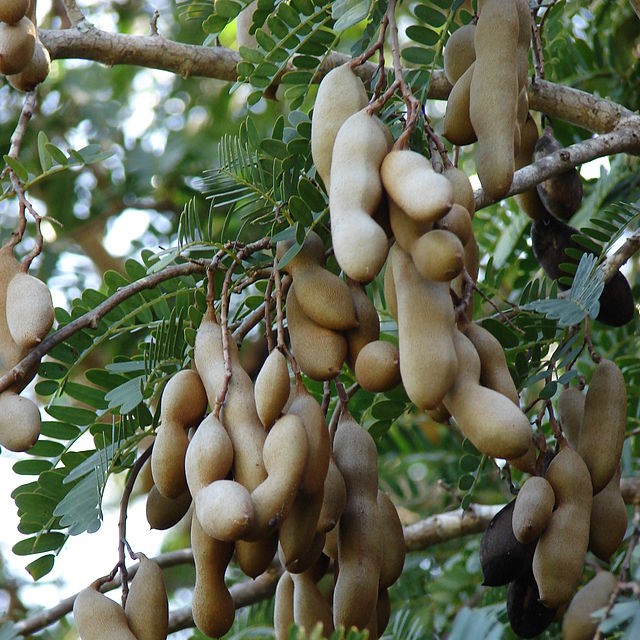
A staple in many cuisines, the Tamarind yields abundant harvests of fresh tamarind pods with minimal effort. Belonging to the Fabaceae or Legume family, Tamarinds produce large, distinct bean-like pods containing a sweet and tangy, brown pulp, ideal for both savoury and sweet dishes. While the mature pulp can be consumed raw, it is best known for its addition to South Asian curries, soups and chutneys, imparting a characteristic sour flavour and deep colour. Tamarind pulp can also be dried for storage and later rehydrated in water to extract its rich flavour. Tamarind pulp can be transformed into a wonderfully refreshing drink, serves as an essential ingredient in Worcestershire Sauce, and is an excellent addition in a Barbecue Sauce. Tamarind pulp receives its distinct, acidic flavour from its high concentration of Tartaric Acid and are also rich in Vitamin C, Calcium, Vitamin B1, Magnesium and Potassium. Immature green pods can be enjoyed fresh or pickled in spicy salads, while the brightly sour young leaves can be cooked or also added fresh to salads. Tamarind trees are hardy and adaptable, thriving in tropical climates characterized by distinct dry periods, such as wet and dry or monsoonal climates. In consistently wet climates, Tamarind trees may exhibit poor or no flowering. They prefer warm to hot temperatures and are susceptible to damage at temperatures below -3 degrees Celsius. Once provided with the necessary conditions, Tamarind trees demonstrate resilience to harsh environments, exhibiting resistance to cyclones, saline soils, winds, and droughts, largely due to their extensive root system. Additionally, they can tolerate a wide range of soil pH levels, from very acidic to alkaline, and poor-quality soils, as long as there is adequate drainage. Tamarind trees thrive in full sun positions and serve well as shade trees due to their ornamental appeal. Widely used throughout the tropics for their beauty, they are often planted along roadsides and in public areas. Their foliage is distinctive and feathery, characterised by small green oval leaves, giving them a unique yet attractive appearance reminiscent of Ponciana trees. While Tamarind trees are slow-growing, especially in cooler climates, they can reach towering heights of up to 25-30 metres in preferred conditions. Therefore, they should be planted thoughtfully, with consideration for their large root system and potential to overshadow nearby plants. Requiring little more than space and warmth, a single Tamarind plant can sufficiently provide for friends and family.
Please reach out to us (Contact & Socials) if you come across any broken links, incorrect details, or if you represent an online nursery that sells the products mentioned above.


 Hortiforum