Agnieszka Kwiecien, Nova – CC BY-SA 4.0 – Wikimedia CommonsSchurdl – CC BY-SA 4.0 – Wikimedia Commons
General Info – Tamarillo, Tree Tomato, Tomate Andino
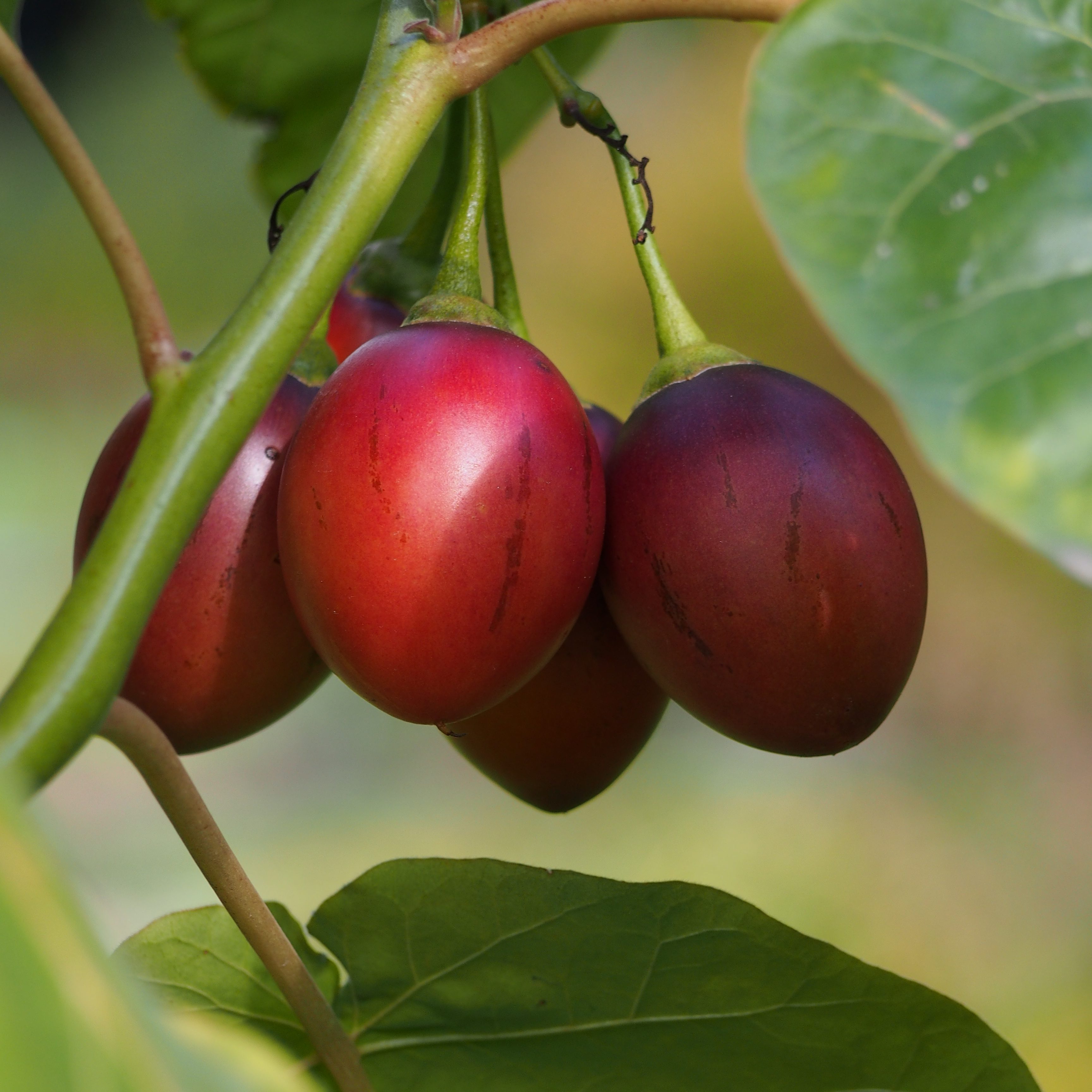
Fast growing and prolific, Tamarillos thrive across a range of climates, offering growers a bounty of unique, oval-shaped fruits across Winter to Spring. As a member of the diverse Solanum genus, alongside well-known food crops such as the Tomato, and lesser known fruits such as the Pepino, Cocona and Naranjilla, the Tamarillo shares much of the savoury and sweet flavours that make its relatives beloved. Alongside the related Naranjilla and Pepino, Tamarillos offer a delightful and delicious fruity flavour with hints of Tomato pleasantly lingering in the fruits. The pulp of the Tamarillo resembles that of a Tomato, with firm, juicy flesh intersected by a jelly-like texture, boasting a taste reminiscent of Kiwifruit, Passionfruit, and Tomato, or in sweeter varieties resembling Peach and Mango. Yellow and Orange-skinned varieties tend to be sweeter than the more common, sub-acid Red-skinned ones. With a smooth but unpalatably tough skin and egg shape, Tamarillos grow up to 10cm long with a tapered end. Tamarillos are a rich source of Vitamins A & C, and they typically begin fruiting within 18 months of planting. Once mature, they are exceptionally prolific, yielding up to 30 kilograms of fruit although they are relatively short-lived plants. They are superb when eaten fresh, easily halved and scooped out, and also excel when made into chutneys, jams or compotes. A must-try fruit for Tomato lovers, looking to enjoy an either acidic or sweet fruity tomato flavour, the Tamarillo is a delightful substitute for Tomatoes either sliced in sandwiches or diced in salads. Tamarillos form a small tree once mature typically reach heights between 2-4m, facilitating easy harvest of the hanging fruits which form in their canopy. Recognizable by their large, heart-shaped, slightly fuzzy, and odorous leaves, Tamarillos are suitable for understory planting or small spaces due to their preference for sheltered positions and tolerance for partial shade. Their distinctive Solanaceae white-pink flowers are clustered along the current season’s growth. Tamarillo have brittle branches which are prone to breakage in strong winds, necessitating semi-regular pruning of damaged limbs. Plants should be pruned to enhance their form, strength, and to stimulate new growth for optimal fruit production. Tamarillos thrive in Australia’s capital cities when provided with a sheltered spot and protection from frosts and strong winds. Particularly suited to subtropical highlands and coastal temperate zones due to their preference for mild temperatures and consistent rainfall, Tamarillos are sensitive to frost, with foliage susceptible to damage below freezing temperatures, though they are resilient and capable of regrowth. Tamarillos can be cultivated in Tasmania, especially in coastal regions but also in inland temperate areas, as long as they are shielded from harsh winter conditions. Soil should ideally be slightly acidic with excellent drainage but consistent moisture. Given their susceptibility to wind damage owing to their brittle branches and shallow root system, a position protected from wind is essential. Partial shade is advisable in climates with intense summer heat. While widely cherished in New Zealand, Tamarillos merit equal appreciation across Australia, offering an abundance of tangy, tasty fruits.
Please reach out to us (Contact & Socials) if you come across any broken links, incorrect details, or if you represent an online nursery that sells the products mentioned above.


 Hortiforum