Hubert Berberich – CC BY-SA 3.0 – Wikimedia CommonsTheLivesAroundUs – CC BY-SA 4.0 – Wikimedia Commons
General Info – Sloe, Sloe Plum, Blackthorn
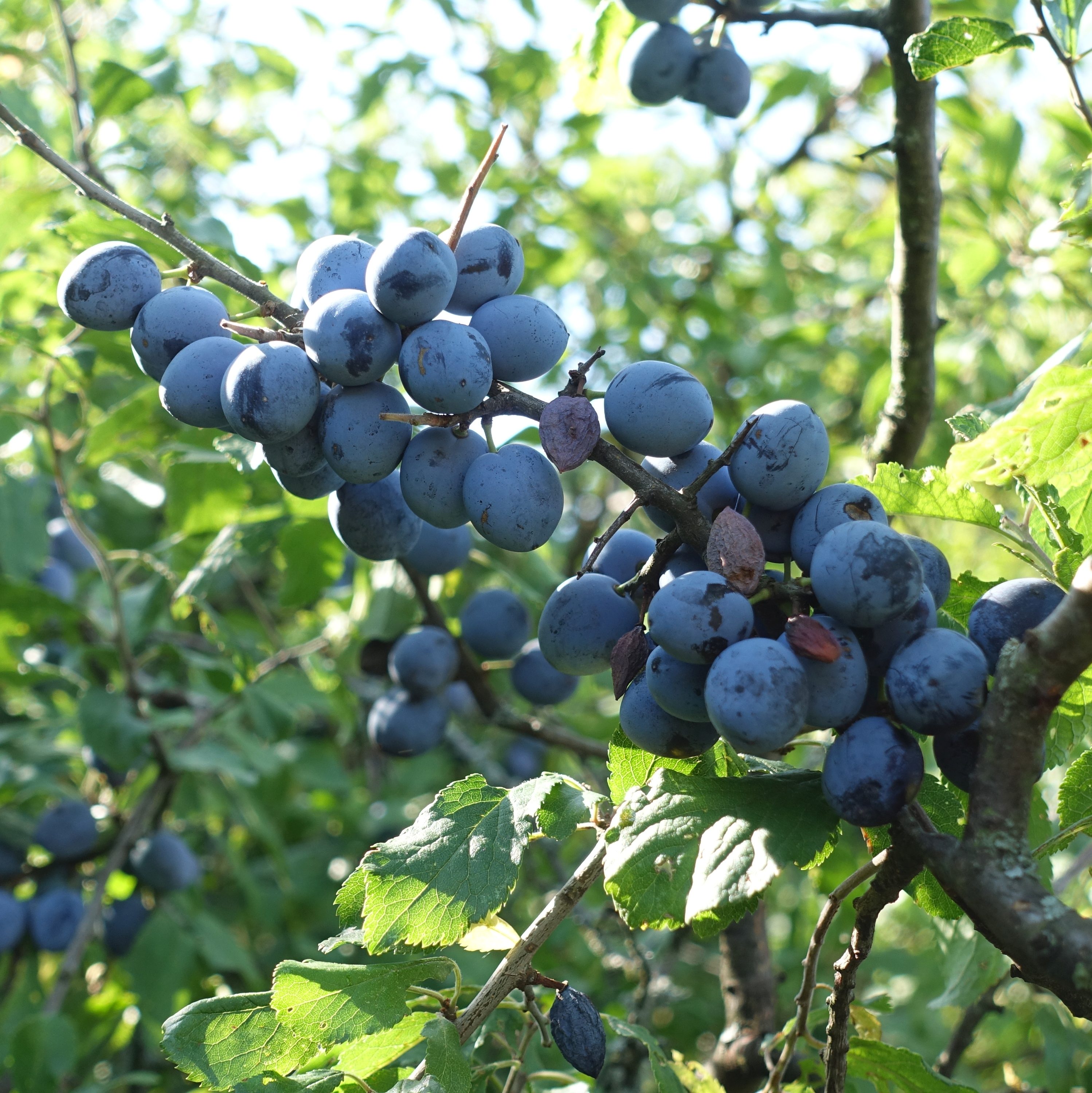
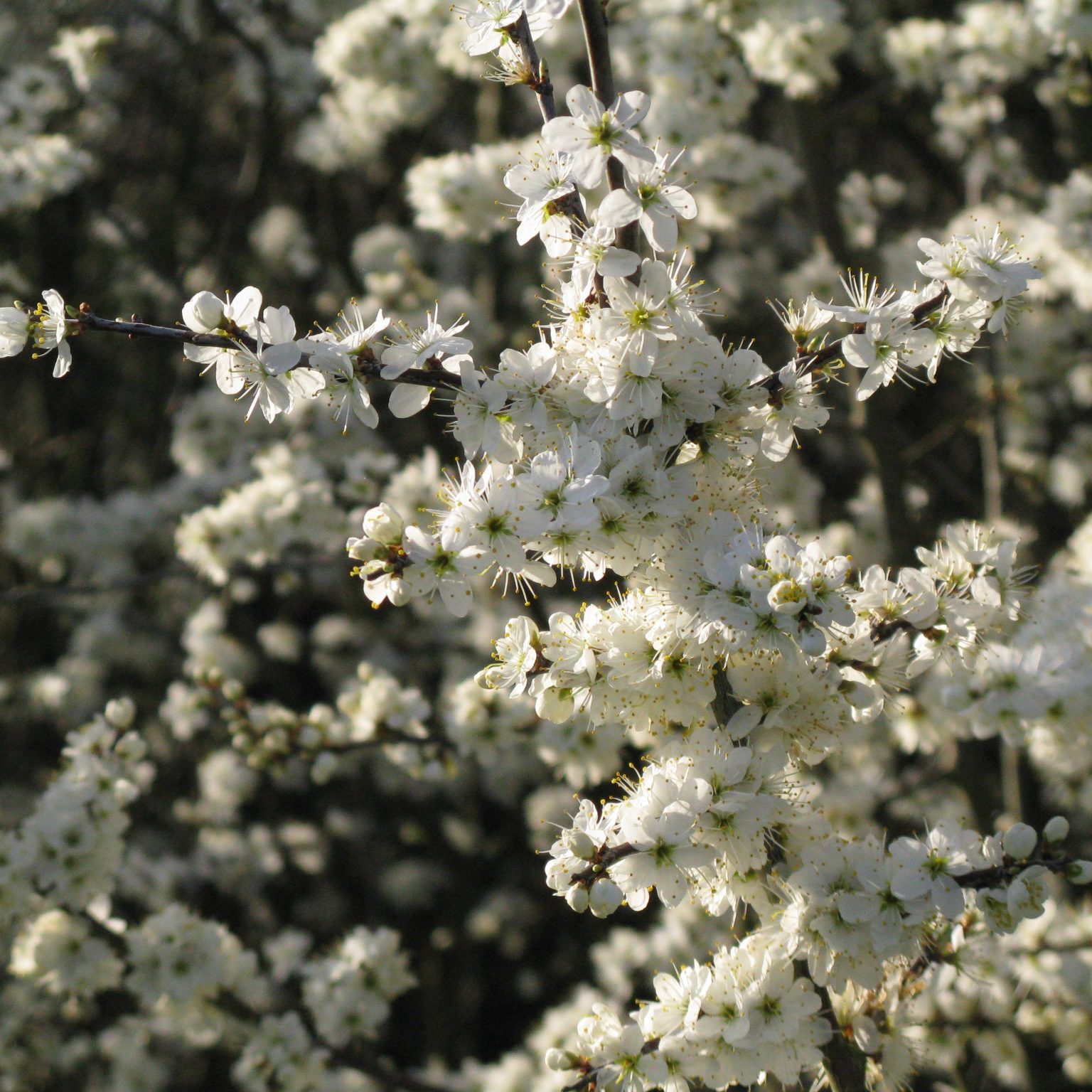
The tiny, wild purple Plums of the sloe tree have long been used across Europe and West Asia. Sloes are notoriously sour and astringent, to the point where they are not edible when eaten raw on their own. However, as is the case with some temperate fruits, Sloes are said to lose some of their astringency after being exposed to frost, becoming more palatable for some. The most well-known use of Sloes is likely their role in flavouring liqueurs, from the famous Sloe Gin of Britain to Spain’s Pacharán and Italy’s Bargnolino. For anyone passionate about liqueurs and eager to make their own, growing sloes to make Sloe Gin is both easy and achievable. Sloes can also be turned into jams, jellies, and syrups, where the sugar perfectly balances the natural acidity of the fruit. The leaves can be used to make a herbal tea. Sloes are particularly well-suited to cool temperate climates, thriving in areas with cold winters. They are notably more tolerant of maritime exposure than other commonly cultivated Prunus species, making them an excellent choice for those in exposed coastal areas. Sloes are also quite adaptable to a range of soil conditions, from slightly alkaline to slightly acidic. While they can tolerate some light shade, optimal production and form are achieved with full sun exposure. Sloes are most commonly regarded as self-fertile due to their hermaphroditic nature, however, others note the need for cross-pollination, likely being the case that this is highly beneficial but not necessary for fruit set. Sloes make a wonderfully ornamental specimen in spring, much like other members of the Prunus genus, producing a spectacular display of white flowers that cover the bare branches. These plants grow to a manageable size, typically not exceeding 5 metres, and often remain at a lower height. Careful positioning is essential due to the spines along the branches and twigs. Sloes can form a dense hedge, and combined with their sharp thorns, they create an impenetrable barrier for larger animals and people. Additionally, sloes have a tendency to sucker and will regenerate quickly after severe pruning.
Please reach out to us (Contact & Socials) if you come across any broken links, incorrect details, or if you represent an online nursery that sells the products mentioned above.

 Hortiforum