General Info – Shangjuan, Ichang Lemon, Mango Lime
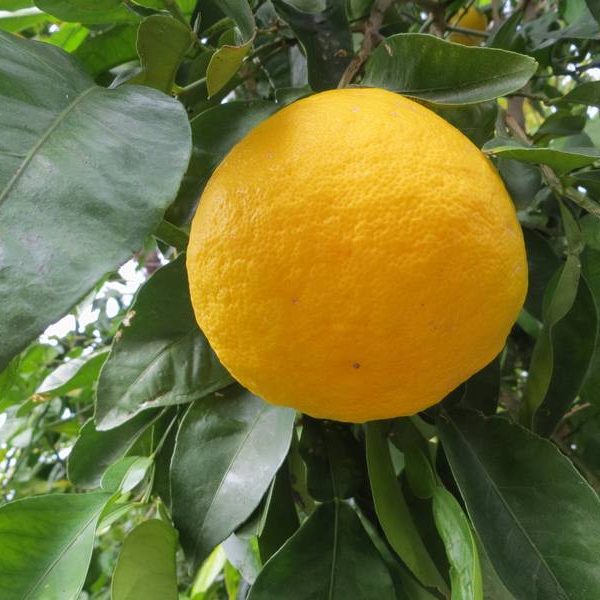
The Shangjuan is a remarkable and rare citrus, known for its unique tolerances. It is a hybrid of two original citrus species: Pummelo (Citrus Maxima) and Ichang Papeda (Citrus Cavaleriei). Its common name, ‘Shangjuan,’ is derived from the Chinese words for ‘fragrant ball,’ reflecting the strong, aromatic fragrance of the fruit. Externally, Shangjuan resembles a round, bumpy Lemon with bright yellow skin, while its interior closely resembles that of the Yuzu, which is a hybrid of Ichang Papeda and Mandarin. The fruit is highly seedy, but the seeds are conveniently clustered around the core, making them easy to extract. Shangjuan has an intensely sour flavour with notes of Grapefruit and Lemon, accompanied by a mild bitterness similar to that of Grapefruit. Compared to the Yuzu, it is more sour and lacks the Mandarin flavour. Though not exceedingly juicy, the fruit yields a respectable amount of juice—up to ½ cup—significantly more than its less palatable parent, Ichang Papeda, which shares a similar cold tolerance. The fruit’s fragrant, rough rind offers a zest comparable to that of a Lemon. Shangjuan is not suitable for eating fresh but excels as a sour seasoning in sauces, marinades, salad dressings, and more. It can also be sweetened in preserves and used as a substitute for Yuzu in the iconic Korean marmalade, Yuja-cheong. More generally, it serves as an excellent Lemon alternative. Mature trees bear fruit heavily, making Shangjuan a valuable addition to any Citrus collection. The Shangjuan is undoubtedly one of the most cold-hardy edible Citrus varieties, capable of withstanding temperatures as low as -10°C, and reportedly even lower. This cold tolerance is surprising, as one of its parents, Ichang Papeda, is remarkably cold-hardy for a citrus, while the other parent, Pomelo, is among the most cold-sensitive citrus species. Additionally, the Shangjuan is highly tolerant of damp conditions during cold periods. Shangjuan is well-suited to cool temperate climates across Australia, including much of the frigid alpine regions. Beyond its exceptional cold tolerance, the Shangjuan thrives under conditions similar to other citrus varieties: it prefers slightly acidic loam soil, moderate watering, and a protected full-sun position. Shangjuan have a shrubby growth habit and can reach nearly 5 metres in height if left unpruned, though they can easily be maintained at a lower height. They are often grafted onto a Trifoliate rootstock, which provides the benefits of a semi-dwarfing form, enhanced cold tolerance, and better resistance to waterlogging and heavy soils. Like most citrus varieties, Shangjuan is well-suited for container cultivation.
Please reach out to us (Contact & Socials) if you come across any broken links, incorrect details, or if you represent an online nursery that sells the products mentioned above.

 Hortiforum