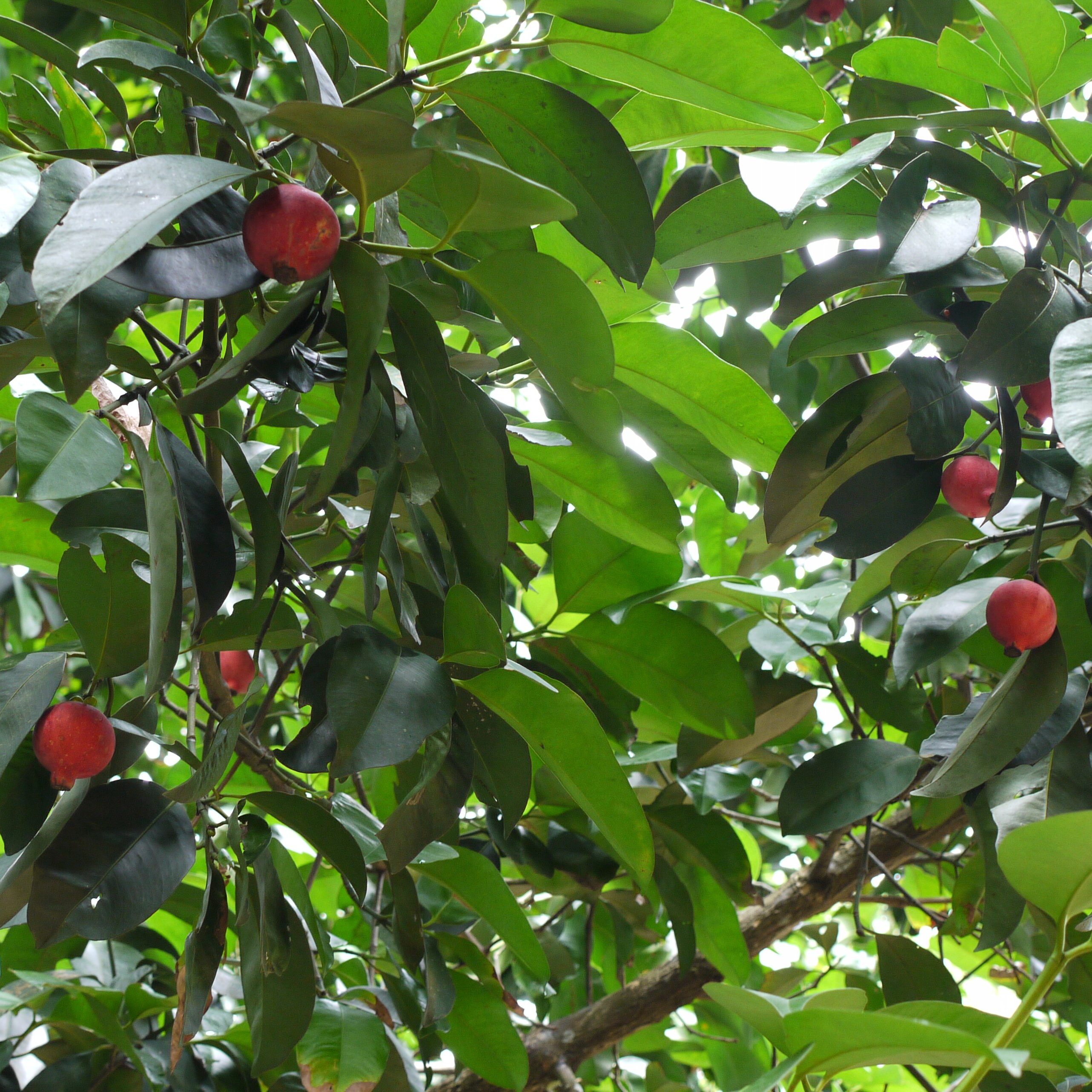
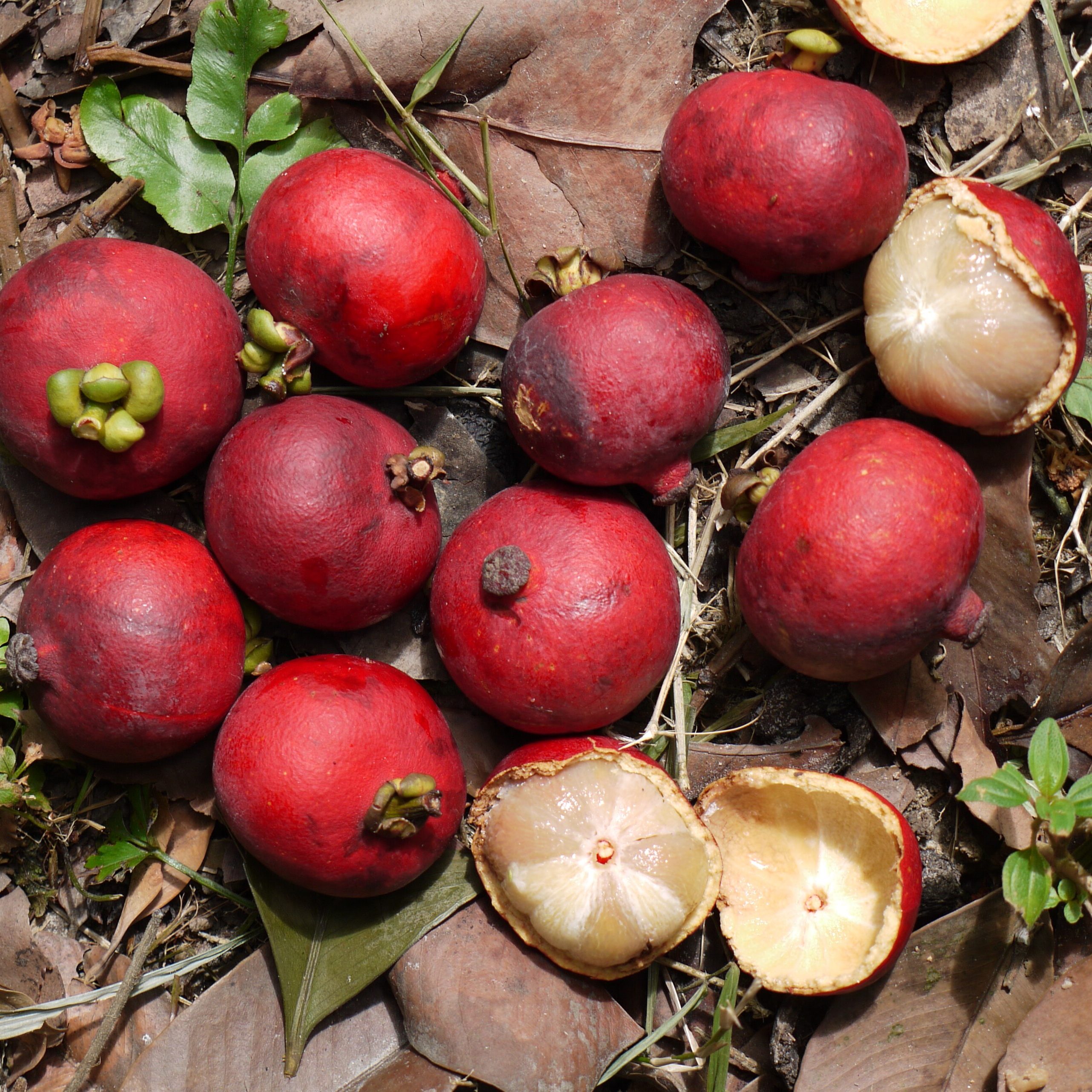
This ultra rare garcinia is much like a Purple Mangosteen, with segments of luscious, translucent flesh and usually one flat seed. It has a pleasantly sour, Peach-like flavour and, while the fruits are smaller and contain less flesh than a Purple Mangosteen, they still offer a superb eating experience. The smooth peel has a distinctive pinkish-red hue and a delicate scent reminiscent of an Apple. Native to South-East Asia, this mangosteen occurs across a range of forest habitats, from submontane forests to coastal, or littoral, forests. As its common name suggests, it naturally grows near the seashore and is notably tolerant of sandy and saline soils, as well as some degree of sea spray. This makes it a particularly interesting choice for tropical and warm subtropical coastal gardens. It is reported to have greater cold tolerance than the Purple Mangosteen, which is generally considered a strictly tropical species. As a result, it is one of several lesser known but highly desirable mangosteens with potential for subtropical climates, alongside Yellow Mangosteen, Lemon Drop Mangosteen, Limoncillo and Achacha. Despite this improved hardiness, it remains frost-sensitive and is not recommended for climates where frosts are a regular winter occurrence. The species is adaptable to a range of growing conditions, tolerating anything from full sun to dappled shade. It is also considered relatively adaptable to soil type, with reports of successful growth in soils ranging from slightly acidic to slightly alkaline, and from heavy clay through to rocky or sandy soils. Once established, it is reported to tolerate both periods of drought and heavy monsoonal rainfall. As a dioecious species, separate male and female plants are generally required for reliable pollination and fruit production, although some capacity for self-pollination has been reported. Information on its cultivation requirements remains somewhat limited, but it is widely regarded as considerably hardier than the Purple Mangosteen. Its impressive resilience has even led to suggestions that it may have potential as a rootstock for Purple Mangosteen. Clusters of creamy white flowers appear on the terminal growth, adding to the ornamental appeal of the tree. Its natural mature height appears to vary considerably, with specimens reported to reach anywhere from 6 to 30 metres. It develops a straight trunk and a dense, leafy canopy, providing excellent shade. These qualities make it well suited to planting along roadsides, in parks and other open spaces, where its attractive foliage, flowers and broad crown can be appreciated.
All plants are seedling grown unless noted. Please reach out to us (Contact & Socials) if you come across any broken links, incorrect details, or if you represent an online nursery that sells the products mentioned above.

 Hortiforum