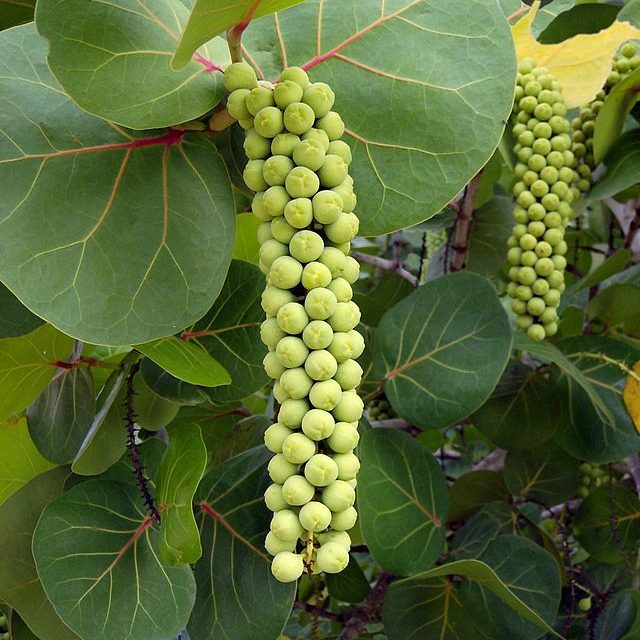
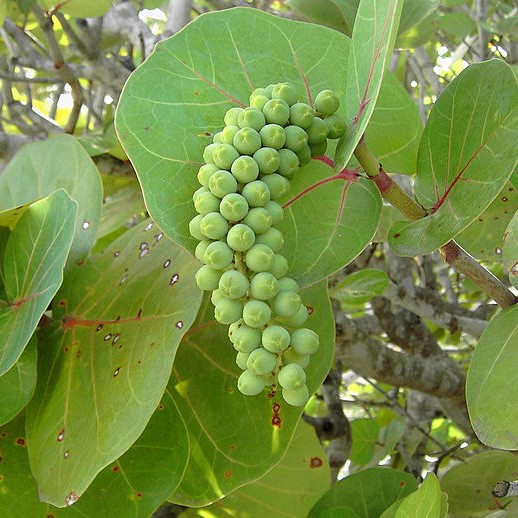
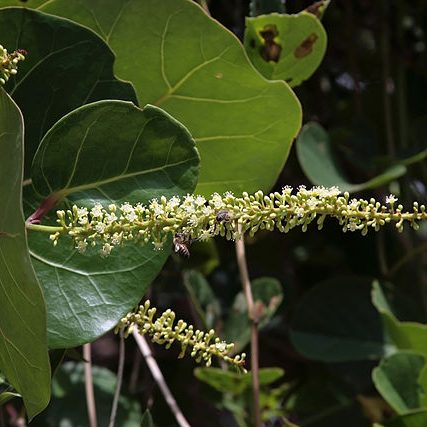
A picturesque and edible plant native to the tropical beaches of the Americas, the Sea Grape serves as a perfect complement to the iconic Coconut. Possessing ornamental beauty, exceptional hardiness, and delicious fruits in abundance, Sea Grapes are an outstanding choice for seaside landscapes. Sea Grapes are borne in abundance, with a pleasantly mild sweet-sour taste reminiscent of Peach, Muscadine Grape, European Grape, and Apple and containing a solitary seed. They are popular for fresh eating but are also commonly used for making jams, jellies, or for transforming into wines. Simply put, Sea Grapes are an extremely low-maintenance plant once established. They have only two primary requirements: ample watering until established and a frost-free climate. While native to the tropical Americas, Sea Grapes can thrive in cool subtropical climates as far south as Sydney or Perth. Their growing needs are minimal, tolerating various soil types, pH levels, and partial shade, though they prefer full sun. Sea Grapes effortlessly withstand strong winds, salt spray, salty soils, drought, and neglect, naturally adapting to coastal conditions characterised by dry seasons, infertile soil, and hurricanes. Once established, Sea Grapes require minimal maintenance, enhancing their appeal as an ornamental specimen. The large oval leaves possess a leathery texture and prominent red veins and a glossy wax-like sheen. They are beautiful throughout all their lifespan; as new growth emerges, it takes on a delicate hue of light brown or orange, gradually transforming into a resplendent green that shines under sunlight. Eventually, the dying foliage transitions into a magnificent array of oranges, reds, yellows, and purples, reminiscent of the vibrant hues seen in deciduous trees during autumn. The drooping Grape-like clusters of fragrant white flowers are present year-round but emerge predominantly in late spring and early summer. These flowers give way to fruits that mature from green to purple, attracting local wildlife. In ideal conditions, Sea Grapes can grow into large shrubs or small trees up to 15 metres tall, but they can easily be maintained at lower heights or as hedges. Hedges of multiple plants are especially ideal, as plants require both male and female plants for pollination. When allowed to grow as trees, their twisting trunks and vase shape give plants an intriguing beauty. With its combination of beauty, resilience, and tasty fruits, the Sea Grape is a delightful and low-maintenance addition to any home landscape.
Please reach out to us (Contact & Socials) if you come across any broken links, incorrect details, or if you represent an online nursery that sells the products mentioned above.

 Hortiforum