General Info – Saskatoon Berry, Pacific Serviceberry, Pigeon Berry
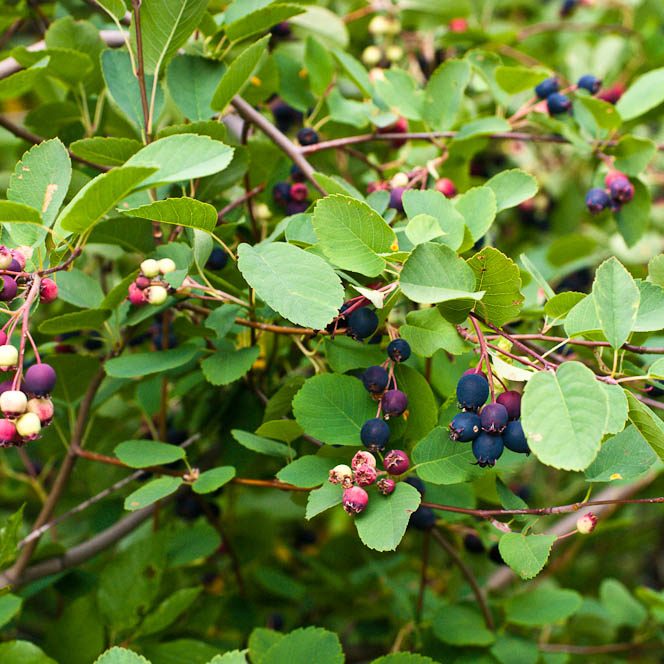
A delightful discovery for gardeners in Australia’s coldest climates, the Saskatoon Berry is a perfect example of the delicious opportunities rather than limitations offered by these climates. Saskatoon Berries fruits are botanically categorised as a Pome fruit rather than a Berry, a fact that is less surprising given its relation to fellow Pomes like the Apple and Pear. Visually akin to a small Blueberry, Saskatoon Berries transition from green to red before taking on a striking dark blue hue, captivating to both humans and birds alike. Saskatoon Berries produce abundantly, with crops often ripening altogether and providing a plentiful harvest. The wonderful flavour of fruits is reminiscent of Blueberries, Almonds, and Cherries. While delightful when consumed fresh, their tendency to produce en masse makes them ideal for drying, preservation in jams and jellies, or incorporation into cherished ‘Saskatoon Pies’ which originate from the Canadian Prairies. Originally native to Western Canada, Alaska, and the Northwestern United States, Saskatoon Berries thrive in extreme cold climates, surpassing anything experienced in Australia. They are adapted to short, cool summers and exhibit remarkable cold tolerance. Furthermore, they are hardy and undemanding, capable of thriving in various soil types, including alkaline, infertile, and dry soils. Ideal conditions consist of well-drained, moist, acidic soils, with plants able to yield over a thousand berries in a single season under such circumstances. Belonging to the Rosaceae Family and the Apple Tribe (Maleae) within it, Saskatoon Berries bear prominent white flowers and oval foliage, with grey bark reminiscent of its well-known relative, the Apple. Growing as dense shrubs or small trees up to 5m tall but easily maintained under 3m, they possess good wind tolerance and a clumping form suitable for windbreaks or hedgerows. Their edible berries and stunning bronze autumn foliage add both aesthetic appeal and delicious fruit to these landscapes. Hardy, productive, and visually striking, the Saskatoon Berry offers a delectable taste of the cold, temperate climates of North America.
Please reach out to us (Contact & Socials) if you come across any broken links, incorrect details, or if you represent an online nursery that sells the products mentioned above.


 Hortiforum