General Info – Sapodilla, Sapote, Chico, Naseberry
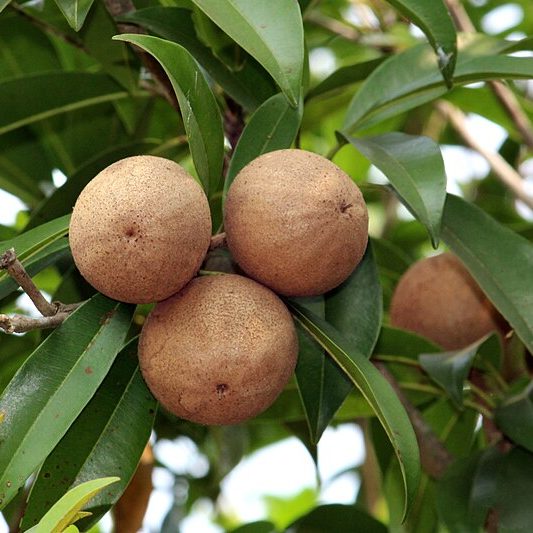
With a tantalising flavour reminiscent of a Pear dipped in brown sugar and its remarkable resilience to coastal conditions, the Sapodilla stands out for its exquisite taste and tolerances. Sapodillas boast an extremely sweet and luscious flavour, with a tender, succulent, melting flesh that has a slightly grainy texture akin to that of a Pear. In addition to flavours of pear and brown sugar, the flavour of Sapodilla flesh also combines the delicious flavours of Cinnamon, Caramel. Sapodilla form round, slightly elongated fruits, roughly pear-sized and with a rugged, potato-like appearance of rough, brown skin. Like most members of the Sapotaceae family such as Mamey Sapote & Canistel, Sapodillas also harbor large, shiny black seeds that are easily removed. Sapodillas are superb when enjoyed fresh or chilled, but can also be frozen well for long term storage. Other than fresh-eating, Sapodilla are excellent in delightfully sweet juices, smoothies, ice cream, and pies, making them a versatile year-round delight. Sapodilla can be cultivated in challenging coastal conditions, being one of many plants like Natal Plum, Imbe & Chilean Guava that ensure gardeners seeking a ‘sea change’ need not forgo cultivating delicious fruits. Sapodilla are resilient to strong winds such as those experienced in coastal storms or cyclones in addition to a range of common coastal soil conditions such as saline, infertile, alkaline and sandy soils. This tolerances make Sapodilla belong to a rare category of plants well- suited for coastal plantings with its tolerance to challenging conditions noticed throughout the Caribbean and Florida Keys. While they thrive in such conditions, they tend to perform even better in richer, high-quality loam soils. Native to the tropics of the Americas, Sapodillas exhibit a distinct preference for hot, humid climates, though mature plants can withstand temperatures as low as -1 degree Celsius and plants are viable in cool, dry subtropical climates. Only moderate rainfall between 800-1200mm yearly is required and mature plants tolerate drought and dry seasons well. Characterized by their slow growth, Sapodillas often take over five years to bear fruit from seed, though grafted plants can bear fruit within two years. Sapodilla trees form large, spreading canopies with dense crowns of glossy green leaves. Given their slow growth, Sapodillas can be easily pruned into desired shapes and typically reach a height of around 10 metres under normal conditions, although they can be kept substantially lower if pruned regularly. Their ability to withstand strong winds is attributed to the extensive, buttressed roots that spread from the tree’s trunk. Glossy, evergreen leaves and clusters of yellow-whitish bell-shaped flowers emerging from terminal growth adorn plants. Suitable for solitary planting, Sapodillas make excellent focal points or shade trees once fully mature. Grafted varieties such as the ‘Tropical’ are particularly well-suited to container cultivation. With their delectable fruit and resilience to conditions few other plants endure, the Sapodilla presents an enticing option for gardeners seeking the perfect fruit tree for their tropical coastal retreat.
Please reach out to us (Contact & Socials) if you come across any broken links, incorrect details, or if you represent an online nursery that sells the products mentioned above.


 Hortiforum