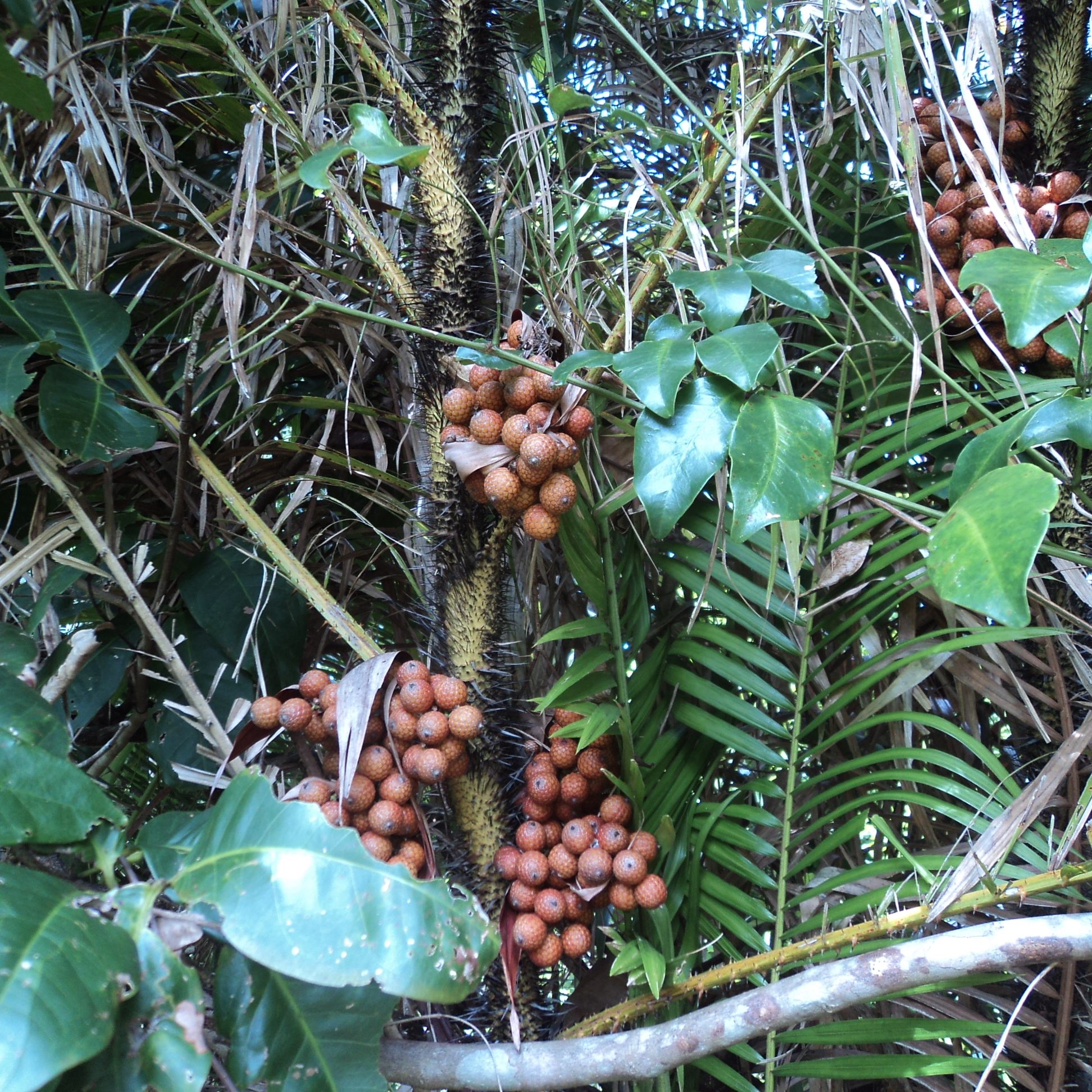
The Salak, a tropical palm renowned for its dense thicket of formidable thorns and prolific production of what is colloquially known as Snake Fruit, stands out as one of the most distinctive potential additions to any tropical fruit orchard. Salak resemble a small Fig in size and shape, with dark brown scaly skin that lend them a distinct resemblance to snake skin. Beneath this scaly exterior lies flesh that is firm, crisp and refreshing, akin to that of an Apple, with flavour profiles ranging from tart to sweet depending on the regional variety. Comparisons to Pineapple, Jackfruit or Apple are often used. Salak are rich in Vitamin C and grow abundantly in clusters with fruits primarily enjoyed fresh, though they can also be enjoyed candied or pickled. Salak is cherished throughout South East Asia and can produce throughout the year but commonly has distinct periods of peak productivity. Seeds are edible and have a pleasant Coconut flavour. Native to the true tropics of Indonesia, the Salak thrives in environments characterised by hot, humid conditions and consistent rainfall throughout the year. There is very limited tolerance to non-tropical climates. It thrives best in moist, acidic soils, basking in full sun to partial shade. While the plant has adapted to withstand strong winds, demonstrated by its ability to re-root itself after being uprooted in storms, it is advisable to provide wind protection due to its shallow root system, especially if not naturally sheltered. Salak plants are commonly dioecious, necessitating the presence of both male and female specimens for pollination although one male plant has the capacity to fertilise up to nine other female plants. The Salak presents a striking presence, forming dense clusters of palms adorned with sharp spines running along their length. This attribute not only renders it an imposing sight but also makes it a practical choice for serving as a living security fence, offering the added benefit of yielding delectable fruits. Harvesting these fruits, nestled tightly within the thorny stems, may pose a challenge, but the effort is undoubtedly rewarding. With careful consideration of its placement, the Salak adds both diversity and a unique culinary experience to any tropical garden or orchard.
Please reach out to us (Contact & Socials) if you come across any broken links, incorrect details, or if you represent an online nursery that sells the products mentioned above.

 Hortiforum