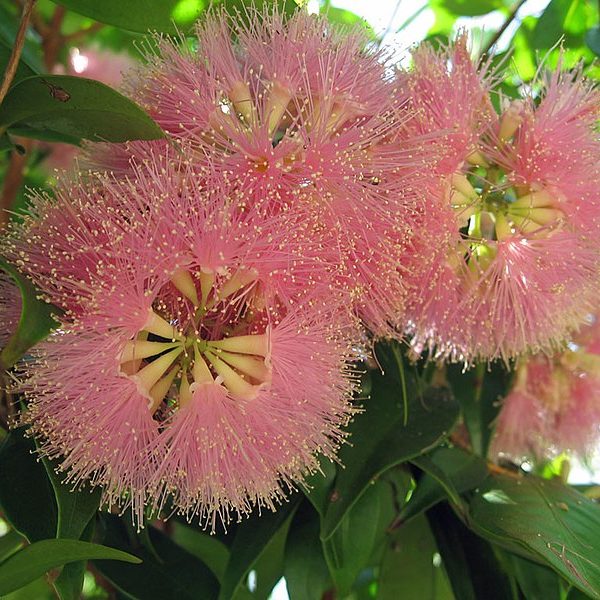
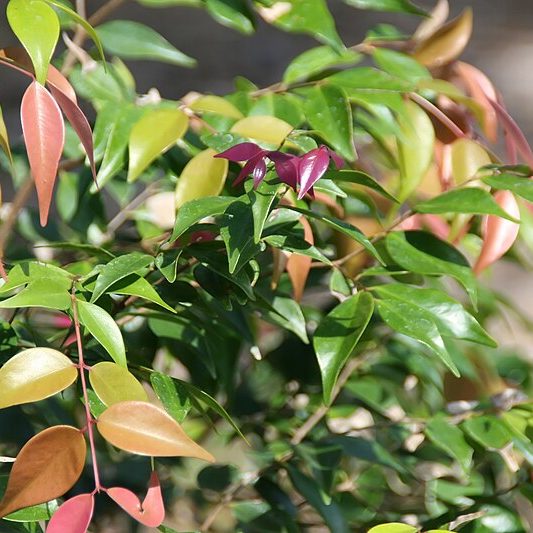
With their abundance of crisp, refreshing fruits, attractive ornamental form, and minimal maintenance needs, Riberries meet all the requirements of an ideal native bush food. With their crispy, juicy, and refreshingly tart flesh, Riberries are not only one of the tastiest Lilly Pilly species but also among the finest native bush foods. These Pear-shaped fruits grow in bountiful, decorative clusters, showcasing vibrant shades of cardinal red to pink. Their flavour is often compared to that of an Asian Pear, with distinct notes of Cranberry, Cinnamon and Cloves (also a member of the Syzygium genus). Their refreshing, juicy texture is typical of members of the Syzygium genus, which also includes other edible fruits like Wax Jambu and Jambolan Plum. Riberries are abundantly borne and versatile, enjoyed as a crispy snack or used to make jams, sauces, and chutneys. Riberries are native to the subtropical and tropical rainforests of Australia’s east coast, from the NSW North Coast to Far North Queensland. Well-suited to much of coastal Australia, they thrive in both full sun and partial shade and can tolerate light frosts once established. In coastal climates, no supplemental watering is needed after establishment, though in arid or drought-prone regions, they benefit from watering during dry periods. Riberries are an excellent choice for low-maintenance gardens that are both ornamental and productive. Riberries are a popular ornamental choice, often grown as hedges due to their dense, compact form that responds well to pruning. They feature the typical attractive foliage of the Syzygium genus, with new growth emerging as a vibrant, bright pink that transitions through shades of pink, bronze, and light yellow before maturing into glossy green leaves. Like many members of the Myrtaceae family, they produce beautiful inflorescences with pom-pom-like clusters of colorful stamens, ranging from white to pink and every shade in between. Riberries are an excellent food source for local wildlife, with their flowers attracting pollinators and birds.
Please reach out to us (Contact & Socials) if you come across any broken links, incorrect details, or if you represent an online nursery that sells the products mentioned above.


 Hortiforum