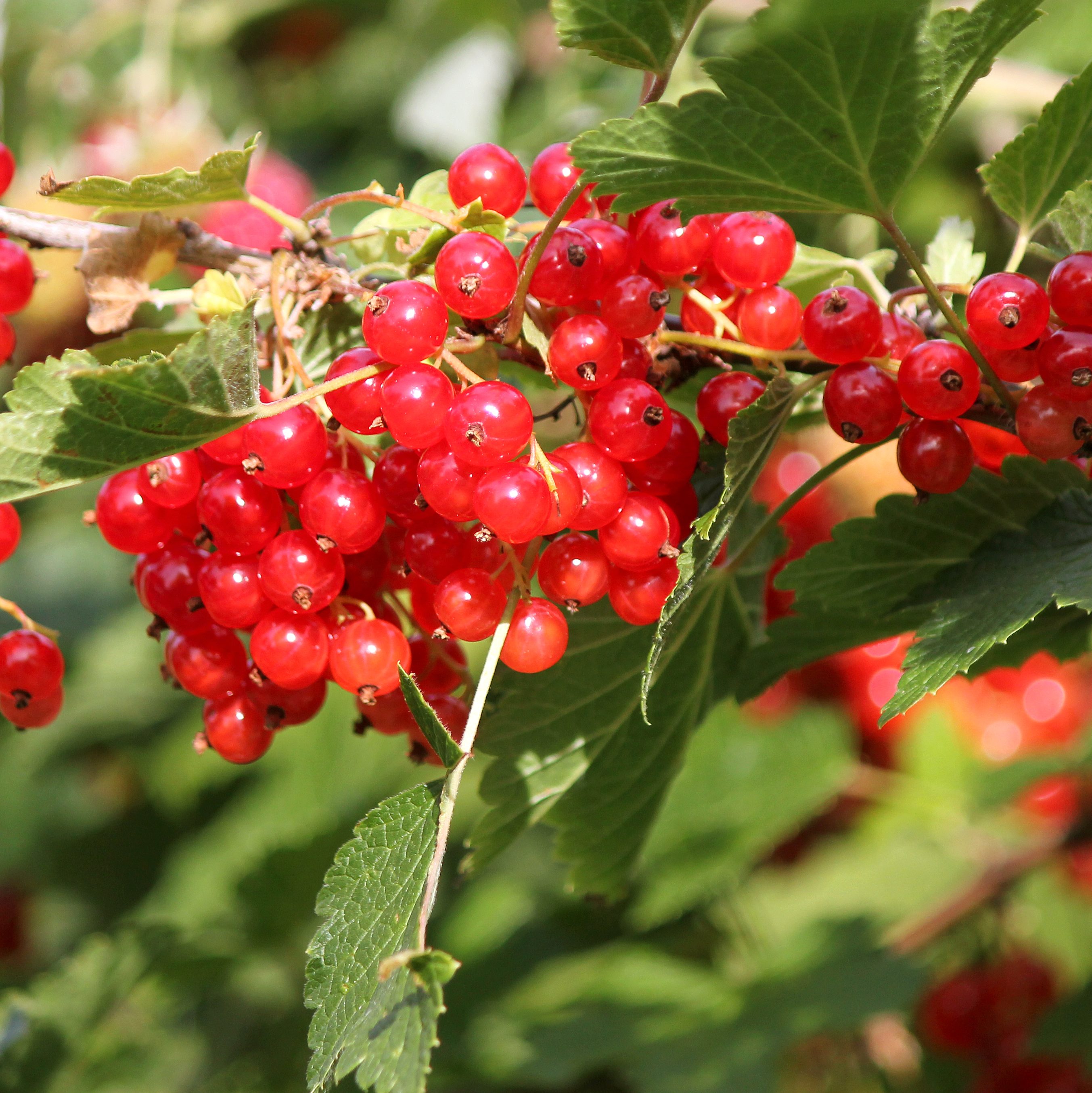
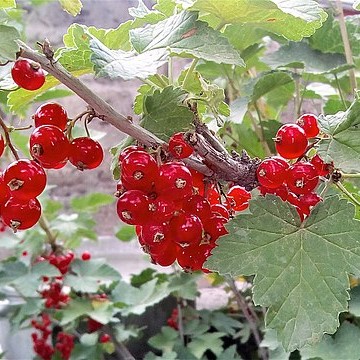
A delightful early summer burst of flavour. Red Currants are renowned for their tartness, though they also possess enough sweetness to make them pleasant for fresh eating. Red Currants are rich in Vitamin C and offer a deep, tart flavour and vibrant colour that lends itself well to various desserts and beverages, where their tartness can be balanced. Red Currants are excellent for making jelly, jam, cordial, or juice, and can also be used in baking pies. Whether as a jelly served with roast meat, used in a Kissel or made into a summer pudding, Red Currants are an excellent fruit to savour. Native to Western Europe, the Red Currant thrives in cooler climates characterized by cold winters and mild summers. It flourishes best in fertile, well-draining soil and full sun exposure, although it can still grow successfully in heavier, poorly draining soils. Both Red Currants and other Currants such as Black or White Currant share similar requirements, although the Red Currant shows a slightly greater tolerance for shade. In hotter climates, Red Currants typically benefit from partial shade, whereas in cooler summer climates, they are better suited to full sun. Mulching plants is ideal to help keep soil moist and cool in Summer, protecting them from strong winds is also important. Red Currants produce their berries in early summer, being one of the many delicious berries that ripen early in the season such as Strawberries and Raspberries. Red Currant plants typically grow into small shrubs, reaching heights of up to 2 metres, adorned with large, deciduous leaves. Naturally, plants will develop into an upright shrub. Red Currants should be pruned to a vase shape, similar to a Peach, to allow airflow and sunlight through the plant. Each season, canes should be shortened and pruned to focus outward facing buds. For those residing in cooler climates seeking a tart addition to their garden or individuals with a passion for baking and preservation, Red Currants present an excellent and well-suited choice.
Please reach out to us (Contact & Socials) if you come across any broken links, incorrect details, or if you represent an online nursery that sells the products mentioned above.

 Hortiforum