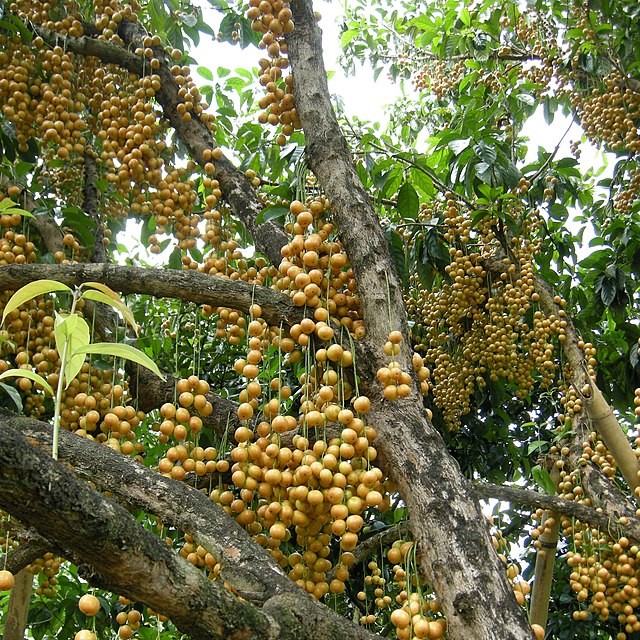
A captivating and ornamental species, native to the lowland rainforests of South East Asia, the Rambai is a splendid choice for enhancing any expansive tropical food forest. Rambai fruit are often mistaken for Langsat due to their similar size, shape, and skin, although they boast a deeper brown hue and grow more singularly rather than in tight Grape-like clusters. Encased within its relatively thick skin are numerous segments of sweet, slightly acidic flesh, imbued with a delightful blend of Grape and Honeydew flavours, perfect for snacking or processing into jams and wines. Primarily found in the wild, the Rambai can be successfully cultivated in suitable locations within a food forest setting. These trees can reach towering heights of 15-25 metres, sporting multiple trunks and a sprawling crown that provides impressive shade when mature. Rambai are a spectacle when flowering and fruiting, with long, hanging clusters of fragrant flowers emerging along the branches and trunks, decorating the interior of trees. The hanging clusters of ripening fruit are not only a sight of beauty but also a tantalising one. This form of fruiting is similar to the Star Gooseberry and Bignay, which are both related, being members of the Phyllanthaceae family. To ensure optimal growth and yield, it is advisable to replicate the moist, well-drained, acidic soils found along riversides in its native habitat. Additionally, providing a sun-drenched environment with consistently warm and humid conditions is essential, as the Rambai exhibits low tolerance for cooler temperatures. Rambai thrives in environments blessed with abundant rainfall, ideally receiving upwards of 1500mm annually, or alternatively, having consistent access to water sources throughout the year. Prospective growers should bear in mind that Rambai is dioecious, meaning it produces distinct male and female plants, both of which are necessary for fruit production. Thus, the presence of at least two plants, and ideally more, is required for successful cultivation of fruiting plants. Despite its somewhat demanding nature, the Rambai rewards dedicated cultivators with its distinct tropical allure and delectable fruits. Its addition to a food forest promises a rare and satisfying culinary experience well worth the investment of time and effort.
Please reach out to us (Contact & Socials) if you come across any broken links, incorrect details, or if you represent an online nursery that sells the products mentioned above.

 Hortiforum