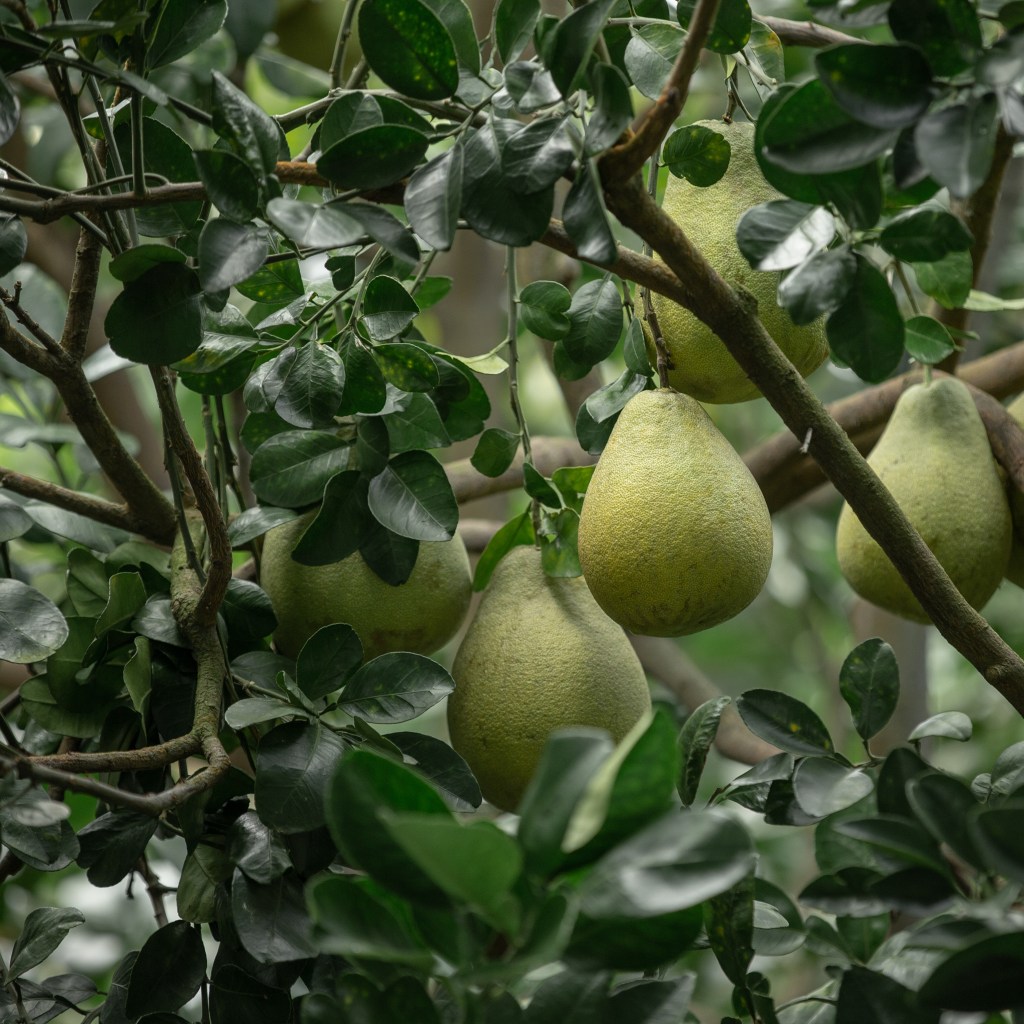
The giant of the Citrus family, with the apt botanical name Citrus Maxima, the Pomelo (or pummelo) produces massive fruits that impress both growers and eaters alike. Pomelos are one of the original Citrus species, along with Mandarins, from which more common citrus fruits like Grapefruits and Oranges are believed to have been hybridised. Pomelos are undoubtedly the largest Citrus fruit, commonly reaching up to 25cm in diameter and 2kg in size, often exceeding these sizes and becoming truly massive, rivaling the size of small Jackfruits. Unlike their relatives, however, such as Mandarin and Oranges, Pomelo have a thick rind (technically called the albedo) that can significantly overstate the size of the segments within. Pomelos taste similar to their descendant, the Grapefruit, but are notably sweeter and less bitter, making them a perfect alternative for those who find Grapefruits unpleasantly bitter. The fruits are superb eaten on their own but like other Citrus have many different uses. Pomelo peel can be candied or the segments can be added to South East Asian salads. Pomelo segments are slightly drier than those of other citrus fruits, yet they still produce a wonderful juice that is sweet and mild, however, unlike other citrus fruits, they cannot be juiced through the usual method; their juice should be pressed rather than squeezed out. Pomelos are available in yellow, white, or red-fleshed varieties. For example, the Nam Roi produces seedless, very sweet, yellow-fleshed fruits, while the Carters Red yields red-fleshed fruits with a mild Grapefruit flavour. Pomelos, like all citrus trees, prefer fertile, slightly acidic, well-draining but moist soils and a full sun position. Compared to many common Citrus varieties, the Pomelo has a distinct preference for tropical climates but will also produce well in frost free, subtropical climates. Pomelo are one of the few Citrus both grown from seed and grafted onto rootstocks such as Trifoliata. Grafted trees are highly advisable for those in warm temperate climates, with Trifoliata rootstock imparting considerable hardiness to conditions such as clay soils and importantly cold weather, allowing trees to tolerate light frosts and temperatures as low as -3 degrees Celcius. Pomelos thrive with abundant and consistent rainfall throughout the growing months but will not tolerate waterlogged soils, benefiting from being planted on raised mounds when faced with clay soils. Pomelo trees form large shrubs or small trees and, when in full sun, have a dense growth habit. The leaves are typical of Citrus trees with a distinct dark green gloss, though, in line with the fruit, they are larger than those of its relatives, reaching up to 20cm long. Pomelos flower profusely throughout the year in the tropics, providing both ornamental beauty and a divine scent. If size is a concern, consider purchasing a variety grafted onto a dwarf rootstock, which can be easily kept below 3 metres. For those passionate about growing Citrus or living in a distinctly tropical climate, the Pomelo is an excellent, versatile choice.
All Varieties are grafted unless noted. Please reach out to us (Contact & Socials) if you come across any broken links, incorrect details, or if you represent an online nursery that sells the products mentioned above.

 Hortiforum