Shuhrataxmedov – CC BY-SA 3.0 – Wikimedia CommonsLuis Fernández García – CC BY-SA 4.0 – Wikimedia Commons
General Info – Pomegranate
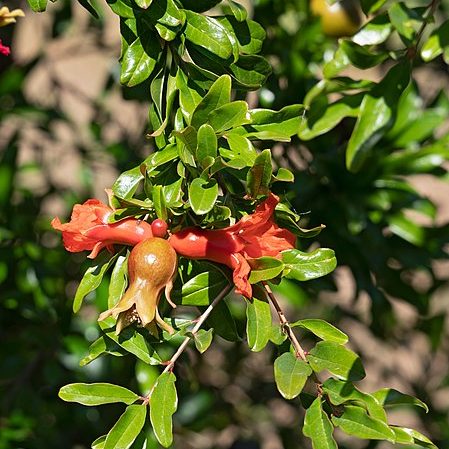
An emblematic fruit of the Mediterranean and Near East, the Pomegranate boasts a rich history of cultivation spanning millennia, ingraining itself as a symbol across cultures within this expansive region. Flourishing in harsh environments, it yields a bounty of exquisitely flavoured fruits, abundant in nutrients and antioxidants, thus securing its enduring popularity. Known as the ‘Punic Apple’ by the Romans (‘Punic’ referring to the historic Carthage in modern day Tunisia), from which its genus name Punica originates, this fruit holds a prominent place in culinary traditions for its delectable sweet and sour arils. Whether crafted into juices, syrups, or employed as a vibrant salad garnish, the deep-red arils not only impart a visually striking appeal but also enhance dishes with their subtly acidic taste. Pomegranate have been traditionally made into a syrup known as Grenadine (derived from the french word for Pomegranate ‘Grenade‘) or transformed into a molasses. Due to their historic and widespread cultivation, there are many Pomegranate cultivars available. These range from the popular ‘Gulosha Azerbaijani’ with its deep, dark red colour, to the ‘Ben Hur’ with its large, sweet, and juicy fruits, to the stunning dark purple ‘Red Velvet’ with its ornamental bright orange flowers, and the naturally dwarf ‘Parfianka,’ which produces an abundant harvest with as little as 200 chill hours. Thriving particularly in warm temperate and arid climates characterized by cool winters and hot summers, the Pomegranate develops its highest quality fruit in regions with hot, dry summers. While capable of fruiting in subtropical and cool temperate climates, its productivity may be hindered by excessive humidity or insufficient summer warmth, respectively. Although resilient to drought and arid soils, severe conditions can impede fruit development, necessitating adequate winter and spring rainfall. Optimal growth conditions entail well-drained, preferably fertile soil with moderate moisture retention, withstanding moderate soil salinity. Pomegranate must be provided a full sun position for best form, productivity and health. Notably ornamental, Pomegranate plants offer magnificent aesthetic appeal, whether fashioned into dense hedging shrubs owing to their natural multi-stem habit, or cultivated as slender trees standing up to 5 metres tall. The glossy, dark green foliage serves as an elegant backdrop to the tree’s spherical, crimson fruits, which not only adorn the landscape but also grace the dining table, offering a delightful addition to any meal. The resplendent orange-red blossoms of the pomegranate grace plants during the Summer and Autumn months, a captivating spectacle alone worthy of cultivation, before giving way to the development of the prized fruits, which gradually swell from the flowers’ base. As Pomegranate are self-pollinating they can be grown individually without concern for productivity. Pomegranates should be cultivated for their rich history, enduring popularity, exquisite flavour, and aesthetic appeal.
All Varieties are grown from cuttings unless specified. Please reach out to us (Contact & Socials) if you come across any broken links, incorrect details, or if you represent an online nursery that sells the products mentioned above.


 Hortiforum