General Info – Pitomba-rana, Pitomba, Belizian Genip, Cotopalo
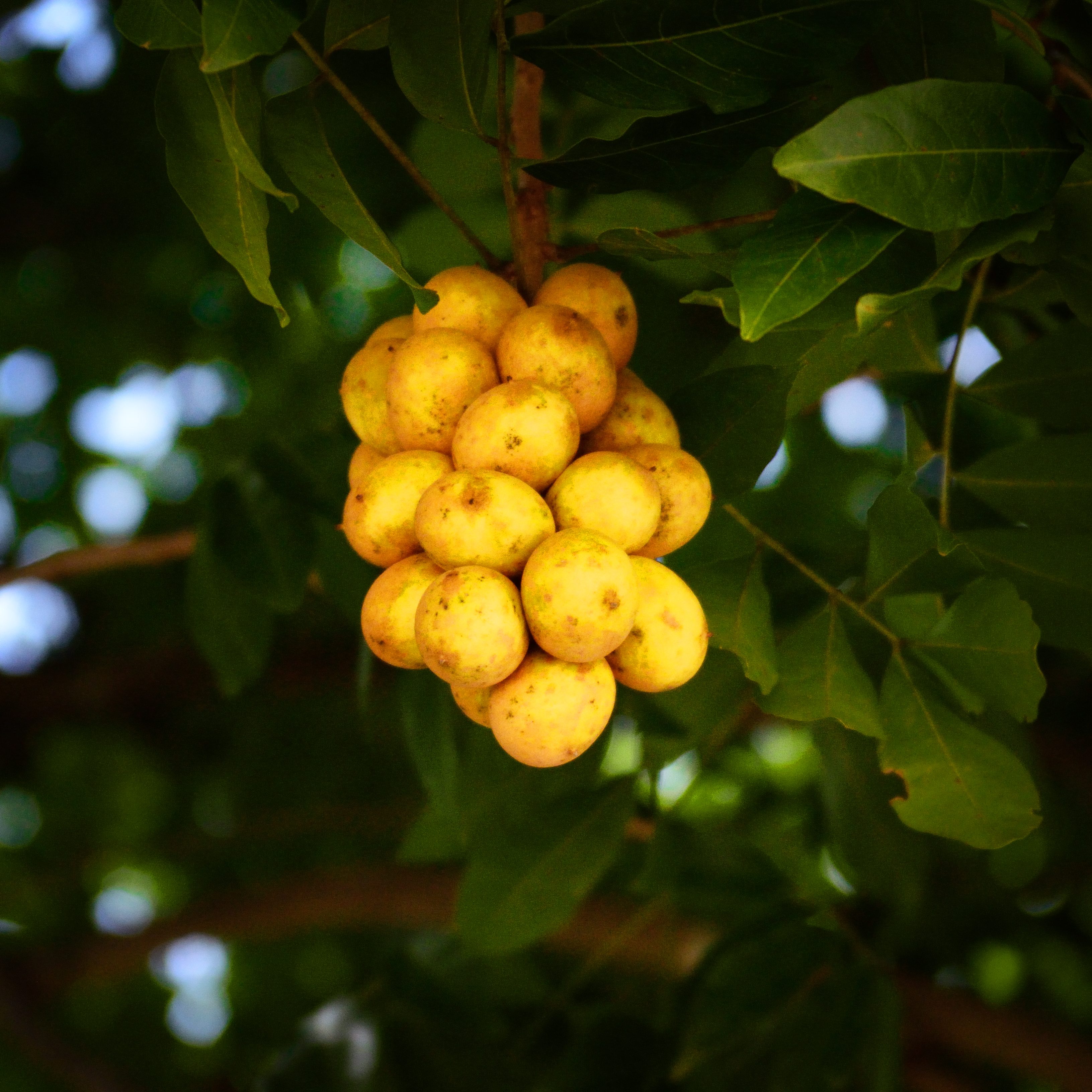
An unassuming brown-yellow fruit that resembles a Langsat or Longan, the Pitomba-rana has flavourful sweet and acidic translucent flesh beneath its peelable skin. It is well loved in its native range but little known or cultivated elsewhere. Its flavour is often compared to Mamoncillo, or described as a mix of Apricot and Lemon. The fruits are rich in Vitamin C and are best enjoyed fresh, though they can also be added to juices. The flesh to seed ratio is poor, especially when compared with better known and more widely cultivated relatives. A member of the Sapindaceae family, it is related to similar fruits such as Longan, Lychee, Mamoncillo and Rambutan. Like Mamoncillo, it suits those in tropical climates who prefer a bit of tang and acidity rather than the dominant sweetness of Lychee and Rambutan. Native to the Amazon Basin and found in parts of Brazil, Colombia, Peru, Paraguay and Bolivia, the Pitomba-rana grows best in conditions similar to tropical lowland forests. It prefers consistently warm temperatures and deep, fertile, well-draining soil. Its drought tolerance is not clearly documented, as the Amazon Basin includes both areas with constant heavy rainfall and others with monsoonal or savannah climates that have distinct wet and dry seasons. It is likely able to tolerate both, especially once mature, although some irrigation may be helpful when the plant is young. Pitomba-rana trees mature into medium-sized specimens between 9 and 20 metres tall. They have glossy green foliage with leaves arranged alternately along the stems. Flowering occurs along the leaf axils and at the tips of new growth, and the inflorescences form clusters of flowers that develop into clusters of fruit that can be harvested easily.
Please reach out to us (Contact & Socials) if you come across any broken links, incorrect details, or if you represent an online nursery that sells the products mentioned above.

 Hortiforum