General Info – Pitangatuba, Pitangola, Star Cherry
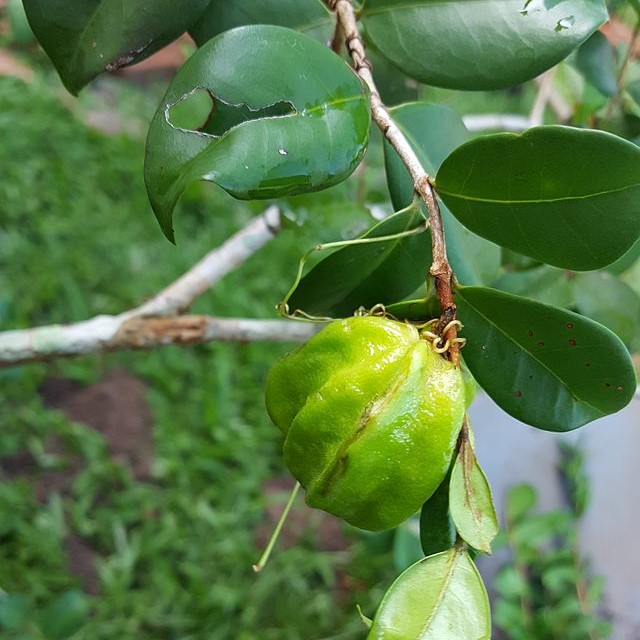
The Pitangatuba stands out as one of the most captivating additions to any orchard due to its exceptional fruit quality and ability to thrive in a wide range of conditions. Also referred to as the Star Cherry because of its star-shaped fruits, the Pitangatuba resembles a miniature Starfruit, boasting a ribbed appearance and maturing to a vibrant yellow-orange hue. Typically reaching the size of a Strawberry, its juicy, aromatic, subacid flesh offers a delightful eating experience, complemented by a relatively large seed easily navigated around. Pitangatuba’s flavour profile, reminiscent of Starfruit, Passionfruit, Apricot, and Mango, appeals particularly to enthusiasts of sweet-tart fruits. While perfect for fresh consumption, Pitangatuba lend themselves well to juices and preserves. Originating from the Brazilian Cerrado, a tropical savanna characterised by distinct wet and dry seasons and nutrient-poor soil, the Pitangatuba thrives in many conditions making it a stress-free planting. Adaptable to a wide range of climates, from tropical to subtropical, frost-free warm temperate, and even arid regions. Pitangatuba are tolerant to brief, light frosts once mature but should be protected when young and will also benefit from being well-watered before established. Pitangatuba exhibits tolerance to poor soils, wind, drought, and both full-sun and partial shade. Optimal fruit quality and yields are attained in full sun. Pitangatuba are noteworthy for being able to commence fruiting at a remarkably young age and small size, often bearing fruit below 30cm and within just two years, despite their relatively slow growth rate. Visually, the Pitangatuba adds an ornamental touch to any landscape with its opposing, smooth dark green leaves juxtaposed against delicate white flowers. Remaining a compact shrub, typically under 2 metres in height, it eliminates the need for regular pruning for size, although in optimal conditions, plants may grow larger. Due to their small size, Pitangatuba are ideally suited for container cultivation, suitable for adorning patios, balconies, or verandahs. Pitangatuba, like other members of the Eugenia genus such as the Cedar Bay Cherry, Brazilian Cherry, and Grumichama, boasts an attractive evergreen form. Owners are promptly rewarded with an effortlessly elegant ornamental plant, followed shortly by bountiful harvests of delectable fruit unattainable at any market or store.
Please reach out to us (Contact & Socials) if you come across any broken links, incorrect details, or if you represent an online nursery that sells the products mentioned above.

 Hortiforum