KATHERINE WAGNER-REISS – CC BY-SA 4.0 – Wikimedia CommonsDouglas Goldman – CC BY-SA 4.0 – Wikimedia Commons
General Info – Pigeon Plum, Tietongue
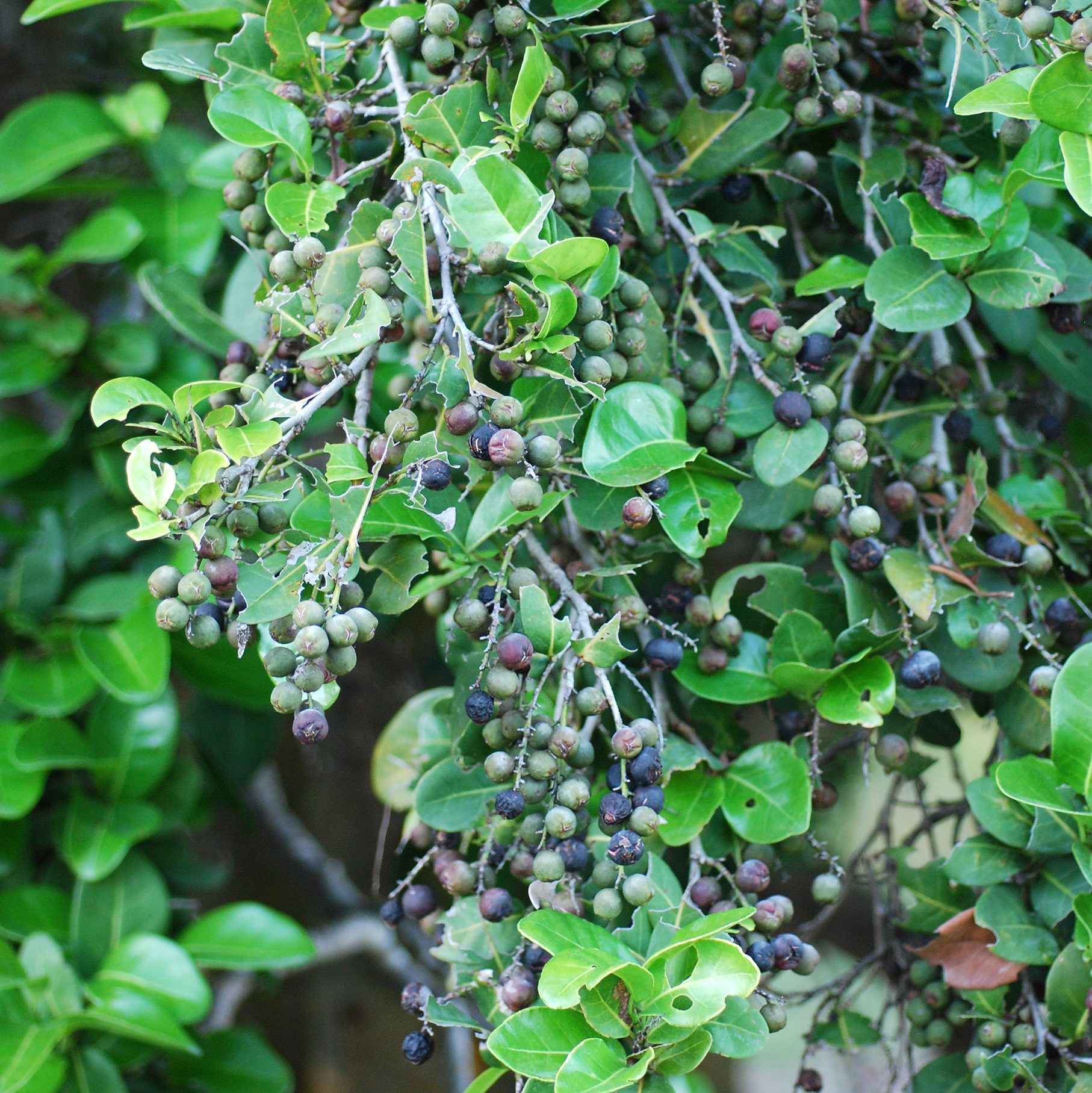
Native to the coasts of the tropical Americas and the Caribbean, the Pigeon Plum is an excellent choice for any tropical, coastal climate. Like its fellow Coccoloba relative the Sea Grape, the Pigeon Plum thrives in harsh conditions such as drought, salt, wind, and poor, sandy soil, which often pose challenges in coastal, exposed locations. While Pigeon Plums can withstand short, light frosts, they truly flourish in tropical climates. Although its fruit may not match the quality of Sapodilla and Coconut, which also thrive in similar conditions, the Pigeon Plum offers rapid growth and a dense canopy, making it ideal for providing quick shade or acting as a windbreak. Due to its drought tolerance once established and its ability to withstand low to high rainfall, this plant thrives in coastal tropical regions across Australia, requiring minimal to no maintenance. Pigeon Plums can be cultivated as either shrubs or small trees, and their adaptability and resilience make them suitable for various locations, including along streets, shorelines, and fences. While some plants may be somewhat unkempt, a healthy specimen blends seamlessly into an ornamental garden, with its coppery growth and clusters of white flowers creating a pleasing visual display. The plants are dioecious, producing male and female flowers on separate individuals, requiring at least two plants for fruit production. The small, berry-like fruits, which can be harvested year-round but peak in spring and summer, have earned the plant the nickname “Tietongue” due to their intensely astringent taste when slightly underripe, though they become marginally better when fully ripe. Once dried, the dark purple-black fruits lose their astringency and become more palatable, and they can also be used to make wines and preserves. Pigeon Plums excel at attracting local wildlife, with their fruits drawing in numerous birds and their flowers attracting pollinators such as bees or butterflies. Plants can be planted solely for this beneficial effect. In ideal climates, Pigeon Plum may bear fruit year-round. An effortlessly attractive evergreen that attracts birds and thrives in challenging environments, coupled with the bonus of edible fruit, the Pigeon Plum stands as a valuable choice for coastal gardeners.
Plant Profile/Properties
Latin Name
Coccoloba Diversifolia
Place of Origin
Subtropical North America, Central America, Caribbean
Where to Purchase – Online Nurseries (Australia Only)
Nursery
Pigeon Plum – No known sellers, if you’re an online nursery selling this product get in contact!
Please reach out to us (Contact & Socials) if you come across any broken links, incorrect details, or if you represent an online nursery that sells the products mentioned above.


 Hortiforum