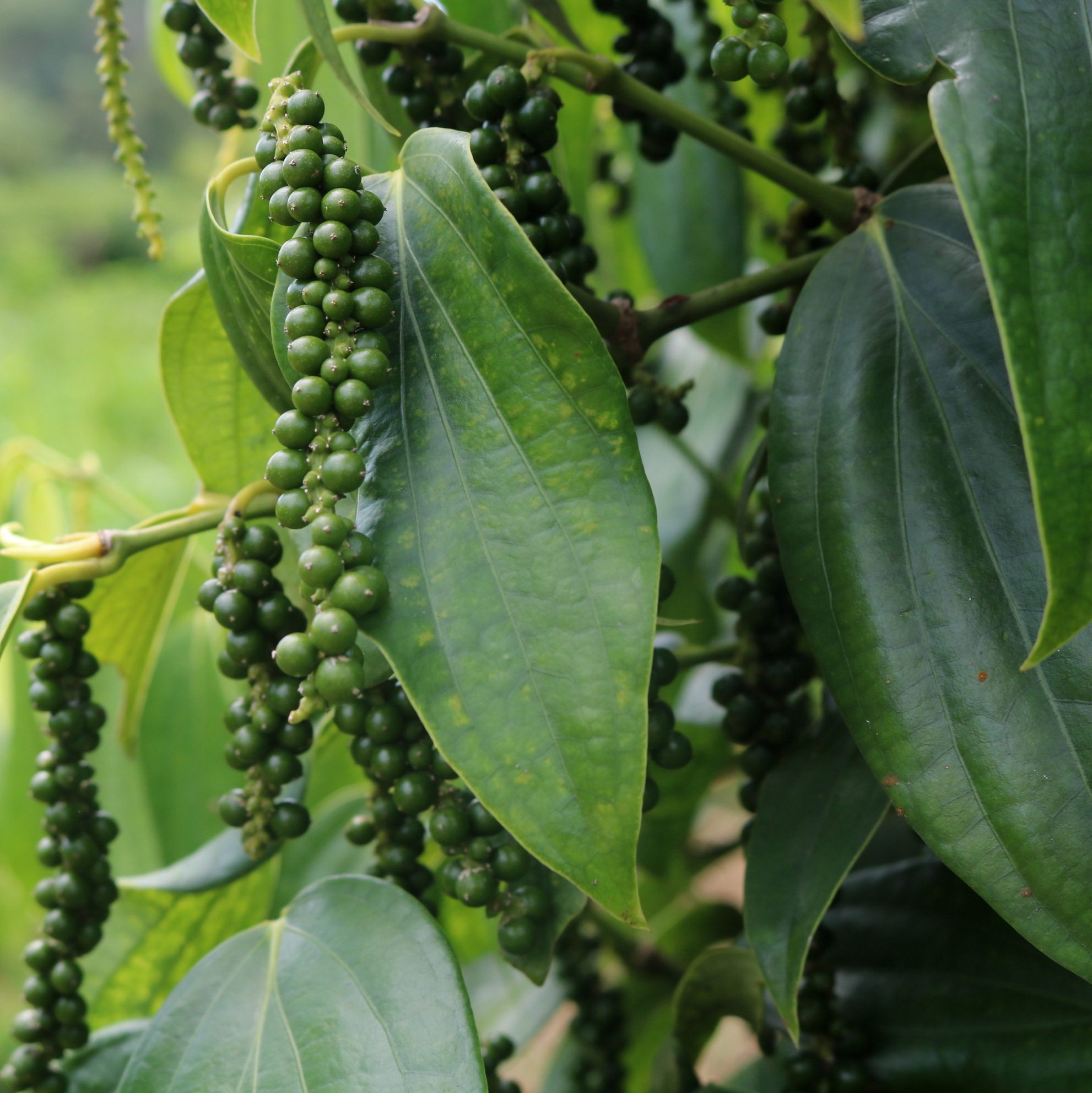
Pepper, the indispensable companion to salt and a ubiquitous table seasoning, can be achievably cultivated in your own backyard. The iconic, spicy flavour of Pepper has propelled it to become the most sought-after spice worldwide, driving substantial trade since ancient times. Pepper plants yield pendulous flowering spikes from their vines. The tightly clustered fruits along these spikes transition from a vibrant green hue to a rich dark red. In botanical terms, the fruits of the pepper plant are referred to as ‘drupes,’ and they are varyingly processed into different forms of pepper (black, green, white, red), determined by factors such as ripeness, processing method and parts removed. Green peppers are the unripe drupes, Black pepper are briefly cooked, unripe drupes, White pepper are ripe drupes with the skin removed while Red Pepper are the ripe drupes preserved in brine and vinegar. Once an expensive and highly prized spice but now ever-present and indispensable for many, cultivating homegrown Pepper is an achievable and rewarding experience available for many. Originating from the tropical regions of South and Southeast Asia, the pepper plant thrives in tropical conditions but can also flourish in frost-free subtropical climates. In hot tropical environments or regions with harsh summers, providing dappled shade can aid in its growth, and it can even be cultivated under the shelter of another crop. Pepper plants prefer a rich, loam soil with excellent drainage and are well suited to cultivation in large containers. Pepper are thirsty plants, preferring over 2000mm of rainfall across the year. Plants thrive in cultivation within greenhouses in temperate climates or shadehouses in tropical climates, where their specific but achievable preffered conditions can be provided. As a climbing vine, Pepper necessitates a supportive structure for growth, such as a trellis or another plant, and can reach heights of up to 10 metres, although it’s advisable to maintain it at a manageable height for ease of cultivation. The pepper plant’s glossy, pinnate green leaves can attract herbivores, particularly possums, making protective measures essential. Pepper plants exhibit prolific flowering and fruiting, with a mature plant capable of yielding ample produce for a family’s needs. Embark on the journey of growing your own peppercorns at home, and enrich your culinary endeavors with this beloved spice.
Please reach out to us (Contact & Socials) if you come across any broken links, incorrect details, or if you represent an online nursery that sells the products mentioned above.

 Hortiforum