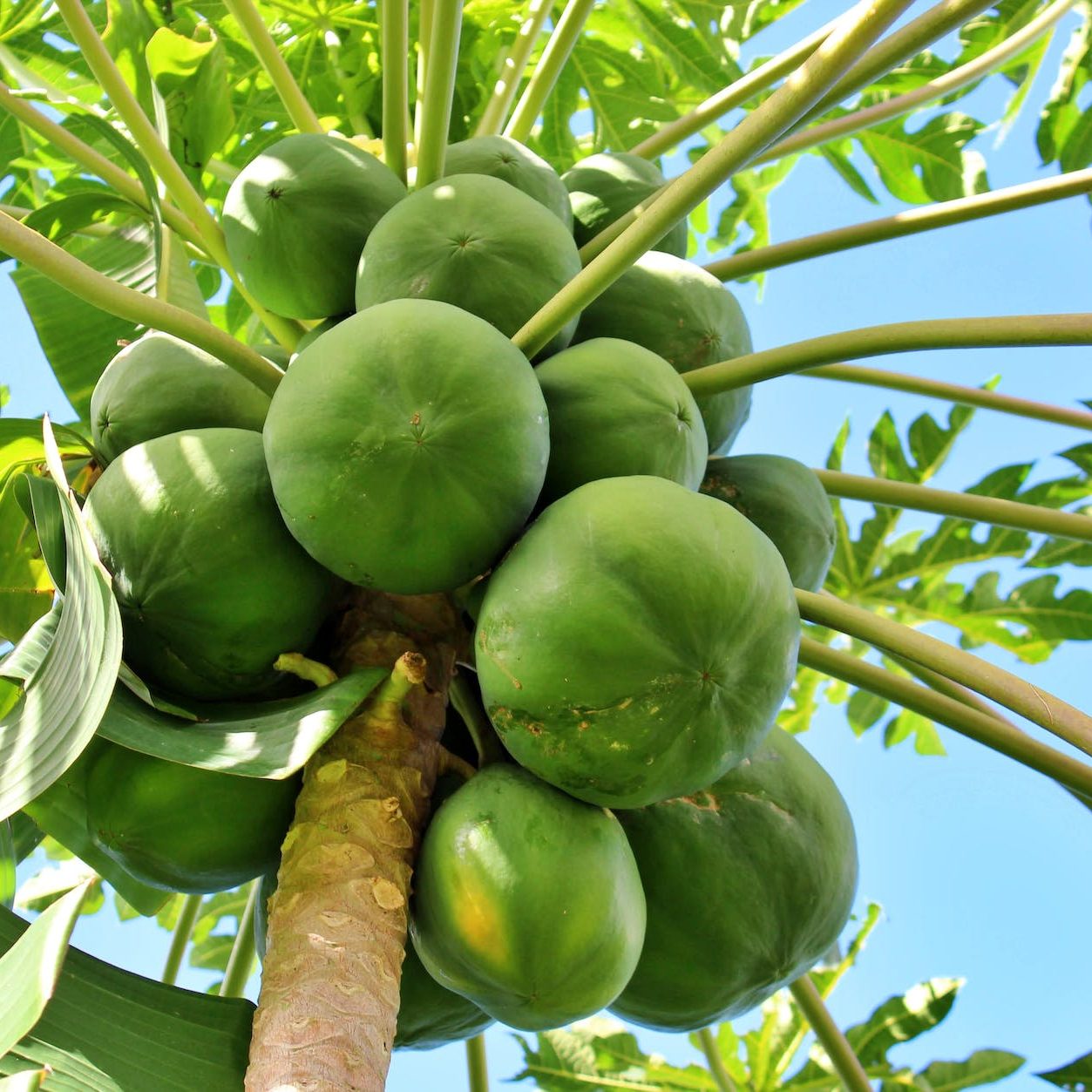
A symbolic fruit of the tropics, few tropical plants rival the Papaya in terms of productivity, rapid fruiting, and sheer deliciousness. With its sweet, juicy pulp that seems to melt in your mouth, the Papaya stands out as one of the most renowned and beloved tropical fruits. Resembling a butternut squash in size and shape, Papaya fruits offer a substantial meal with a uniquely versatile flavour profile. Papayas are most commonly enjoyed fresh, either on their own or incorporated into salads (when still green). Moreover, they prove delightful when dried, transformed into jams, or juiced, showcasing their remarkable culinary options. Gardeners have access to a variety of Papayas, including the bisexual (self-pollinating) ‘Sunrise Solo’ with its pink flesh and sweet, musky flavor; the bisexual (self-pollinating) ‘Southern Red’ with its red flesh and extremely sweet, elongated fruits, also available in a dwarf form; and the dioecious, yellow-fleshed ‘Yellow H13,’ which is an excellent choice for cooler climates. Papaya plants are known for their remarkable growth rate, often flowering and bearing fruit within just 12 months under optimal conditions. However, they are relatively short-lived and exhibit diminished productivity and quality over time. Additionally, as they grow taller, they become more susceptible to diseases and harder to harvest efficiently. Despite these limitations, their compact size makes them an excellent choice for short to medium-term cultivation, allowing growers to try different varieties. Indigenous to the tropics, Papayas thrive in consistently warm temperatures either the tropics or subtropics and are highly sensitive to frost, necessitating protection in even mildly temperate climates. Ample rainfall, nutrient-rich well-draining soil, and a sheltered position are essential for optimal growth. For cooler climates, alternative options to Papaya include Babaco, Oak-Leaved Papaya, or Papayuelo. Yellow varieties of Papaya are also reported to perform better than red varieties in cooler climates. Papaya have minimal sensitivity to salt and wind exposure and will need to be in a highly protected position in coastal locations. Easily recognisable by their single thick stem and top-heavy appearance, Papaya trees shed side branches as they mature, eventually developing into multi-stemmed, woody structures. While aesthetically pleasing when healthy and lush, they tend to lose their attractiveness as they age. Papayas boast large, distinctively shaped leaves with deep lobes and lengthy leaf stalks. Spirals of leaves emerge from the apex of the stems, forming an umbrella-like canopy. Whether for seasoned gardeners or novices alike, Papayas prove to be highly rewarding additions to gardens in the tropics and subtropics, offering delicious fruits in quick time to their caretakers.
All Varieties are seedling grown unless noted. (C) = Cutting. Please reach out to us (Contact & Socials) if you come across any broken links, incorrect details, or if you represent an online nursery that sells the products mentioned above.


 Hortiforum