General Info – Oregon Grape, Holly-Leaved Barberry, Grape Holly
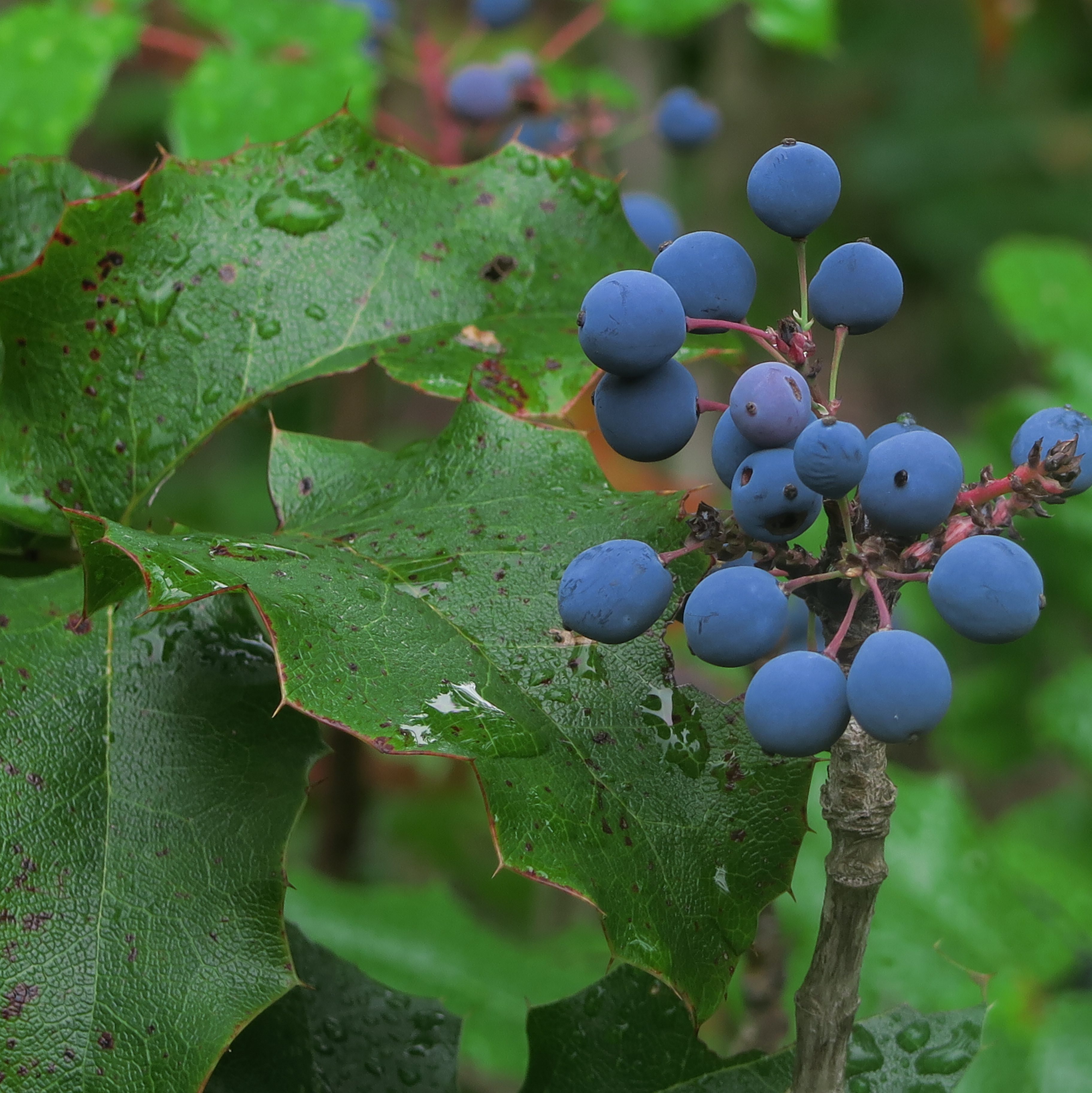
The Oregon Grape produces ornamental bluish-purple fruit, although the colour can appear slightly muted due to a natural waxy coating, known as a bloom. Although there are many Grape species (Vitis) native to North America, such as the Muscadine and Fox Grapes, the Oregon Grape is not a member of the Vitis genus. Instead, it belongs to the Barberry family, alongside the widely cultivated European Barberry. The fruit has a bright, tart flavour that is generally unpalatable when eaten fresh. However, when combined with plenty of sugar and made into jellies, juices or even wine, it can be quite delightful. On their own, the berries have a subtle Grape-like taste with a mouth-puckering tartness, making them less than ideal for fresh eating. Native to the cool, wet climate of the Pacific Northwest coast of North America, the Oregon Grape is well adapted to cold conditions, tolerating heavy frost and snow. It grows best in moist but well-drained, acidic loam soils and is not suited to dry soils, as it is sensitive to drought. Ideally, it should be planted in at least a semi-sheltered position. Naturally found in the understory and at the edges of forests, it is well suited to both full sun and partial shade. Partial shade is preferable in regions with harsh, hot summers. The plant is low maintenance and generally free from serious pests and diseases. The holly-like, evergreen, compound pinnate foliage of this plant develops striking bronze to reddish-purple hues during the cooler months, particularly when grown in sunny locations. This dramatic colour change gives it the appearance of a deciduous plant while still retaining its leaves, adding ornamental vibrancy to cool temperate gardens that can otherwise appear sparse and bleak in winter. From late winter to early summer—depending on the climate—dense clusters of bright golden, slightly fragrant flowers emerge at the ends of branches. These blooms attract pollinators, while the colourful berries that follow are highly appealing to birds. The plant typically has a somewhat leggy, upright spreading habit and can reach a mature height of around 3 metres. Its dense foliage also makes it well-suited to being pruned into a hedge. Although it has a suckering tendency, it’s not aggressive or problematic like some Rubus species, so careful placement in the garden is advised. Several cultivars have been developed for their ornamental value, though they remain relatively uncommon in Australia.
Please reach out to us (Contact & Socials) if you come across any broken links, incorrect details, or if you represent an online nursery that sells the products mentioned above.


 Hortiforum