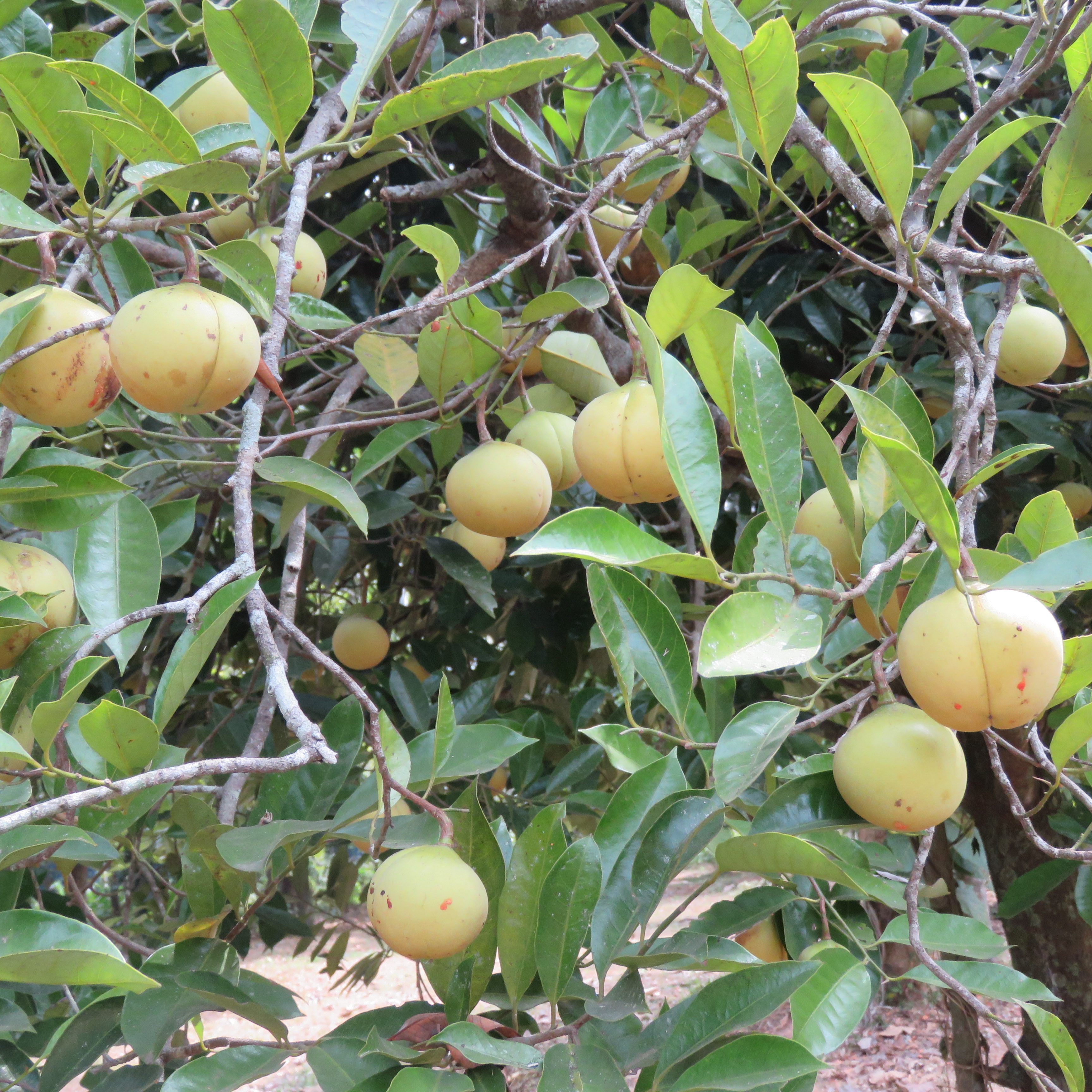
Nutmeg fruits are similar in shape and size to an Apricot but have a greyish-brown colour. When ripe, the fruit splits open to reveal a crimson aril tightly attached to a starkly contrasting black seed. Once opened, the fruit resembles that of the native Small Leaf Tamarind, whose pods also split to reveal a vibrant red interior. Nutmeg is an iconic tropical spice, long traded and often associated with Cloves, also from the Moluccas, as well as other spices like Cinnamon, Allspice, and Vanilla. While many people assume that Myristica fragrans, the nutmeg tree, is solely the source of the common Nutmeg spice (derived from the seed), it is also the origin of the lesser-known spice Mace, which comes from the aril surrounding the seed. Nutmeg has a delightful, powerful fragrance and a warm, earthy, slightly sweet flavour, while Mace is often described as having a more delicate flavour with hints of Pine, Pepper, Citrus, and Cinnamon. After harvesting, both the Nutmeg seed and the aril (Mace) are left to dry, with the seeds requiring up to two months to dry thoroughly. Once dried, they have a smooth, slightly wrinkled appearance similar to an unopened Walnut. Nutmeg is commonly used in sweet dishes, such as cakes, cheesecakes, slices, puddings, and, for many, is most memorable in Eggnog and Christmas pudding. It pairs well with a variety of fruits, particularly Apple, Banana, Mango, Orange, and Pear. Mace, though lesser known, is more commonly used in savoury dishes such as soups, curries, or meat rubs. Native to the Moluccas in eastern Indonesia, Nutmeg thrives in ultratropical climates with consistent, ample rainfall throughout the year (over 1500 mm), and no pronounced dry season, though it can tolerate short dry periods. Like many trees native to tropical rainforests, Nutmeg prefers partial shade or filtered sunlight when young. As it matures, it can tolerate full sun exposure, where it will grow healthiest and produce the most abundant harvests. Nutmeg is adaptable to a range of soil types, provided they are well-drained but moist. It prefers volcanic or rich loamy soils but is also reported to tolerate well-drained clay soils. However, wet or waterlogged soils can lead to root rot. A sheltered position, protected from strong winds, is essential, as Nutmeg plants have a shallow root system. While Nutmeg can briefly tolerate temperatures as low as 5°C, such conditions should be rare, as the plant generally suffers in temperatures below 10°C. Nutmeg trees are typically dioecious (having separate male and female plants), though some reports suggest they may exhibit a degree of self-fertility. Nutmeg is an ornamental, evergreen tropical tree that ranges from small to medium in size. It features glossy, aromatic leaves and develops a dense, conical shape with a wide, upright canopy. The creamy white to pale yellow flowers have a similar shape to Blueberry.
Please reach out to us (Contact & Socials) if you come across any broken links, incorrect details, or if you represent an online nursery that sells the products mentioned above.

 Hortiforum