General Info – Mysore Raspberry, Ceylon Raspberry, Hill Raspberry
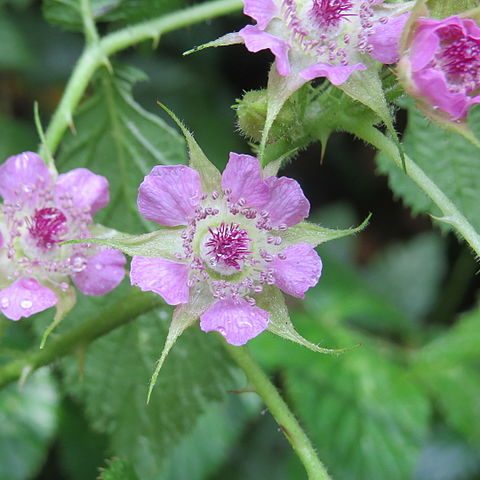
A robust and prolific tropical Rubus, the Mysore Raspberry presents a delectable black raspberry, providing a welcomed alternative for tropical gardeners disappointed by the performance of many Blackberries and Raspberries in hotter climates. Mysore Raspberries boast a sweet, rich flavour remarkably akin to the Black Raspberry native to eastern North America. As with all Rubus, Mysore Raspberry are a versatile fruit, anti-oxidant rich, juicy and delicious in a variety of forms particularly when eaten fresh. The berries decay quickly, within 24 hours and should be either consumed quickly or made into a variety of delicious products such as Pies, Jams and Smoothies. Mysore Raspberry fruits on second-year growth, with flowers and berries emerging year-round. However, it’s worth noting that summer fruits may exhibit slightly lower quality compared to those harvested in Winter/Spring. To optimize the Winter/Spring harvest, seasonal pruning is recommended to discourage summer fruiting. The sprawling and scrambling nature of these shrubs can be aggressive, tending to overtake areas and spread. The spiny canes, feature closely spaced, sharp thorns along the stems and on the back of leaves, present a potential challenge if placed near walkways. Canes can reach between 1-3m tall dependent on variety. Indigenous to the mountains and hills of South Asia, the Mysore Raspberry thrives in subtropical and cool tropical climates but adapts well to mild, frost-free temperate conditions. Like most Rubus varieties, it flourishes in fertile, well-draining loam soils, thriving in both light shade and full sun. While some support and tying may be beneficial for controlling growth, these raspberries can also be cultivated in a controlled clump. Mysore Raspberry thrive when provided with plentiful, regular watering. It’s crucial to be mindful of the Mysore Raspberry’s tendency to become a noxious pest globally due to its vigorous spread and reproduction, forming impenetrable thickets that choke out native vegetation. This tropical threat is comparable to the wild blackberry’s impact in temperate regions. Growers should exercise caution to prevent overgrowth, acknowledging the plant’s weed status, with restrictions in place across NSW. In tropical Australian climates, alternative options such as the native Atherton Raspberry, another Rubus well-suited to tropical/sub-tropical conditions, may be considered. Despite its formidable thorns and potential for spreading, the Mysore Raspberry stands out as one of the most adaptable, prolific, hardy, and tasty tropical raspberries. It offers a nearly perfect berry for those yearning for temperate berry flavours, provided they can navigate the thorns and control plant spread.
Where to Purchase – Online Nurseries (Australia Only)
Nursery
Mysore Raspberry – No known sellers, if you’re an online nursery selling this product get in contact!
Please reach out to us (Contact & Socials) if you come across any broken links, incorrect details, or if you represent an online nursery that sells the products mentioned above.


 Hortiforum