Krish Dulal – CC BY-SA 3.0 – Wikimedia CommonsCrops for the Future – CC BY-SA 3.0 – Wikimedia Commons
General Info – Horseradish Tree, Moringa, Drumstick Tree, Ben Oil Tree
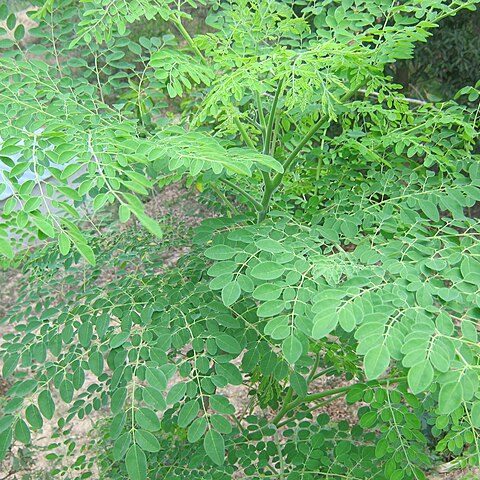
The Moringa, also known as the Horseradish tree, is a truly versatile, multi-purposed plant, being both medicinal and edible. Nearly all parts of the plant are edible or possess medicinal properties, often serving both purposes simultaneously. Native to South Asia, Moringa has gained global popularity due to its culinary uses, health benefits, and resilience in challenging conditions. The small leaves of Moringa are edible in their raw form, commonly dried, used in soups & curries and powdered for inclusion in beverages and baking, imparting a slight Peppery flavour. The leaves are highly nutritious, rich in Vitamin A, Manganese, Magnesium, B Vitamins, and Vitamin K. The roots can be used as a Horseradish substitute, while the long, edible green seed pods are frequently cooked in stews and curries, offering a taste reminiscent of Asparagus and Green Beans. Moringa trees are highly adaptable to various climate such as semi-arid, subtropical and tropical and will thrive in a range of soils provided they are well-drained, including poor, sandy soils both acidic and alkaline. A sandy-loam soil with a slightly acidic to neutral PH in a tropical climate are the ideal conditions for cultivation. Moringa are highly resilient to drought and adaptable to low-high rainfall, they can withstand low rainfall (<300mm), although leaf production may decrease. Plants thrive in the warmth and sun but are susceptible to light frosts and will often resprout from the base in warmer weather. Moringa produce small circular, oppositely arranged leaves and fragrant, yellow-whitish flowers. A member of the Brassicales order and a distinct relative of Brassicas such as Mustard, Beans and Broccoli, plants develop long, bean-like seed pods, like a straight form of Tamarind. Under optimal conditions, Moringa grows rapidly, forming an open, spreading crown and often reaching heights of up to 10m. Flowering and fruiting can occur within two years, while the nutritious leaves can be harvested at all stages of maturity. Well-suited to tropical, subtropical, and warm arid climates akin to South Asia, Moringa trees make an excellent, hassle-free addition to any garden, providing numerous edible products.
Please reach out to us (Contact & Socials) if you come across any broken links, incorrect details, or if you represent an online nursery that sells the products mentioned above.


 Hortiforum