General Info – Monstera Deliciosa, Fruit Salad Tree, Monstera, Swiss Cheese Plant, Ceriman
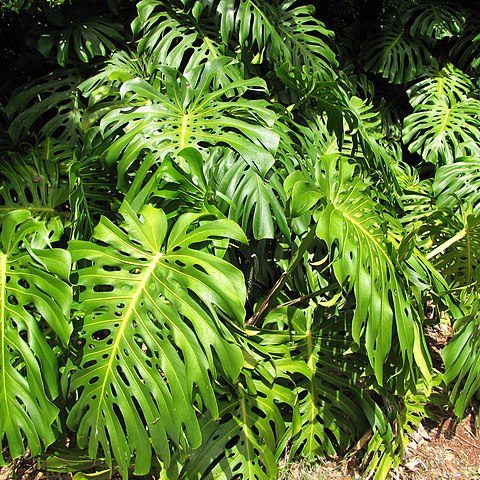
Renowned for its ornamental appeal and its ability to thrive in damp, deeply shaded positions, the Monstera is more than just a decorative plant; it hides a lesser-known but equal treasure—its flavourful, edible fruit. Often referred to as the Fruit Salad Plant, thanks to its fragrant tropical aroma and a delectable taste reminiscent of a combination of Jackfruit, Pineapple, Banana, Strawberry, and Coconut, this unique specimen combines beauty with taste. The distinct corn-shaped fruits, with an exotic appearance, harbour juicy sub-acid segments beneath the inedible scales. Caution is advised, as the fruits must be allowed to ripen naturally, with the outer scales falling off to signify the edibility of the segments below. Unripe fruits contain harmful oxalate crystals in the form of small needles, causing significant discomfort to eaters; hence, only fully ripe pulp should be consumed to avoid encountering these oxalate crystals. The pulp is commonly enjoyed fresh but can also be utilised in ice creams, drinks, and sherbets, contributing a delightful sub-acid taste. While extensively grown and known for its ornamental allure, the edible quality of these fruits is much less known by comparison, resulting in abundant potential harvests throughout neighborhoods. A native of the rainforest floor, the Monstera thrives in conditions of high rainfall, well-draining, rich soils, and a protected position when young or until it finds support to climb on. Monstera plants are often cultivated as indoor greenery due to their affinity for deep shade and ease of care. Deeply shaded positions, particularly during the early stages of development are preferred and plants are well-suited for shaded spots throughout the garden, where few other productive plants can thrive. Monstera flourish in frost-free climates, whether temperate, subtropical or tropical and are a common sight throughout Sydney. Plants should be sheltered from strong chilling winds and any frost exposure. The majestic, glossy, heart-shaped leaves, adorned with distinctive eyes or holes, give rise to the plant’s distinct ornamental look, earning it the moniker Swiss Cheese Plant. These plants can thrive as either shrubs up to 1.5 metres tall or taller when along a support structure—traditionally a tree trunk in the wild but also an artificial one, with the plant attaching itself through aerial roots. The stunning cream-coloured, hooded flowers add to the plant’s beauty in ornamental settings. A dual-purpose plant, perfect for both ornamental settings and its underrated, albeit challenging, fruit, the Monstera is a natural choice for any deeply shaded location where limited alternatives are available.
Please reach out to us (Contact & Socials) if you come across any broken links, incorrect details, or if you represent an online nursery that sells the products mentioned above.


 Hortiforum