General Info – Mocambo, Jaguar Tree, Motelo, White Cacao, Pataxte
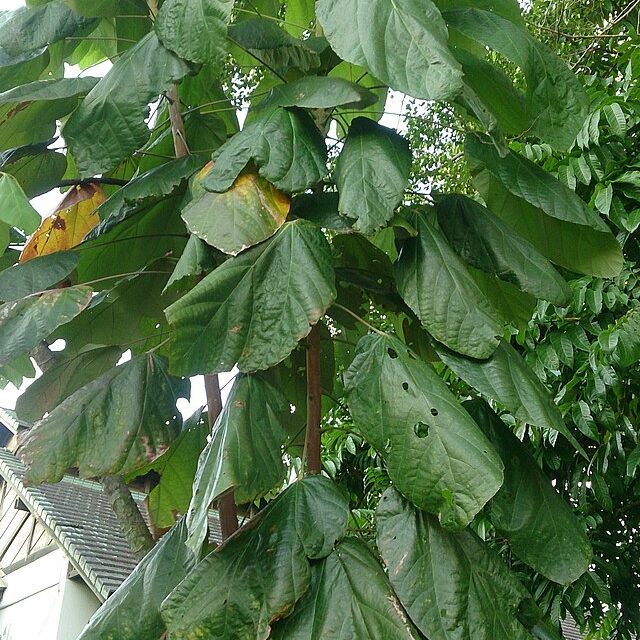
An underappreciated species within the Theobroma genus and a relative of the Cacao and Cupuassu, the Mocambo produces unique pod-like fruits with edible seeds and flavourful pulp. Mocambo pods are similar in size and shape to Cacao pods, with an ovular shape but contrastingly a much firmer shell even when ripe. This sturdiness allows the fruits to fall to the ground without significant damage, enabling easier harvesting without the need for difficult hand-picking and pruning to allow for hand-picking that Cacao trees often require. The pods feature a distinctive, slightly velvety skin with a veined appearance and prominent ridges that turn brown when ripe, contrasting with the pale yellow of the rest of the fruit’s ripe skin. Beneath the thick skin lies a large amount of tightly packed yellow pulp surrounding edible seeds. Mocambo pulp is sweet with a strong musky flavour and creamy undertones, reminiscent of a blend of Melon, Chempedak, and Jackfruit. The pulp can be used in drinks and ice creams. Like Cacao, Mocambo seeds are edible but have a different flavour, similar to a mix of Almond, Macadamia, and Cashew, without the distinct cacao taste. The seeds are nutritionally dense, rich in Carbohydrates, Protein, Fibre, and Omega-9. Mocambo can be used to make a nutty and creamy chocolate and historically was used but fell out of favour. Native to the tropical rainforests of Central and South America, the Mocambo is an ultratropical species, thriving best in tropical climates and being only marginally suited to subtropical areas. Mocambo trees are native to the understory of tropical forests, where they naturally receive partial shade and filtered sunlight. In cultivation, they can mature in full sun but should be shaded when young. Mocambo prefers alluvial soils that are fertile and well-draining, and display variable tolerance to the seasonal flooding common in the Amazon. Some specimens show limited tolerance to flooding, while others have considerably greater tolerance to deeper, prolonged flooding, this variability likely showing adaptation to varying levels of seasonal flooding. The trees tolerate a range of soils from acidic to slightly alkaline, but they prefer slightly acidic to neutral soils. Mocambo are an understory tree, commonly reaching heights between 10-12m in their natural filtered sunlight environment, though they can grow considerably larger. When cultivated in full sun, Mocambo trees generally remain much smaller, around 5 metres tall. They have large, heart-shaped evergreen leaves and develop a slender form and narrow crown. Small purple flowers grow along the branches. Although Mocambo may have fallen out of favour to its related Cacao, it is an excellent example of the unique and delicious tropical fruits that can be cultivated in your own garden.
Please reach out to us (Contact & Socials) if you come across any broken links, incorrect details, or if you represent an online nursery that sells the products mentioned above.

 Hortiforum