General Info – Mexican Hawthorn, Tejocote, Manzanita, Mexican Thorn
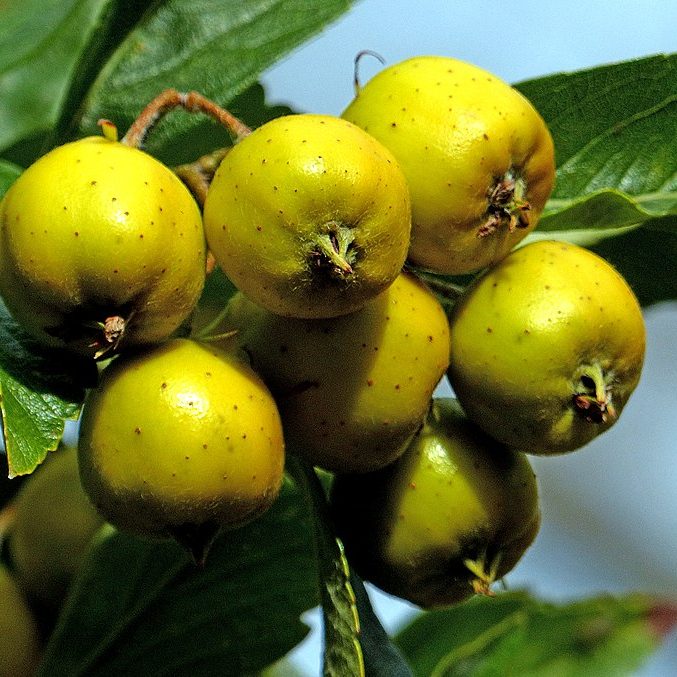
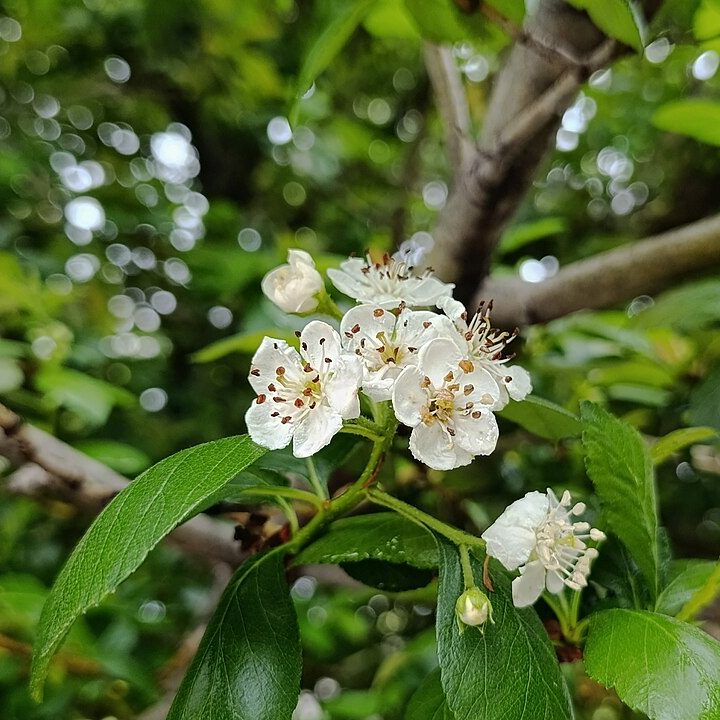
Known as Tejocote in Mexico, the Mexican Hawthorn (Crataegus Mexicana) is a much-loved fruit, especially popular for its use in Ponche, a traditional hot Christmas fruit punch. In this festive drink, Tejocote is a key ingredient, alongside Guava, Tamarind, Raisins and Cinnamon. Beyond its role in seasonal celebrations, the fruit is also used in confectionery, either candied or made into preserves, thanks to its naturally high pectin content. It is commonly ground into a paste and mixed with sugar and chilli powder to create Rielitos, a well-known Mexican sweet. The fruit appears in late autumn and can persist into winter. Golden to yellow in colour, it resembles a small Apricot or a large, round Loquat. Rich in vitamin C, it has a soft, mealy texture and a mild, pleasant flavour, though some may find it somewhat bland. Its taste is often likened to Apple, Hawthorn and Jujube, with subtle hints of Guava, Pineapple and Apricot. The Mexican Hawthorn is a hardy and adaptable tree, tolerant of a wide range of conditions including coastal exposure, drought and various soil types. However, it does not cope well with waterlogged soils and requires good drainage. While it prefers lime-rich soils, it is unsuited to extremely dry, desert areas. Semi-arid climates are considered ideal. The tree performs well in both part shade and full sun, although full sun is best for promoting a dense canopy and higher fruit yield. Native to the mountainous regions of Mexico and Guatemala, it thrives in environments with warm summers and cool winters, and it can withstand frosts. Its native range includes subtropical highlands to semi-arid zones, making the species well suited to warm temperate parts of Australia, and also adaptable to many subtropical and cool temperate climates. Typically growing 4 to 7 metres tall, the Mexican Hawthorn forms a dense crown and can be pruned into either a small tree or a hedge. It is semi-deciduous and often only partially sheds its leaves, with leaf drop being more pronounced in cooler regions. The foliage is a glossy dark green that turns orange-red in autumn, with slightly toothed edges near the tips. Thorniness appears to vary between specimens, with some being sparsely thorned and others more heavily armed, so this should be taken into account when choosing a planting site. In spring, clusters of attractive white flowers emerge. Like other Hawthorns, the blossoms are said to have a sweet scent when freshly opened. However, they may develop an unpleasant smell as they mature, which is believed to help attract pollinating insects such as midges.
Please reach out to us (Contact & Socials) if you come across any broken links, incorrect details, or if you represent an online nursery that sells the products mentioned above.

 Hortiforum