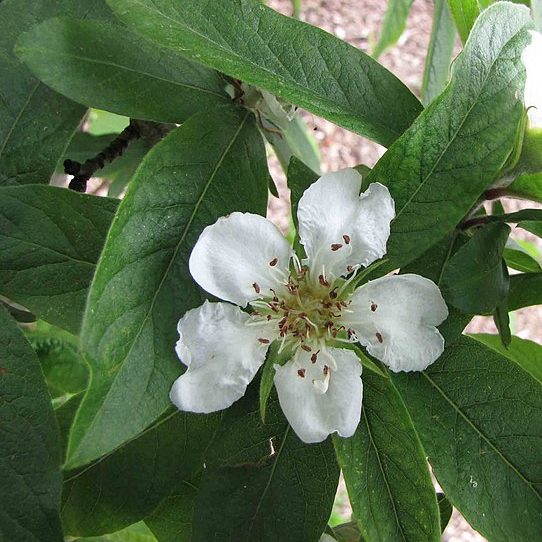
The Medlar, an ancient fruit cultivated for millennia, has recently fallen out of favour in modern times, primarily due to the considerable bletting it requires. Despite their recent fall from favour, the Medlar is a fruit that boasts exceptional flavour. Originally native to the Caucasus, Medlars have spread across the Mediterranean, Europe, and West Asia. Enjoyed by the Ancient Greeks, Romans, and throughout the Middle Ages, Medlar are now rarely cultivated within their native range and even less so abroad. This decline in cultivation can be attributed to the significant bletting required in comparison to fruits like Pears and Apples, which can be consumed directly from the tree and grown in similar conditions. The small, brown Medlar fruit, featuring a prominent calyx at the bottom, is picked while still hard and inedible. The ripening process occurs off the tree in a cool, dry spot where the fruit blets, softens, and releases its sugars, akin to the process for an astringent Persimmon. The fruits are not only delicious when enjoyed fresh with the pulp scooped out but also serve as excellent ingredients for making Jelly and Cheese Jam. In terms of taste, Medlars are superb and are said to possess a buttery, lusciously smooth, and sweet flavour likened to Apple, Pear & Date with Cinnamon undertones. Medlar Trees are typically small to medium-sized, reaching around 4m, depending on their rootstock, and can be pruned into a pleasing vase shape. Medlar were initially thought to be closely related to the Loquat due to their similar appearance, especially their large, ornamental leaves, Medlars are highly ornamental trees. Their solitary, white, rose-like flowers, situated in the center of each leaf cluster, contribute to the tree’s beauty when in bloom. Medlar Trees thrive in various conditions, including moderate drought, and can tolerate temperatures as low as -25°C when dormant. For optimal fruit set and performance, Medlars prefer cold winters and moderately wet summers but can still thrive in warm temperate climates. A deep, fertile loam soil that is both moisture retentive and freely-draining is optimal in addition to a full sun position, although plants will succeed in most well-draining soils and can crop in partial shade. The fragile leaves and flowers of Medlar trees are susceptible to damage from strong winds, it is advisable to plant these trees in sheltered or protected positions. Both of the commonly available varieties ‘Dutch’ and ‘Nottingham’ are self-pollinating. With a bit of patience and an appreciation for its beauty and rarity, the Medlar presents a unique choice for temperate gardeners with their winter-ripening, delightful fruits sure to leave a lasting impression.
All Varieties are Grafted unless noted. Please reach out to us (Contact & Socials) if you come across any broken links, incorrect details, or if you represent an online nursery that sells the products mentioned above.


 Hortiforum