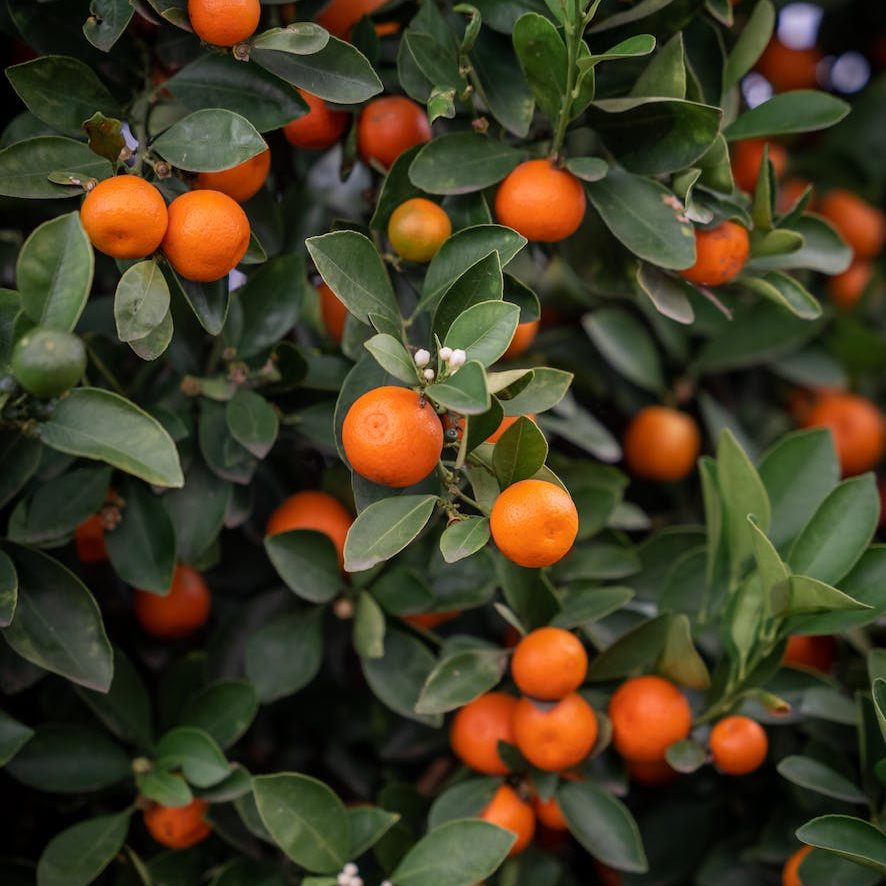
Esteemed for its convenience and delectably sweet citrus flavour, the superb qualities of the Mandarin make it a virtually indispensable addition to any home orchard throughout Australia. Mandarins are one of the original citrus species, alongside Pomelo and Citron, from which the majority of cultivated species, such as Orange, Grapefruit, and Lemon, have been developed as hybrids. With easily peeled skins and neatly separated segments, Mandarins offer a delicious and fuss-free snacking experience, particularly during the cooler months when few other fruits are ripe. Whether eaten fresh, juiced, or preserved in segments, the juicy, flavourful flesh of mandarins is always a treat. The aromatic peel can be dried or zested and is valued for its vibrant flavour. Like all citrus fruits, Mandarins are an excellent source of Vitamin C. With a long history of cultivation, there are a wide range of Mandarin cultivars, from the beloved and widely cultivated, early season Imperial to the tangy, bright orange Afourer Murcott and the late-ripening, juicy Ellendale. For those with space for multiple trees, selecting varieties that ripen from early to late in the season can extend the harvest from Autumn through Spring. In addition to their culinary appeal, Mandarin trees are highly ornamental, boasting glossy, dark green foliage and showy white flowers that emit a delightful scent. They can be shaped and trained according to preference, suitable for espalier, hedge pruning, or left to grow in their natural, spreading form. Mandarin trees typically maintain a rounded crown and can grow between 3 to 7 metres tall on regular rootstocks. However, many varieties are also available on dwarf rootstocks, which limit their height to a more compact 2 metres. Mandarins are adaptable to a variety of climates, thriving with sufficient water and well-draining soil. Hardy to temperatures as low as -6 degrees Celsius, they can flourish in temperate as well as warm temperate and subtropical climates. Satsuma or Japanese Mandarins are particularly suitable for cool temperate climates, reportedly tolerating temperatures as low as -9 degrees. For optimal growth and fruit production, Mandarins prefer slightly acidic, fertile, and well-draining soil, along with ample water during fruiting and flowering seasons. While Mandarin tolerate various soil PH levels and soil types, they should not be cultivated in waterlogged or swampy soils, but thrive with regular, plentiful watering. Like all citrus trees, they thrive in full-sun positions with good airflow, which helps prevent diseases. Mandarin are well-suited to container cultivation, especially when grafted on a dwarf rootstock. Delicious, prolific, hardy, and beautiful, a Mandarin tree is a guaranteed winner for any backyard orchard.
All Varieties are Grafted unless noted. (S) = Seedling. Please reach out to us (Contact & Socials) if you come across any broken links, incorrect details, or if you represent an online nursery that sells the products mentioned above.


 Hortiforum