Vladimir Kosolapov – CC BY 3.0 – Wikimedia CommonsKostka Martin – Public Domain
General Info – Magnolia Berry, Schisandra, Five-Flavour Fruit, Five Flavour Berry, Omija
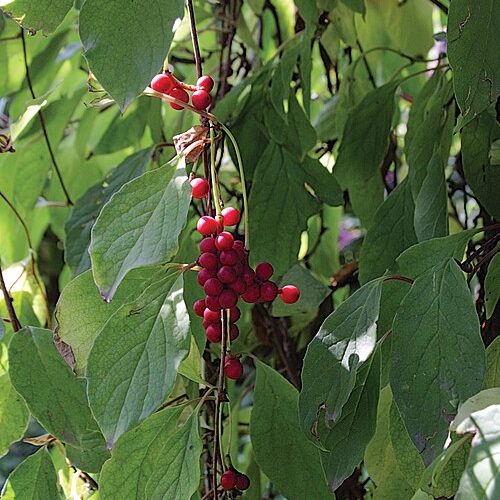
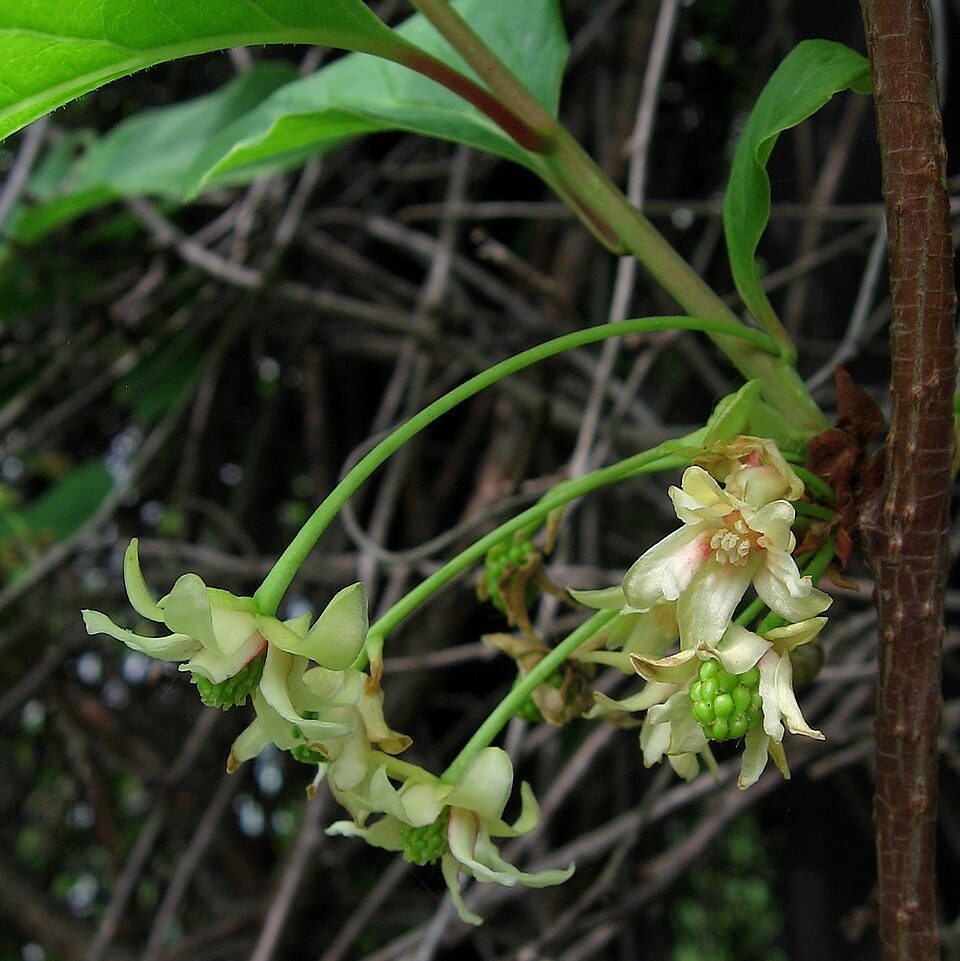
Another common name for the Magnolia Berry is the Five Flavour Berry or Five Flavour Fruit, due to its unique combination of saltiness, sweetness, sourness, spiciness, and bitterness. Magnolia Berry is most commonly used in traditional medicine across East Asia to ease stress and colds, among other numerous health benefits. In Korea, the fruits are used to make Omija-cha, a tea often sweetened with honey or sugar. A fruit punch is also made using the berries and is commonly enjoyed during summer. The fruits can be dried for long-term preservation. It is a member of the Schisandraceae family, along with Kadsura, whose fruits resemble clusters of Magnolia Berries. Native to the cool temperate climates of East Asia, Magnolia Berry is found in the Russian Far East, the Korean Peninsula, Japan, and northern China. Due to the climate of its native habitat, it tolerates harsh, freezing temperatures down to at least -20°C. Magnolia Berry prefers fertile, moist but well-drained soils in a temperate climate. It will tolerate both full sun and partial shade, with full sun generally being more suitable in the cooler parts of its range, while partial shade is better in warm temperate regions that experience intense summer sun. Most sources describe the plant as having moderate resilience to drought, though it is occasionally noted to have poor drought tolerance. A dioecious species, Magnolia Berry typically bears male and female flowers on separate plants. However, some cultivars are bisexual (and therefore partially self-pollinating) and are propagated through cuttings. Prune plants to encourage growth during the warmer seasons. The plant forms a deciduous, twining climbing vine that can be trained along a support structure similar to that used for Grapes, reaching heights of up to 8 metres depending on the structure provided. Its elliptical, glossy, slightly serrated leaves have a lemony scent and contrast attractively with the cream to light pink flowers, which emerge from the leaf axils. The drooping clusters of ripening red-pink berries are strikingly ornamental and highly eye-catching.
Please reach out to us (Contact & Socials) if you come across any broken links, incorrect details, or if you represent an online nursery that sells the products mentioned above.

 Hortiforum