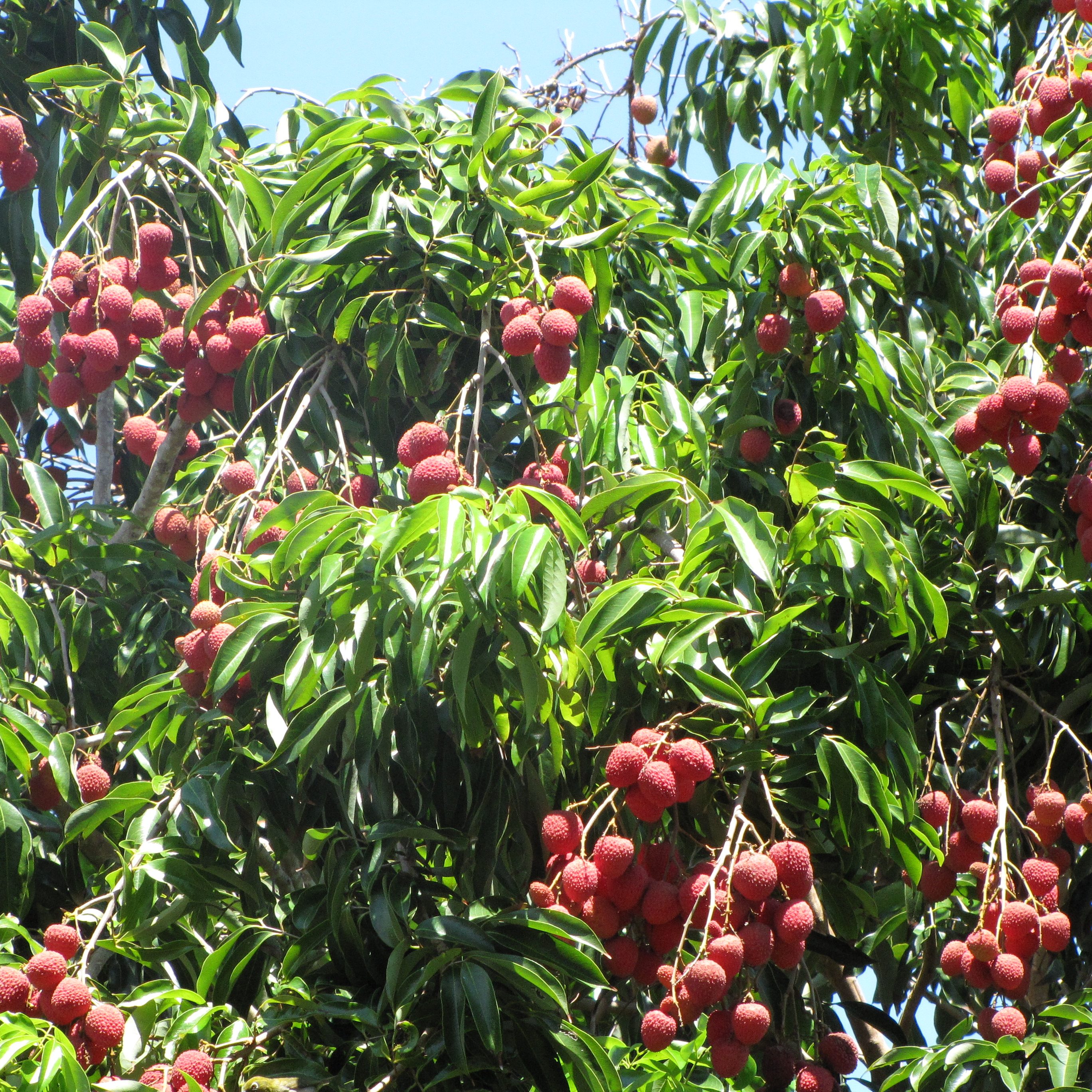
An exceptionally delicious beloved by Chinese emperors, Lychees are a genuine delight for those fortunate enough to cultivate one of the most luscious fruits in the world Ranging in size from that of a Kumquat to a large Strawberry, Lychee fruits boast a distinctive bumpy, red exterior. Beneath this textured surface lies a succulent, translucent pulp bursting with juiciness, offering a delightful blend of sweetness and aromatic essence, reminiscent of floral notes with hints of Grape and Watermelon. While delightful when enjoyed fresh, Lychees also find their way into various culinary creations, including canned in syrup, dried, or incorporated into ice creams, fruit salads, and even transformed into a fruit wine. Lychees must fully ripen on the tree to achieve their full flavour; unripe fruits are toxic and should not be consumed. There are numerous and increasing numbers of cultivars available, ranging from the Salathiel with its minuscule seed, to the massive, bumpy-skinned Erdon Lee, and the early-season, consistent producer Bosworth 3. Originating from the subtropical regions of East Asia, Lychees can succeed in frost-free warm temperate, subtropical and cooler tropical climates (which have mild winters). Optimal fruit production for Lychees occurs in climates with brief, cool, dry periods that encourage the production of floral growth flushes replete with flower buds, similar to the requirements for many Mango cultivars. These cool periods, often mistakenly referred to as chill hours (temperatures between 0-10 degrees Celsius), occur when mean daily temperatures range between 15 to 20 degrees Celsius. In Australia, Lychees are commercially cultivated from Northern NSW up to Cairns in Far North Queensland. Where Lychees fail to experience the required cool periods and instead only encounter warm weather, they will produce vegetative or partially vegetative flushes and, consequently, fail to fruit significantly or at all. In ultra-tropical conditions where cool periods are absent, related fruits such as Rambutan or Pulasan can offer an equally delicious alternative. Lychees are reasonably cold-tolerant during dormancy, reportedly withstanding brief temperatures as low as -4 degrees Celsius. However, climates with consistently cold nights are not suitable, as frosts can damage growth. Frosts should be rare abnormalities rather than defining regular winters. Few places in Australia experience such extreme and sudden cold snaps, but these are more common in Asia and North America, where powerful arctic cold waves can affect otherwise subtropical climates. For subtropical climates and borderline frost-free temperate regions, cultivars like Bosworth 3, Salathiel, and Wai Chee are ideal. Additionally, for those in cooler climates, the Longan stands as a commendable alternative due to its enhanced vigor and tolerance of lower temperatures. The ideal growing medium for Lychee plants is a slightly acidic, well-draining loam or clay-loam soil. Proper drainage is essential to prevent waterlogging, which can harm the plants, while moisture retention is crucial to avoid issues such as fruit drop and browning during dry spells. Partial shade is beneficial during the early stages of growth, but ample sunlight is important once the plants mature. Lychee plants have a poor tolerance for wind and can be easily damaged due to their weak root systems, a result of their marcotted nature. Therefore, they require a sheltered planting location and are not suitable for exposed coastal areas due to their lack of tolerance to salt. Lychee trees gradually develop into ornamental specimens with dense, rounded canopies and lush, lanceolate, glossy green foliage. Depending on the cultivar and propagation method, Lychee plants can reach heights of 5 to 20 metres, with the common marcotted form typically remaining manageable at a height below 5-6 metres. In spring, inflorescences emerge from terminal growth, featuring long panicles of yellowish-cream flowers. A long-lived and fruitful tree, Lychee demands meticulous care but rewards growers with bountiful harvests of this otherwise costly delicacy, thriving in a surprisingly diverse array of climates.
All Varieties are Marcots unless noted. Please reach out to us (Contact & Socials) if you come across any broken links, incorrect details, or if you represent an online nursery that sells the products mentioned above.


 Hortiforum