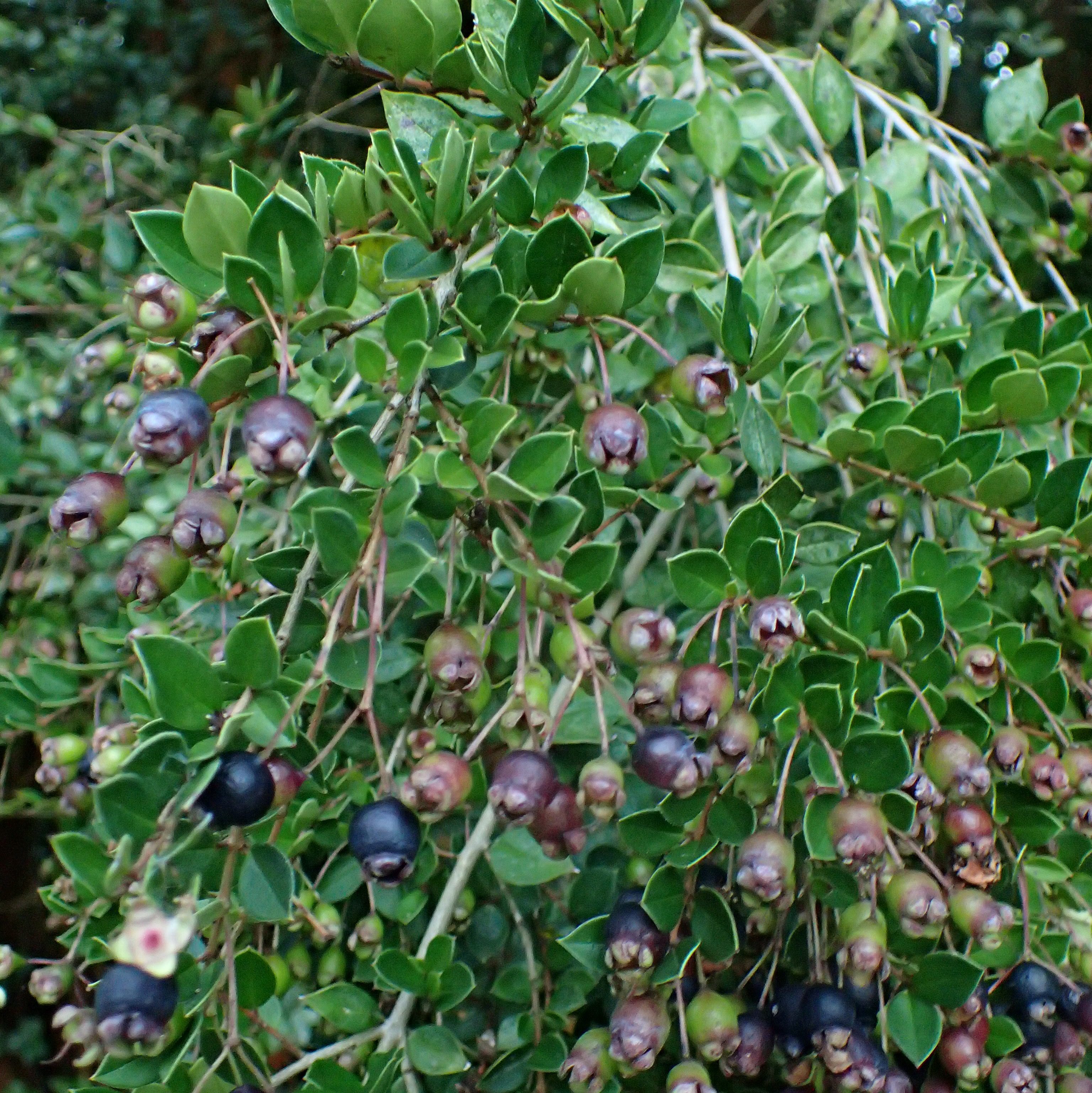
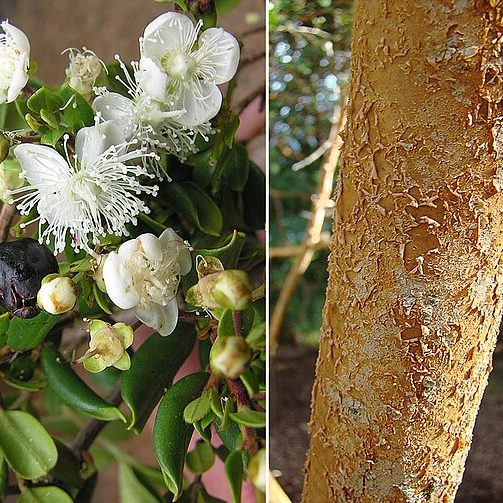
A striking ornamental, evergreen specimen well-suited to temperate climates, the Luma, also known as the Chilean Myrtle or Temu, originates from the temperate mountains of Chile and Argentina. Luma are a member of the Myrtaceae family, and produce small, red to purple, Guava-like berries, being particularly similar to the Cherry Guava which they are related to. These berries are widely appreciated throughout their native range due to their pleasant taste, likened to Blueberries and Strawberries. Fruits are not only delectable when consumed fresh but can also be utilised in the creation of jams and sauces. Plants are also natively cultivated for their flowers which are prized in Honey production. Luma is an interesting and tasty berry that will be rarely found outside its native range but can be cultivated in your own backyard. While the Luma is indeed a reliable producer of tasty fruit, it is more commonly cultivated for its captivating ornamental qualities and resilience to diverse conditions. Luma plants exhibit remarkable adaptability and can be cultivated as specimen trees, hedges, topiaries, or for screening purposes, displaying aesthetic appeal in all applications. The leathery, dark green leaves release a delightful spicy aromatic scent and serve as a perfect backdrop to the clusters of waxy, white flowers that bloom in summer. However, the true allure of this multi-trunked tree lies in its Cinnamon brown coloured twisting trunks and branches, which shed to reveal a stunningly contrasting beige and cream stem. Luma typically attains mature heights ranging from 5 to 10 metres. Native to the temperate, evergreen forests of Southern Chile and Argentina, the Luma is a dynamic and hardy addition to a temperate garden while providing beauty across the year. Luma are highly frost tolerant, suitable for both warm temperate and cool temperate climates across Australia and have even been cultivated in coastal parts of the British Isles. Luma plants tolerate a variety of soil structures, provided they are well-drained and moderately fertile. They can thrive in regions with low to moderate rainfall, and they exhibit tolerance for both full sun and partial shade. Once established, Luma trees are drought-hardy and can withstand moderate maritime exposure. Chilean Guava is likewise native to Southern Chile and thrives in similar conditions while being a smaller plant. Luma trees make a splendid addition to any temperate garden, enhancing both ornamental and productive landscapes with their award-winning beauty and versatility.
Please reach out to us (Contact & Socials) if you come across any broken links, incorrect details, or if you represent an online nursery that sells the products mentioned above.

 Hortiforum