General Info – Kiwi Berry, Hardy Kiwi, Baby Kiwi, Dessert Kiwi, Tara Vine, Cocktail Kiwi
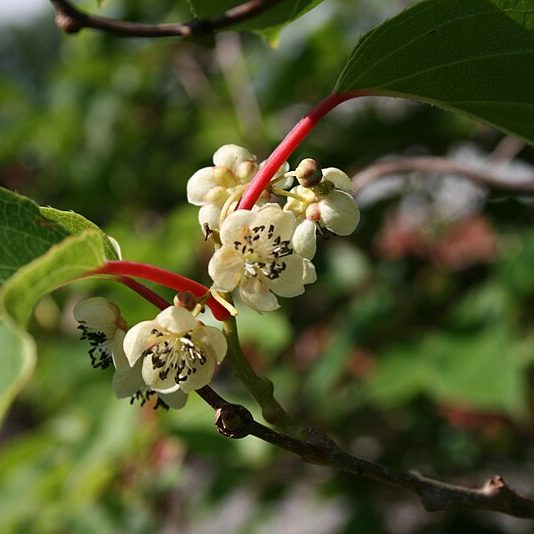
The Kiwiberry, known for its hardiness, rapid growth, and availability in self-pollinating varieties, is a superb climbing vine suitable for diverse climates. Kiwiberry vines yields adorable, petite green-red berries, resembling miniature Kiwifruits although generally without fuzzy skin. Ripening in mid-autumn, these fruits are abundant in Vitamin C, offering a flavour akin to traditional green Kiwifruit but with an added sweetness. Kiwiberry are delightful when consumed fresh, skin and all, but can also be processed into jams. Although naturally dioecious, numerous self-pollinating varieties now exist, granting them the ability to pollinate themselves—an advantage over Kiwifruit, which requires does not yet have self-pollinating varieties available (noting that female Kiwiberry vines can be pollinated by male Kiwifruit vines). Kiwiberry plants exhibit moderate tolerance to partial shade and soils spanning from acidic to alkaline. However, they flourish best in neutral, well-draining soils, ideally positioned in full sun and shielded from harsh winds. Kiwiberries surpass Kiwifruits in cold hardiness and demand fewer chill hours, rendering them well-suited for temperate and cool subtropical climates alike, a greater versatility for gardeners than its better known relative. Kiwiberries are a deciduous vine that freely and rapidly climbs along support structure such as a trellis. Characterised by large, dark green leaves supported by red stalks, vines adorn themselves with clusters of delicately fragrant, white flowers that emerge in early Summer. Due to their rapid growth, regular pruning may be required to manage excess growth. Enduring various climates and requiring minimal effort to cultivate, Kiwiberry presents an excellent substitute for Kiwifruits in regions with marginal climates or limited space for growing male and female plants.
Please reach out to us (Contact & Socials) if you come across any broken links, incorrect details, or if you represent an online nursery that sells the products mentioned above.


 Hortiforum