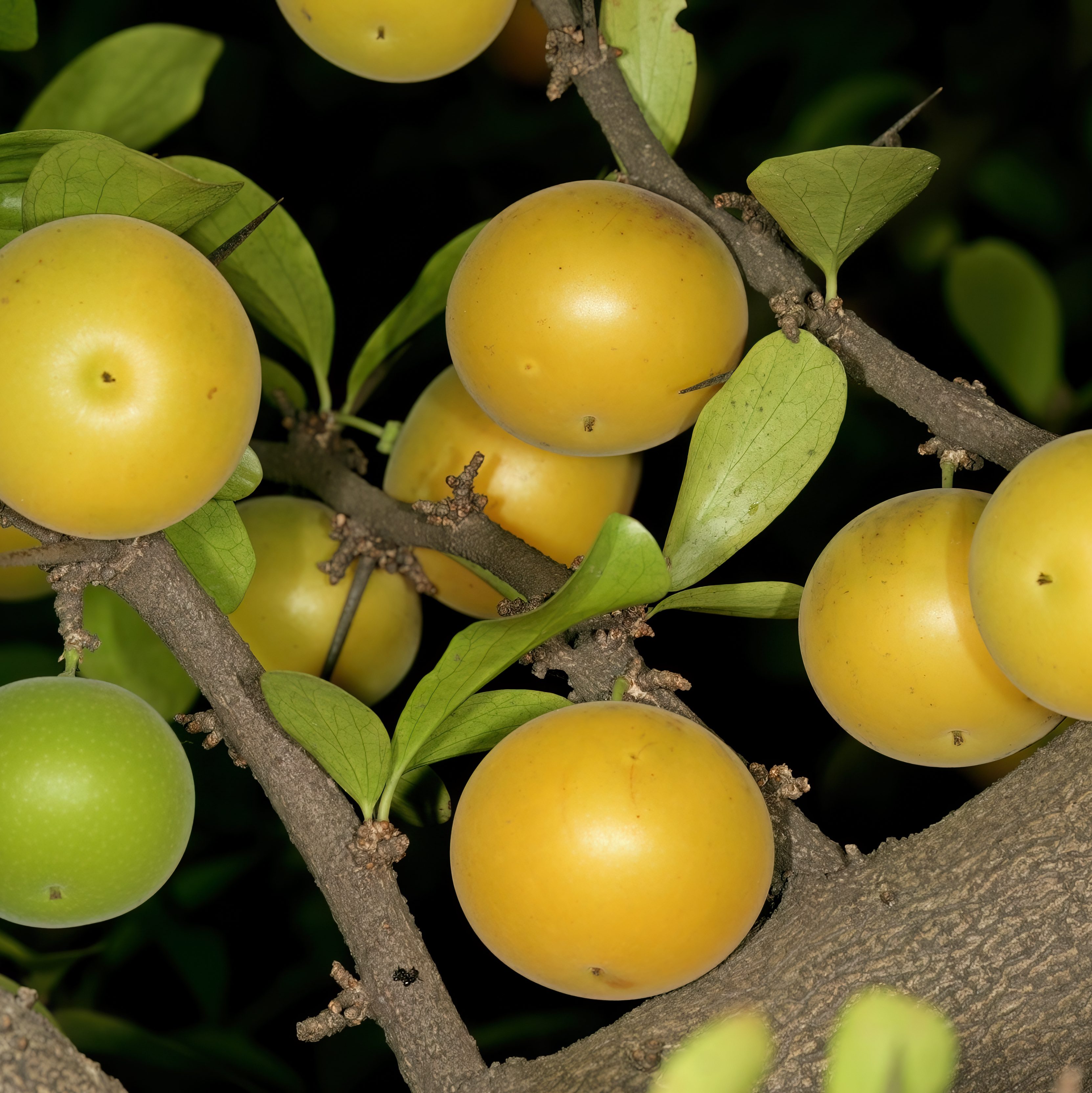
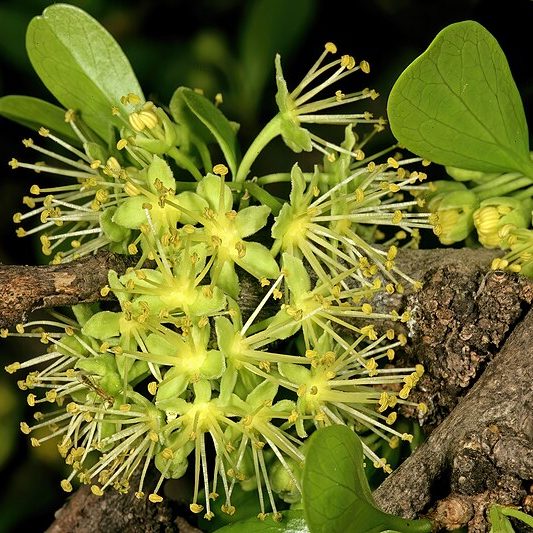
Native to Southern Africa, the Kei Apple thrives as an exceptional edible hedge, resilient in various conditions, including warm temperate climates. The light orange, Plum-sized fruits boast a velvety, thin skin encasing a soft, ultra-juicy pulp. Sub-acidic, aromatic and succulent, its delightful flavour often draws comparisons to a juicy Apricots. The abundant yield of delicious fruits are enjoyable both fresh, by themselves or sprinkled with sugar to neutralise any tartness, or processed into a range of preserves, to which their pectin-rich pulp is well-suited. The fruits can also be simmered down into a savoury sauce, ideal for pairing with meats, or transformed into a delectable filling for pies, cakes, and pastries. Notably low maintenance, Kei Apples remain unfazed by various conditions, enduring cooler winters, harsh summer heat, and drought with ease. Although natively Subtropical and thriving in these climates, Kei Apple tolerate frost and freezing temperatures down to -3 degrees (-6 degrees reportedly). They tolerate various soil types provided they are well drained, but prefer a slightly acidic, loam soil. Kei Apple are best cultivated in full sun, although light shade is tolerated, and can be used in coastal landscaping due to their wind tolerance and tolerance of both saline soils and salt spray. An effortless plant to cultivate, Kei Apple require minimal maintenance and irrigation. Sporting formidable, large thorns throughout the shrub, the Kei Apple also serves admirably as a security hedge, albeit requiring caution during pruning. Plants form a dense shrub, reaching heights of up to 6 metres, adorned with creamish-green flowers that emerge from late spring to early summer. Kei Apples are dioecious, meaning they bear male and female flowers necessary for pollination on separate plants. Kei Apple may become a noxious weed in many parts of Australia due to its hardiness and the readiness of its seeds to sprout, it is a known weed in Greater Sydney and the North Coast and South East of New South Wales. Thus, potential growers should carefully consider this aspect before planting, referring to the Weed Risk section in the Disclaimer Page for more information.
Please reach out to us (Contact & Socials) if you come across any broken links, incorrect details, or if you represent an online nursery that sells the products mentioned above.

 Hortiforum