Rotational – Public domain – Wikimedia CommonsSAplants – CC BY-SA 4.0 – Wikimedia CommonsSAplants – CC BY-SA 4.0 – Wikimedia Commons
General Info – Kaffir Plum, Kaffar Plum, South African Wild Plum, Wild Plum
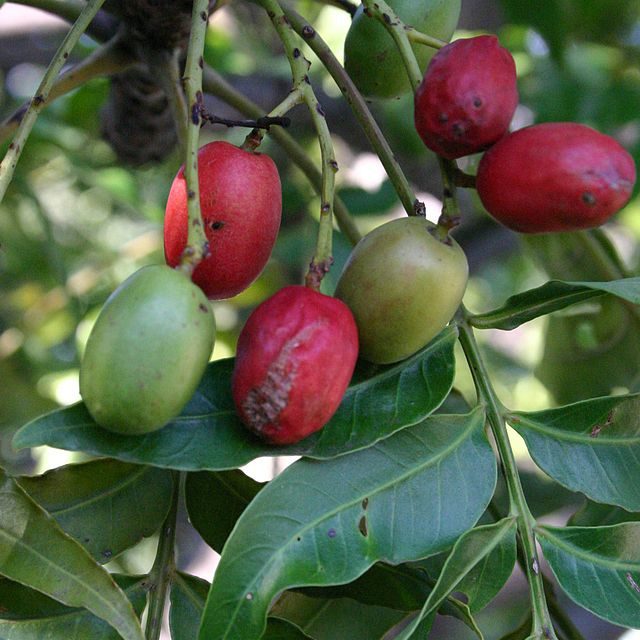
Native to the subtropics of Southern Africa, the Kaffir Plum is an exceptional and uncommon fruit tree from a region often overlooked. The flavour profile of Kaffir Plums is a delightful blend of tartness and sweetness reminiscent of Mangoes, Grapes, and Blackcurrants. Though the flesh-to-seed ratio may be less than ideal, the delicious taste compensates for it. Enjoyed fresh as a flavorful snack, these fruits can also be fermented into traditional African wine or transformed into delicious jam. The Kaffir Plum is a member of the Anacardiaceae family and therefore a relative of the Mango, Cashew Nut, Marula and Red Mombin, the latter of which has fruits very similar in appearance. Resilient to various conditions and boasting a compact, elegant growth habit, the Kaffir Plum serves as a captivating and low-maintenance asset to any garden. Kaffir Plum typically develops into a small to medium-sized tree, ranging from 5 to 12 metres in height, although specimens reaching up to 15 metres have been observed. Kaffir Plum form a dense canopy excellent for providing shade, which can be easily managed to the desired height through regular pruning. The oppositely arranged leaves have an attractive form, with new growth having a glossy, red shine. The Kaffir Plum produces striking and prominent inflorescences that emerge from terminal growth, closely resembling Mango inflorescences in both nature and appearance. Once established, Kaffir Plum are highly drought-tolerant, requiring minimal additional watering in subtropical and tropical climates once established. Kaffir Plum tolerate a range of soils provided they are well-drained, including dry and infertile soils, but will thrive in a loam soil. A full sun position and a location sheltered from damaging strong winds is ideal. Kaffir Plum may tolerate a light, brief frost in a subtropical climate once fully established but should be cultivated in a frost free environment. Kaffir Plum are excellent at attracting pollinators such as butterflies, but are dioecious in nature, requiring both male and female plants are necessary for pollination, although there are reportedly self-pollinating specimens. As an ornamental rarity, Kaffir Plums add charm and uniqueness to subtropical gardens.
Please reach out to us (Contact & Socials) if you come across any broken links, incorrect details, or if you represent an online nursery that sells the products mentioned above.



 Hortiforum