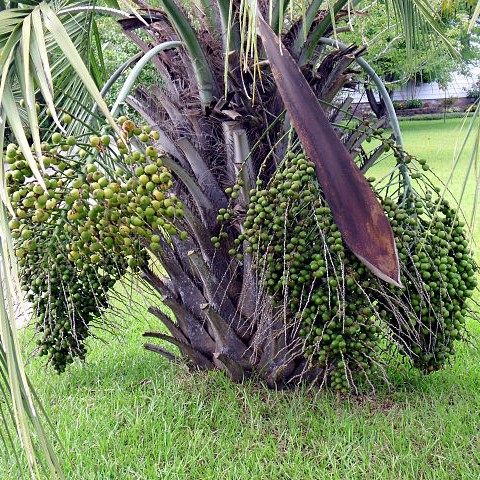
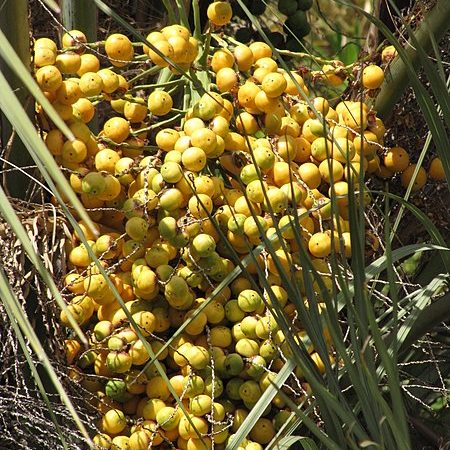
The Jelly Palm, also known as the Wine Palm, is a highly ornamental and resilient plant that thrives in nearly all conditions, making it an exceptional choice for gardens seeking a tropical ornamental and delectable palm fruits. With a maximum height rarely exceeding 6 metres and fruit clusters hanging at accessible levels, the Jelly Palm combines a striking presence with practical manageability. The Jelly Palm, boasting a lifespan of over 20 years while maintaining productivity, stands out as a eye-catching specimen in any garden setting. Palms can serve as a striking standalone specimen, transformed into a tropically, iconic row of palms, or for contrasting the unique palm aesthetic beautifully against low-lying shrubs or trees like the Ceylon Hill Gooseberry, Chilean Guava, Dwarf Coffee, or Midyim Berry. Jelly Palms feature a thick, stout trunk up to 0.5m in diameter, adorned with the stubs of old, fallen leaves remaining visibly. The lengthy, pinnate fronds display a distinctive curvature, gracefully arching before gently drooping down. At the center of the crown, sizable, creamy-yellow inflorescences emerge, adding to the palm’s unique visual appeal. Palms exhibit resilience to various environmental challenges, including drought, wind, salt, and poor soils, making them adaptable to a wide range of conditions. However, they will not usually thrive in cool, wet conditions . For optimal growth, well-draining soil is crucial such as a sandy-loam soil, ensuring the health of plants and the development of a robust root system. Mature Jelly Palms demonstrate tolerance to arid conditions and drought. The Jelly Palm can often be confused with Butia Odorata, which is amongst the cold-hardiest of the Butia genus and feather palms, tolerating up to -10 degrees and with a similar tasting fruits. The Jelly Palm itself is not particularly cold-hardy but will be suitable for warm temperate climates with occassional, light frosts. The Jelly Palm is known for its prolific fruit production, yielding hanging clusters of small, Cherry-sized fruits that mature into a stunning golden-reddish hue. The fruits are characterized by their fibrous texture and juicy, aromatic flesh, offering a delightful flavour reminiscent of a Pina Colada with a taste profile includes strong notes of Pineapple, complemented by hints of Apricot, Banana, Vanilla and Coconut. Beyond their delectable taste, these fruits are versatile ingredients, often transformed into delicious jellies or jams and utilised as flavourful additions to beverages. Given their impressive cold hardiness, the Jelly Palm is as an ideal choice for those seeking an ornamental tropical plant that not only enhances the aesthetic appeal of the garden but also provides a taste of the tropics.
Please reach out to us (Contact & Socials) if you come across any broken links, incorrect details, or if you represent an online nursery that sells the products mentioned above.

 Hortiforum