General Info – Jaboticaba, Jabuticaba, Brazilian Grape
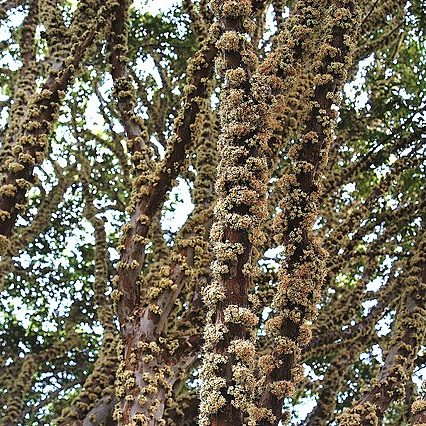
An ornamental spectacle and a prolific producer of delicious Grape-sized fruit, the Jaboticaba has quickly established itself as one of the most exciting edible fruit trees, and for good reason. Fruit The grape-sized fruit have a thin but tough, glossy skin that can be easily pierced to reveal a translucent, sweet, juicy flesh similar to that of a Grape, although with a larger seed inside. The taste of Jaboticaba varies between species, but it is commonly compared to that of a Fox Grape, Muscadine Grape, or Lychee. Jaboticabas are commonly eaten fresh by piercing the skin and sucking out the aromatic pulp inside. The fruits are also delicious when processed into juices, jams, and jellies, while for the more adventurous, they can be transformed into a remarkable sweet, dry wine. Gardeners looking to preserve excess harvest or unsure which way to preserve their harvest will be pleased to know that Jaboticabas are well-suited for freezing. “Jaboticaba” can refer to a range of species in the Plinia genus, many of which are available for cultivation and have wonderful features, as will be summarised below. This article will focus more specifically on Plinia cauliflora, often known as the Sabara Jaboticaba, for those familiar with the various species and wishing to differentiate them. The Sabara is among the most dynamic and hardy of the Jaboticabas and should generally be the first choice for gardeners, although it does have one of the longest times to fruiting among Plinia species. Other available species include the ‘Giant Jaboticaba,’ named aptly for its golf ball-sized fruits and larger, elongated foliage; the ‘Red Hybrid,’ which produces vibrant red fruits and has a natural dwarfing form, impressively beginning to fruit in as few as three years; the ‘Costada,’ which also has a dwarf form and reportedly fruits within only two years, yielding deliciously sweet, dark maroon fruits; the ‘White’ Jaboticaba produces distinct, white to pale green fruits with a unique flavour with hints of honey. Cultivation Jaboticabas are native to the rich, slightly acidic loam soils of southeastern Brazil and thrive in conditions that replicate these soils. Jaboticaba are sensitive to iron deficiencies, which can be addressed through applications of chelated iron. Jaboticaba require excellent drainage and full sun for optimal production, though they will also grow well under light shade, particularly in climates with scorching summer heat. Upon flowering and fruiting, provide plants with plentiful watering to ensure maximum fruit set and high fruit quality. Jaboticabas often produce two crops a year and can fruit even more frequently in ideal conditions. Appearance Jaboticabas are spectacular fruiting trees with a swirling, multi-trunked base that becomes profusely covered in sweet-smelling, white flowers, followed by striking black, Grape-like fruits that adorn the trunks and stems—a cauliflorous fruiting habit. Jaboticaba can take on either shrub or tree form, reaching heights of up to 10 metres, with a handsome, rounded crown of dense foliage. The evergreen, lanceolate leaves grow oppositely along the stem and are particularly beautiful when the soft, new growth emerges, transitioning through a stunning rainbow of colors from light pink to copper, pale yellow, and finally light green. The ornamental peeling bark ranges from beige to reddish-brown. Jaboticaba are dynamic ornamental trees, perfect as either large centerpieces, kept to a manageable size as dooryard trees, or pruned into a hedge form. They are excellently suited for container cultivation, happily fruiting within them, with dwarf Jaboticaba varieties being especially ideal. A must-have for any garden, the Jaboticaba serves as a centerpiece tree that rewards owners with both bountiful beauty and fruit.
All Varieties are Seedlings unless noted. (C) = Cutting, (G) = Grafted. Please reach out to us (Contact & Socials) if you come across any broken links, incorrect details, or if you represent an online nursery that sells the products mentioned above.


 Hortiforum