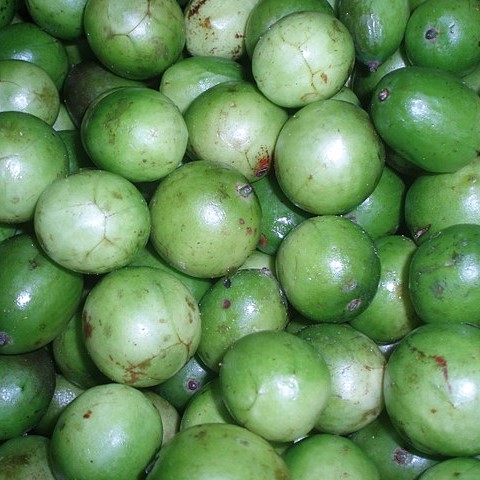
Daniele Gidsicki – CC BY-SA 2.0 – Wikimedia Commons
General Info – Imbu, Brazil Plum, Umbu
Native to the northeast of Brazil, the Imbu is an excellent choice for gardeners in arid tropical regions or those experience highly seasonal rainfall. Imbu are primarily native to an area of Brazil known as the ‘Caatinga’, consisting of shrubland and deciduous forests adapted to the hot, semi-arid conditions and highly seasonal rainfall. Imbu plants have high drought tolerance and are largely undemanding when it comes to additional watering, thriving in semi-arid, savanna climates with distinct and prolonged dry seasons. This tolerance is faciliated by the roots of the Imbu, which store large reservoirs of water, essential for their survival during drier months. In periods of low rainfall or cooler weather, the plants will become deciduous, further reducing moisture loss. However, as the dry season concludes, the trees burst into flower and foliage, creating a dense leaf canopy that provides protection from the intense sun. Imbu plants prefer well-drained, neutral pH soils and thrive in full sun. Highly fertile soils are not essential although they should not be shallow or rocky. Though inherently a tropical tree, the Imbu displays adaptability to subtropical conditions and potentially thrives in frost-free, warm arid, or temperate climates. Notably, it has shown tolerance only to brief, light frosts in Florida. The fruits, resembling those of other Spondias varieties like Ambarella and Red Mombin, are medium-sized and green when ripe. Imbu fruits are juicy, sweet and aromatic with a delightful touch of tartness similar to an Orange. Commonly consumed fresh, fruits are also utilised in preserves and beverages, such as the popular Brazilian Imbuzada which is made of Imbu fruit juice together with sweetened milk. Imbu are both common and popular in local markets within their native region, with wild Imbu often gathered for consumption. Imbu trees generally attain a height of up to 5m, featuring a wide-spreading crown, with plants often being wider than taller. Despite their modest height and due to their spreading form, Imbu yield abundant quantities of fruits once mature. Although not as visually striking as evergreen trees like the Olive or Date in arid climates, the Imbu compensates with its stunning display of white-petalled flowers and lush green foliage that emerges at the end of the dry season, reminiscent of the blossoming beauty seen in Plum or Cherry trees. Excellently adapted to the challenging conditions of harsh semi-arid and savanna tropical and subtropical climates, the Imbu is cherished in its native region for its ability to bear fruit prolifically and provide much-needed dense shade.
Where to Purchase – Online Nurseries (Australia Only)
Nursery
Imbu – No known sellers, if you’re an online nursery selling this product get in contact!
Please reach out to us (Contact & Socials) if you come across any broken links, incorrect details, or if you represent an online nursery that sells the products mentioned above.

 Hortiforum