General Info – Imbe, African Mangosteen, Lowveld Mangosteen
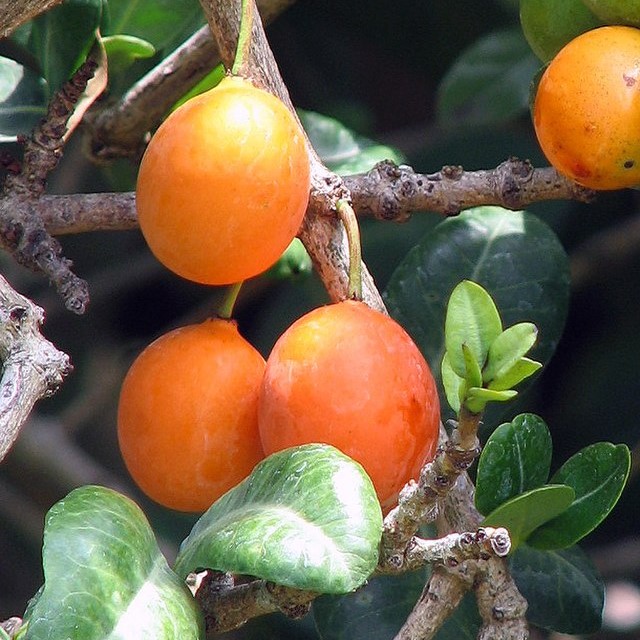
One of the most promising African Garcinia species and wild fruits, the Imbe, thrives in a wide range of conditions, yielding a sweet, delicious fruit. The attractive orange fruits are roughly the size of a small plum, with thin skin and watery but pleasant pulp. The flavour is sweet and tart, reminiscent of Apricot, Citrus, and Peach. Despite having a tender skin and a poor flesh-to-seed ratio, these fruits are excellent eaten fresh, made into preserves, added to drinks, or fermented to create alcoholic beverages. While not a Garcinia suitable for commercial cultivation like the Purple Mangosteen or Achacha, these flavourful fruits are borne in great abundance and are well-suited to home cultivation. Imbe is adaptable to various conditions, with a vast native range extending across Tropical Africa from Senegal to Somalia and South Africa. Imbe thrives across a range of habitats, from riverine woodlands to coastal forests. Notably, plants are particularly well-suited to coastal environments with excellent wind and salt tolerance, along with an ability to endure sandy soils and moderate drought. Sandy loam soil is ideal and should be slightly acidic to neutral, as deficiencies can occur in slightly alkaline soils. Full sun is optimal for growth and production, despite part shade being tolerated. While tolerant and adaptable to many tough conditions, Imbe is sensitive to cooler temperatures and will withstand only brief exposures to freezing temperatures once mature. Imbe is suitable and will crop well in frost-free coastal areas as far south as Perth or Sydney. Aside from sensitivity to cold, Imbe is a hardy, slow-growing species, and once established, it requires minimal maintenance other than picking the tasty fruits. A vital addition for any Garcinia collector, the Imbe stands out as one of the more unique species within the genus, exhibiting variable growth patterns that can range from a dense shrub up to 3m tall to a conical tree nearing 5m. Regardless of its form, under ideal conditions, the Imbe transforms into a distinctive and attractive ornamental specimen, featuring striking flushes of red new growth and the ability to form a dense hedge. The dark green leaves are both leathery and glossy, while the small yellowish flowers are borne in great abundance along stems. Imbe is dioecious, meaning that (with some uncommon exceptions) plants bear either male or female flowers and require cross-pollination for effective pollination and fruit set. As a result, gardeners should acquire at least two plants and potentially more to ensure both male and female plants are present; to this effect, they are well-suited to creating a dense, fruiting hedge. With its alluring, tasty fruit and unique, exotic plant qualities, the Imbe is a must-have for Garcinia collectors or anyone with a passion for fruits from around the globe.
Please reach out to us (Contact & Socials) if you come across any broken links, incorrect details, or if you represent an online nursery that sells the products mentioned above.


 Hortiforum