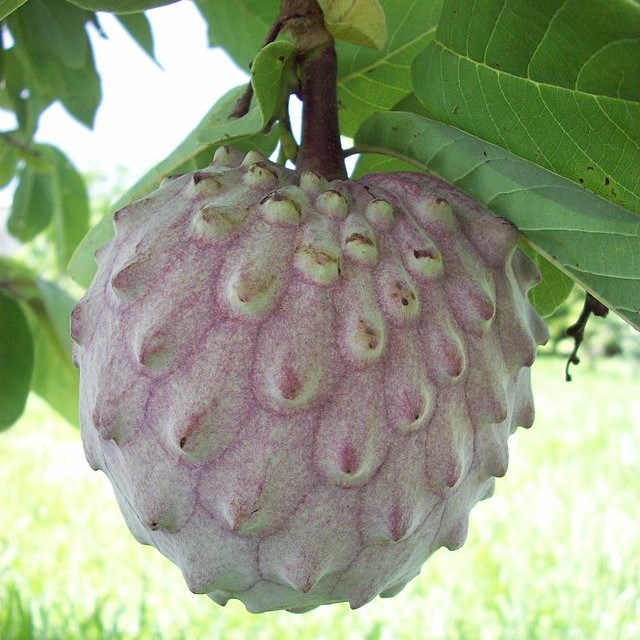
Native to the tropical lowlands of Central America, the Ilama stands out as one of the few genuinely tropical Annonas, thriving in the sweltering heat and humidity of the true tropics. The fruit of Ilama shares similarities with other Annonas, but its thicker skin provides resistance against pests. In terms of taste, Ilama is often comparable to other Annonas but is widely recognized as superior to its counterparts with a sweet, creamy, aromatic flesh. Ilama fruit are commonly seperated into either a light green variety with a very sweet, white flesh and a pink-red variety with a vivid, rose tinged flesh with a more acidic but creamy flesh described as having a slight Strawberry flavour. Fruits are commonly enjoyed on their own, either chilled or fresh, but they also make delightful additions to beverages and desserts. Fruits can tend to split open when perfectly ripe. Ilama are closely related to other Annonas, such as Cherimoya, Sugar Apple and the Mexican Custard Apple. However, it distinguishes itself by displaying greater tolerance for lowland tropical conditions, including intense heat, unrelenting humidity, and variable rainfall, but it is less accommodating to cooler temperatures, intolerant of anything below 0 degrees Celsius. Ilama thrives in climates with distinct wet and dry seasons, making it particularly well-suited to tropical savannas and monsoon climates. A fertile, sandy loam soil with a neutral PH is ideal, although slightly acidic and slightly alkaline soils are also tolerated. Ilama become a medium sized tree up to 8m tall with a spreading crown. Foliage is distinctly Annona like, being glossy and clearly veined, while the simple three petal flowers are pinkish to red. For those residing in lowland tropical climates with variable, seasonal rainfall, Ilama stands out as the superior choice.
Please reach out to us (Contact & Socials) if you come across any broken links, incorrect details, or if you represent an online nursery that sells the products mentioned above.

 Hortiforum