Burkhard Mücke – CC BY-SA 4.0 – Wikimedia CommonsAlejandro Bayer Tamayo – CC BY-SA 2.0 – Wikimedia Commons
General Info – Ice-cream Bean, Joaquiniquil, Guama
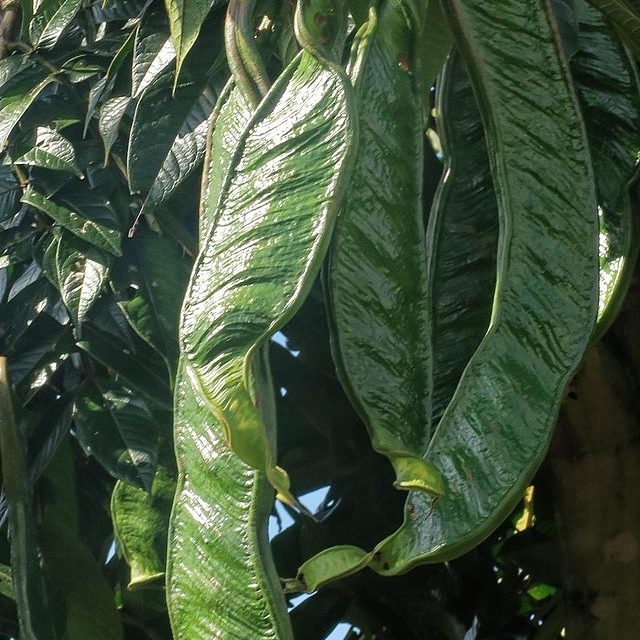
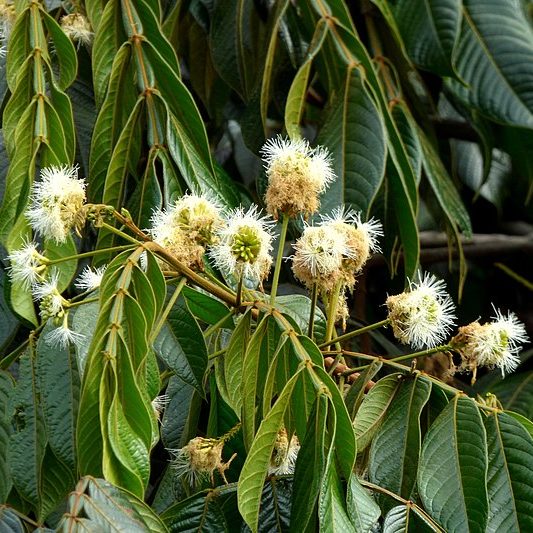
One of the most distinctive fruiting trees, the Ice-Cream Bean earns its name from its bean-like pods, which are filled with a remarkably sweet, juicy white pulp reminiscent of Vanilla ice cream and a faint Cinnamon flavour. This delectable pulp is best savoured fresh or used to flavour desserts. In Colombia, it is traditionally employed to craft an alcoholic beverage known as Cachiri. Ice-Cream Bean pods can attain remarkable lengths, although they are commonly considerably smaller. The large black seeds are abundant but inedible when raw, yet they become edible once cooked. Ice-Cream Beans belong to the Fabaceae family, along with other similar fruits such as Carob, Tamarind, and Nam Nam. The fruit “Ice-Cream Bean” refers to several cultivated Inga species, including Inga edulis, which has the longest pods, and Inga feuilleei and Inga densiflora, both of which produce shorter pods. Ice-Cream Bean are vigorous growers, capable of reaching heights of up to 30-40 metres in their native habitat, although they typically reach 10-20 metres in less optimal conditions. Hardy against wind, drought, and poor drainage, mature Ice-Cream Bean trees can withstand temperatures as low as -4 degrees Celsius. Cropping is abundant and can occur year-round in tropical climates. Plants tolerate relatively infertile and acidic soils but will strongly prefer a full sun position. Additionally, as nitrogen fixers and with a broad protective canopy, Ice-Cream Beans serve as ideal companion plants for smaller species like Coffee, offering protection from both sun and wind. However, their prolific sprouting from mass-produced crops can lead to invasiveness, necessitating careful consideration of environmental risks before planting in vulnerable areas. With their broad, spreading canopy and dark green, pinnate leaves arranged oppositely along stems, Ice-Cream Beans are a handsome tree. Their flowers, differing from many other Fabaceae, bear moreso a resemblance to those of Myrtaceae species such as Guava or Wax Jambu, featuring a profusion of white stamens reminiscent of Pom-Poms. These fragrant, eye-catching flowers are abundantly produced and attract numerous insects. Ice-Cream Beans present an ideal choice for those seeking an evergreen, ornamental shade tree with a prominent canopy that yields copious quantities of delectable, sweet fruit.
Please reach out to us (Contact & Socials) if you come across any broken links, incorrect details, or if you represent an online nursery that sells the products mentioned above.

 Hortiforum