General Info – Strawberry Guava, Cherry Guava, Cattley Guava
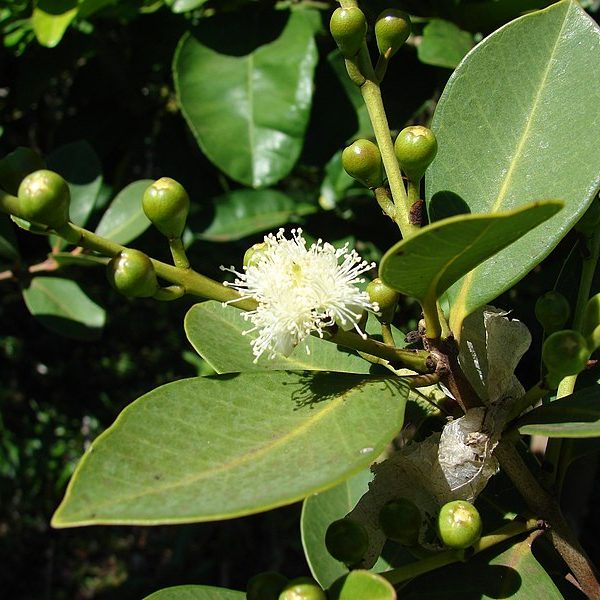
Robust, resilient, and versatile, the Strawberry Guava stands out as one of the most accessible fruiting trees to cultivate across tropical, subtropical, and warm temperate climates. These trees are prolific producers of dark red, cherry-sized fruits with a juicy sub-acidic pulp, boasting a delightful fusion of Guava and Strawberry flavours. Beyond being a delicious and nutritious fresh snack, Strawberry Guavas lend themselves exceptionally well to crafting superb jams, syrups, and incorporating into ice creams and cakes. The fruits, containing many hard seeds and having a limited post-picking shelf life, are well-suited for processing where these attributes pose no issue. Tolerant to a variety of conditions, including moderate to strong winds, moderate salt exposure, acidic, alkaline and infertile soils, partial shade positions, and moderate drought, these hardy traits make Strawberry Guavas suitable for a wide range of environments and climates. Distinguishing itself as more cold-hardy compared to other Guava varieties, the Cherry Guava can withstand temperatures as low as -5 degrees for brief periods without sustaining damage. This resilience enables it to thrive as far south as Melbourne and potentially in more temperate climates in Tasmania. However, it’s essential to note that these same properties can make Strawberry Guavas potentially invasive with plants vigorously outcompeting the understory of forests. In tropical and subtropical climates, Strawberry Guavas have become highly invasive such as in Hawaii and parts of Queensland and New South Wales. Regardless of potential invasiveness, it is advisable to net trees as birds will actively pilfer fruits and disperse seeds. The adaptability of Strawberry Guavas to pruning allows them to take on the form of either an edible hedge or a small tree. Maturing into small trees with heights ranging from 1-4 metres, Strawberry Guavas display a dense form, with outer layers of reddish-brown bark that attractively peel away to reveal fresh grey bark. The oval-shaped, pointy leaves are dark green, featuring a shiny surface and smooth edges. The flowers, akin to other Myrtaceae members, boast prominent white stamens, contributing to the overall ornamental appeal of the plant. With its dynamic and vigorous nature, adaptability to various conditions, and suitability for cooler climates, the Strawberry Guava presents itself as a unique and excellent option, provided careful consideration is given to its potential invasiveness in certain regions.
Please reach out to us (Contact & Socials) if you come across any broken links, incorrect details, or if you represent an online nursery that sells the products mentioned above.


 Hortiforum