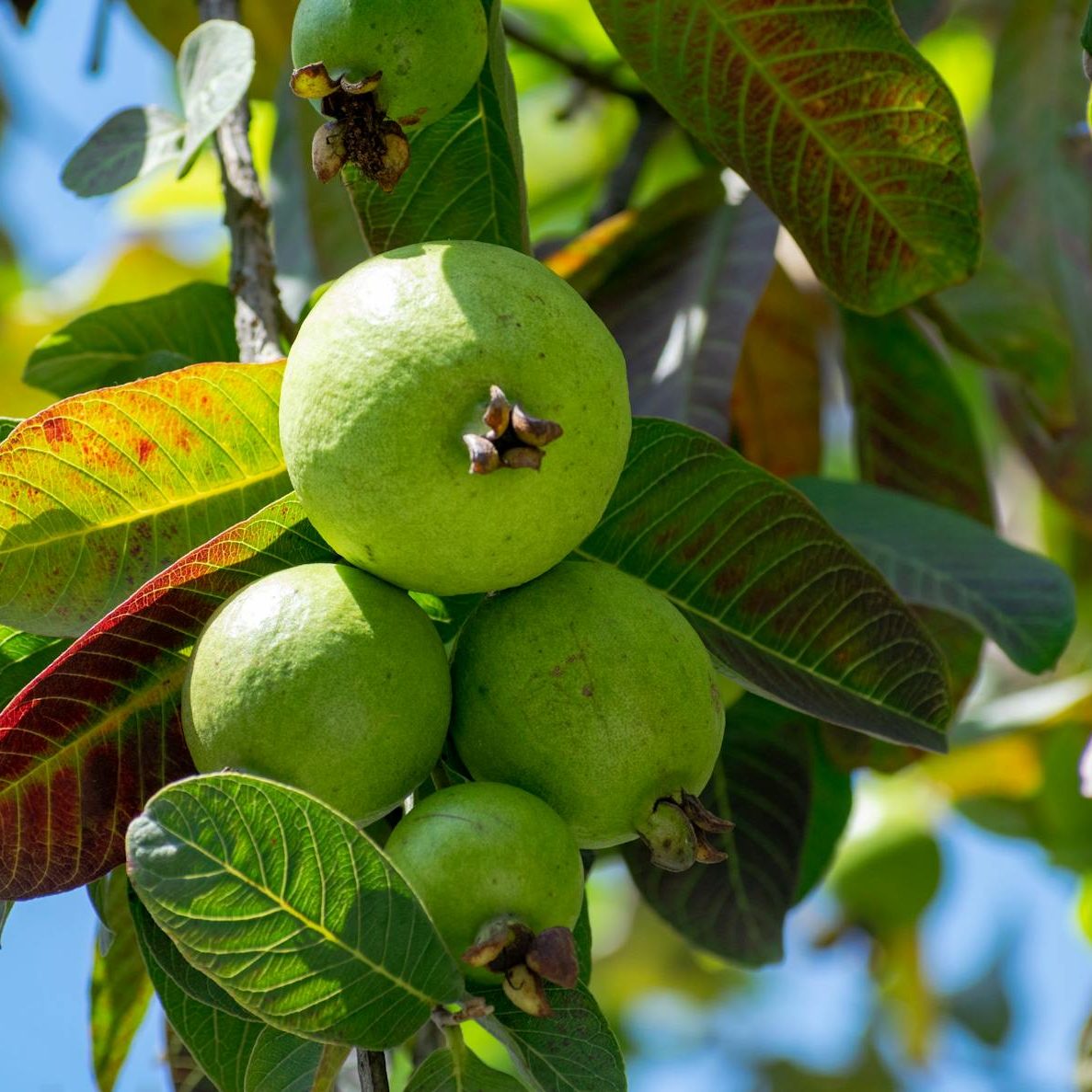
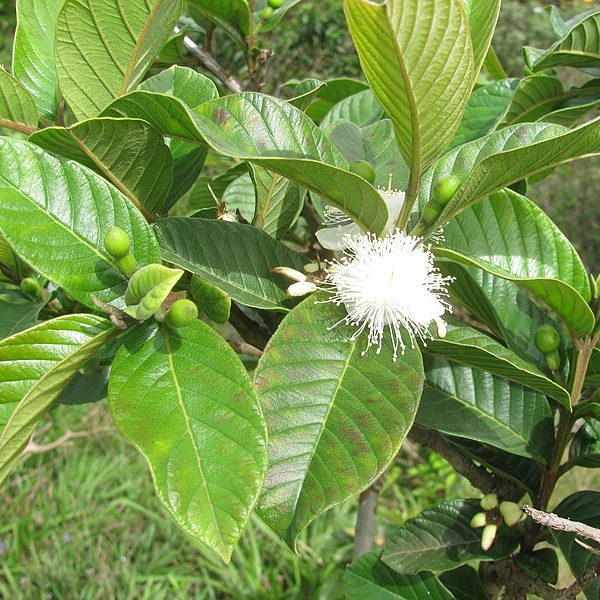
One of the most popular fruits globally and extensively cultivated across all tropical and subtropical regions, Guava are an excellent, ornamental edible addition to any garden. Due to their widespread cultivation, a variety of Guava types are available, each exhibiting distinct, attractive characteristics. For instance, the Ruby Red variety boasts bright red, sweet, and juicy flesh, while the Starlings White variety features crisp, white flesh and the Mexican Cream has creamy, white, sweet flesh and minimal seeds. Guava are consumed both when ripe and soft and immature when crunchy, in both forms they make themselves an excellent fruit. Fruits are often consumed when firm and still immature to protect them from pests and to enjoy their delicious crunchy flesh, in this form they are delicious eaten fresh or in fruit salads when combined with sweet, sour and salty dressings/seasonings. Fully ripened Guavas have sweet, juicy and soft flesh and can be eaten fresh or chilled, turned into smoothies or juices, or combined into Jam or Ice Cream. Self-pollinating and moderately hardy to drought and salt, Guavas thrive in well-drained, well-watered, and slightly acidic soils under full sun conditions. These optimal conditions promote prolific growth and fruit production. Guavas can be partly deciduous in cooler climates, demonstrating some tolerance to frost and cooler conditions. For optimal fruit quality, providing full sun and a warm environment is crucial, especially in cooler climates where fruit may otherwise lack sweetness. Guavas are visually appealing with uniquely shaped leaves and delicate white flowers. They can be cultivated as either shrubs or trees, fashioned into hedges, or trained into an espaliered form. A must-have for any tropical garden, Guavas come in various sizes and flavours, catering to the preferences of every gardener.
Plant Profile/Properties
Latin Name
Psidium Guajava
Place of Origin
Tropical South America, Central America, Caribbean
All Varieties are Seedlings unless noted. (C) = Cutting, (M) = Marcot, (U) = Unknown. Please reach out to us (Contact & Socials) if you come across any broken links, incorrect details, or if you represent an online nursery that sells the products mentioned above.

 Hortiforum