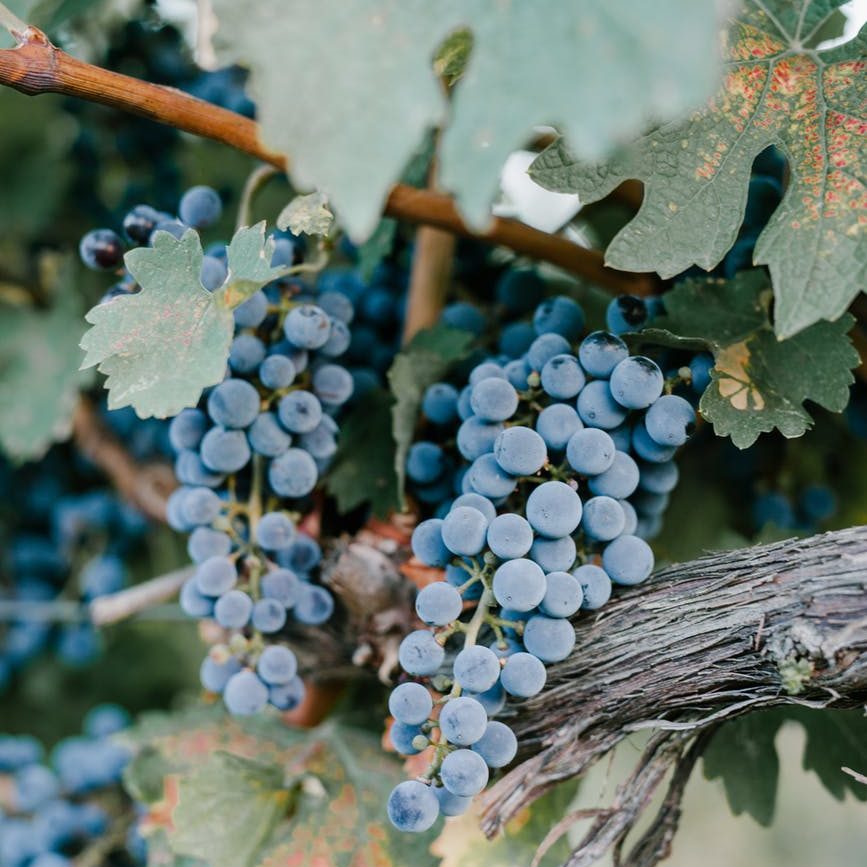
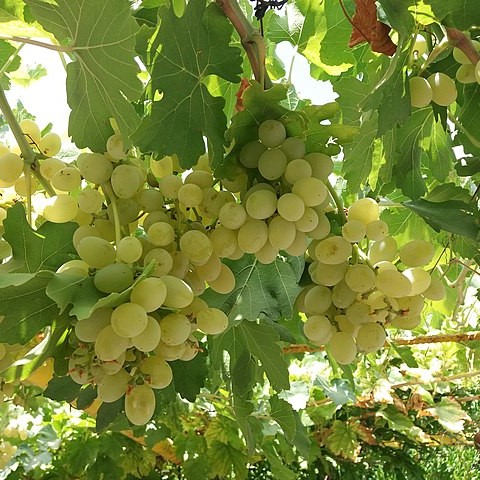
The Common Grape, Vitis Vinifera, has been a staple of the Mediterranean diet for millennia and is undoubtedly one of the most widely cultivated fruiting plants globally, with thousands of known cultivars. Fruit Grapes are a multipurpose fruit with innumerable varieties available, variably perfect for fresh eating, wine making, juicing and drying. They make an ideal fruiting vine for children to pick from and are a refreshing, sweet snack, satisfying to pick on a hot day. Table grapes are often crisp, sweet and seedless, perfect for fresh consumption by themselves or in fruit salads, with cultivars including Crimson Seedless, Flame Seedless and Red Globe. Other grape varieties are ideal for drying, the Black Corinth cultivar produces tiny but intensely flavourful currants, while the Thompson Seedless variety yields large, soft, and juicy sultanas, and the Gordo Blanco can be turned into dark-colored raisins. Famous cultivars such as Chardonnay, Merlot, Cabernet Sauvignon and Shiraz are available for gardeners wishing to try develop their own wine at home. The deeply acidic juice squeezed from unripe grapes, known as verjuice (or verjus), can be used like vinegar or Lemon juice to add a bright acidity and piquancy to sauces and seasonings. Grape leaves are used in Sarma, a dish popular throughout Greece, Turkey, and Southeastern Europe, where they serve as a wrapping for a filling of grains, rice, vegetables, and minced meat before being steamed or boiled. Cultivation Grapes thrive in Mediterranean climates with hot, dry summers and mild winters, performing well in arid to temperate regions with low summer humidity. In cooler, humid climates, the Fox Grape (Vitis labrusca) is ideal, while in warm, humid climates, the Muscadine Grape (Vitis rotundifolia) may be the ideal option. Varieties such as Chambourcin (a hybrid grape), Pink Iona, and Carolina Black Rose are suitable for coastal climates that are traditionally challenging and in which vines are susceptible to pests and diseases. Grape vines can tolerate a wide range of soil types, provided they are well-drained, preferring a slightly alkaline soil rich in humus. For many wine enthusiasts and experts, the soil type in which vines are cultivated can influence and shape the final flavour and body of the wine. It is essential to provide vines with a full sun position that also receives good airflow, as both factors are crucial in reducing disease and pest problems. Grape Vines are often subject to quarantine restrictions between states and even within states, although most nurseries are proactive and will restrict their sale to allowed areas, if unclear, please check with local authorities (refer to Weed Risk section). Appearance Vitis Vinifera form climbing vines that depend on a supporting structure, which dictates their form and size. Commercially, vines are cultivated along spaced-out simple trellises, which is also ideal for gardeners. They can also be grown along fences and are picturesque when used to cover a pergola, providing shade in the summer while allowing sunlight through in the winter months when they are dormant. The iconic, multi-lobed leaves are ornamental, and the inflorescences consist of panicles with tiny green flowers. Grape vines produce iconic, delicious, sweet, juicy fruits and edible leaves that enhance any garden and with the ever-growing list of cultivars adapted to various climates, there is a variety for nearly every environment.
All Varieties are Cuttings unless noted. Please reach out to us (Contact & Socials) if you come across any broken links, incorrect details, or if you represent an online nursery that sells the products mentioned above.

 Hortiforum