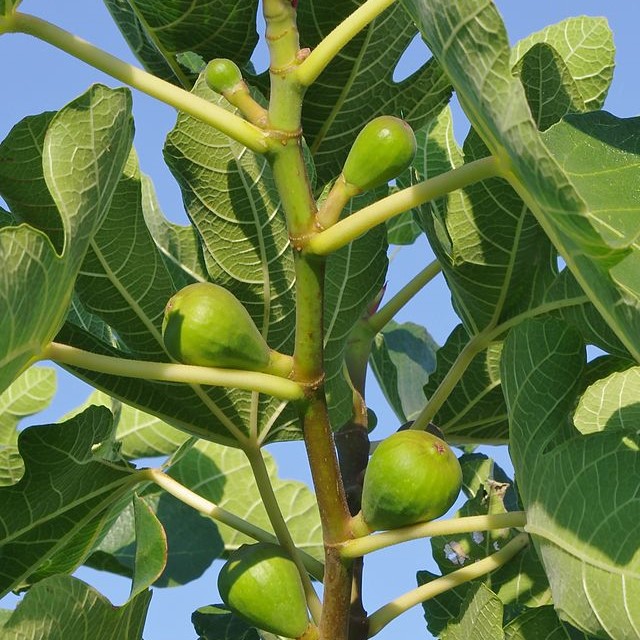
The fig tree, an iconic Mediterranean fruit tree and one of the earliest cultivated by humans, is cherished for good reason. Hardy in most climates, Fig Trees produces delectable fruits as sweet as honey, making it an indispensable addition to any temperate or arid garden. Whether enjoyed fresh or dried, Figs are a candy-sweet delight, bearing a unique but beloved flavour. Figs are well-suited to the creation of flavour-rich jams and preserves, or made into a range of delicious baked goods such as Cookies, Cakes, Tarts or the well-known Fig Roll. Figs add a delightful sweet flavour to a range of dishes such as Salads to even Pizzas. Due to their extensive and historical cultivation, a diverse array of fig cultivars are available for home cultivation. This variety includes the widely favoured ‘Brown Turkey,’ distinguished by its brown skin and copper-coloured flesh, the exceptionally flavourful ‘White Adriatic’ featuring green skin and vibrant red flesh, and the sizable ‘Black Genoa’ with its luscious, rich flavour enclosed in purple skin. Thriving in Arid or Mediterannean climates, Fig trees can also endure moderately humid conditions, provided there is proper airflow and ample sunlight to minimise the risk of pests and diseases. During fruiting, Fig trees often bear highest quality fruits without additional watering as this prevents fruits from becoming watery, intensifying the rich concentration of flavour and sugar in fruits. In more arid or extreme drought conditions, some watering may be beneficial. While moderately drought-tolerant, wind-resistant, and salt-tolerant, extreme conditions may hinder fruiting. Fig trees thrive in a full sun position, with neutral PH, well-draining soil. Propagation is easily achieved through cuttings, with fruiting typically occurring within 2-3 years, depending on environmental conditions. Figs thrive in the Mediterranean Climates of South Australia and Western Australia, and the semi-arid interior of Australia. However, they can face difficulty in the wet summer climates of the East Coast where summers are wet and humid, leading to potential fungal problems and decreasing fruit quality. Natural growth can reach approximately 4 metres in height and width, but for those with limited space, dwarf varieties like Pingo de Mel and Brown are excellent alternatives. The leathery, multi-lobbed foliage of the Fig Tree is iconic and remains lush and ornamental even throughout drought periods. Figs have extensive (up to 7m) but often shallow, fibrous root sytem that can deprive nearby trees of nutrient and water, or cause damage to paths or drains, consider position carefully accordingly. Fig trees, like other members of the Moraceae family such as Jackfruit or Mulberry, produce ‘multiple fruits’ in Botany, which are technically fruits formed from a cluster of inflorescences (flowers). Traditionally, although not now the case in most modern ‘persistent’ varieties, pollination was performed inside fruits by the mutualist Fig Wasp. Fig Trees produce fruits on their new growth and as a result will benefit from pruning encourage new growth for next season. Fruits are not only delicious and visually appealing to humans but also to animals such as birds, possums, and bats. To safeguard crops from unwanted harvesters, netting may be necessary. For those fortunate enough to have the right conditions, cultivating Figs is a genuine delight.
All Varieties are Cutting Grown unless noted. (BR) = Bare Root. Please reach out to us (Contact & Socials) if you come across any broken links, incorrect details, or if you represent an online nursery that sells the products mentioned above.


 Hortiforum