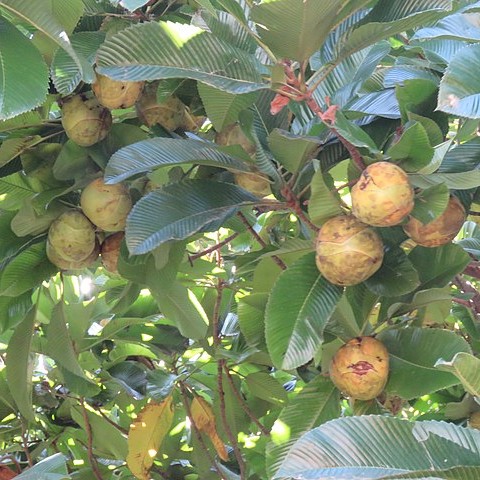
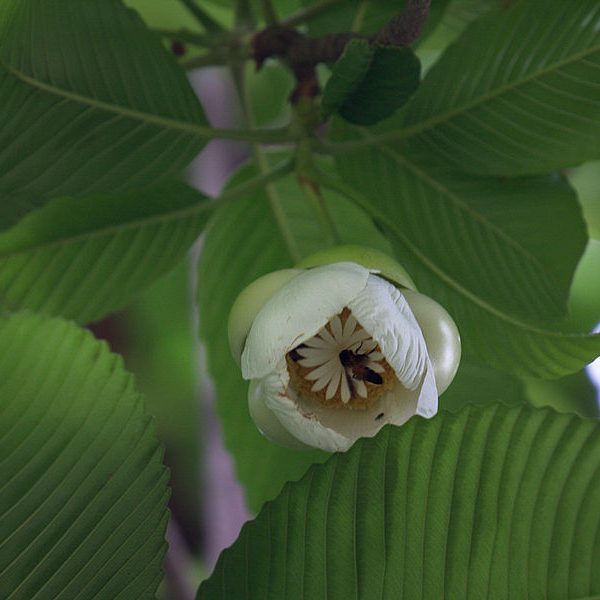
A prevalent backyard tree in South Asia, the Elephant Apple is celebrated for its ornamental allure and distinctive sour, uneven fruit. Elephant Apples have a peculiar appearance, with the outer layer of the fruit consisting of tightly layered fleshy sepals and an aromatic, jelly-like pulp within, both of these are edible. Fruits are not typically consumed fresh due to its taste reminiscent of an unripe Apple, with a strong tartness and acidity. This naturally unpalatable, sour and savoury pulp can be transformed into delicious pickles and preserves such as Ou Khatta, a chutney made from Elephant Apples. Elephant Apple stands out as an imposing tree reaching up to 30 metres in optimal conditions. Featuring peeling reddish-brown bark, large corrugated leaves, and fragrant white flowers, the Elephant Apple serves admirably as a productive focal point or a shade tree. With moderate cold tolerance, it can withstand, brief light frosts down to -2 degrees but thrives best in the hot, humid climates typical of South Asia. To ensure robust growth and fruitful yields, ample water is essential through either high rainfall or plentiful irrigation in fruiting periods. Optimal conditions include a full sun position in well-draining, fertile soil, although the tree adapts well to shaded environments during its early stages of growth. Plants are well-suited to the climate of North Queensland. For enthusiasts of Indian cuisine residing in tropical climates with ample space, the Elephant Apple proves to be an excellent and rewarding choice.
Please reach out to us (Contact & Socials) if you come across any broken links, incorrect details, or if you represent an online nursery that sells the products mentioned above.

 Hortiforum