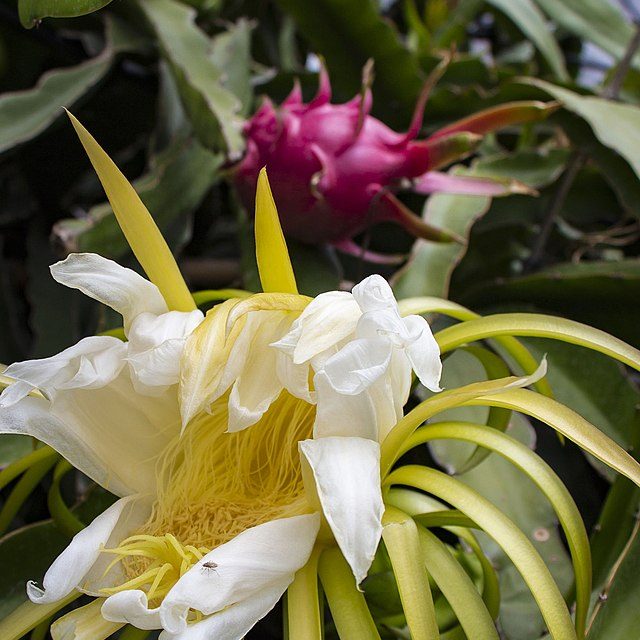
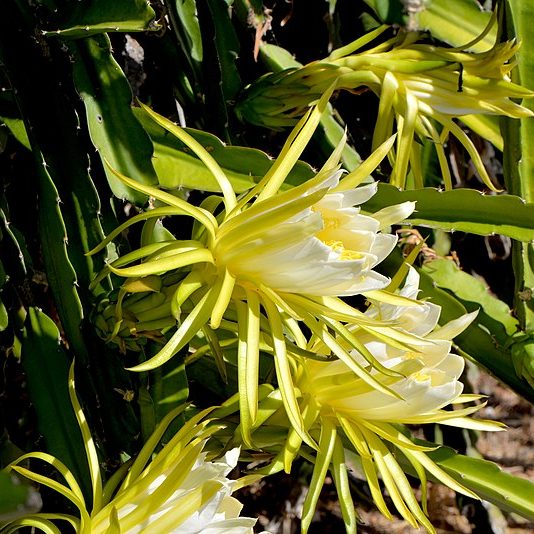
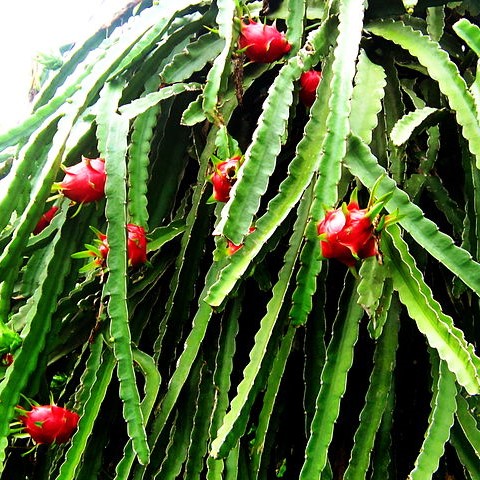
Indigenous to the Wet and Dry Rainforests of the American Tropics, this cactus, resembling a vine, showcases some of the most stunning white flowers and flavourful, colourful fruits. Cultivating Dragon Fruit provides an excellent opportunity to explore numerous flavorful cultivars, each featuring distinct fruit sizes and colors. Varieties range from those with orange skin and pink flesh (such as Frankie’s Red Dwarf) to those with yellow skin and white flesh (like Aussie Gold). The fruits are a delight when enjoyed chilled or incorporated into milkshakes, smoothies and fruit salads. Dragon Fruits or Pitaya can encompass a variety of fruits derived from different Selenicereus species, along with hybrids like the Neon or Pink Panther varieties. For instance, Undatus yields pink-skinned, white-fleshed fruits, including the commonly cultivated Pearl variety. Megalanthus produces spiny, yellow-skinned fruits with sweet white flesh, exemplified by the Lemonade variety. Monocanthus produces pink-skinned fruits with red-colored flesh, with the appropriately named ‘Red’ variety also cultivated widely. With their striking form and unique fruit, Dragon Fruits are well-suited for home cultivation due to their compact size and adaptability to container growing. Dragon Fruits belong to the Cactaceae or Cactus Family, making them related to the Apple Cactus or Indian Fig. In contrast to the columnar or shrub-like forms of their relatives, the Dragon Fruit takes on the form of a climbing vine. It features distinctive, thick cactus stems with a smooth, ribbed skin, and variable spikiness depending on the species. A Dragon Fruit in bloom is a unique, ornamental spectacle, showcasing large, nocturnal flowers that unfurl in full splendor during the night. Although the flowers are fragrant, they are short lived. In their native environment, they are pollinated by moths that are active at night, but in a home setting, hand pollination will be beneficial in increasing fruit set. The Dragon Fruit naturally thrives as an understory vine, reaching for the light of the canopy, often cultivated to mimic this environment by ascending structures before cascading over the top and branching out. Pitaya exhibits moderate shade tolerance and can benefit from partial shade to shield it from intense sunlight in climates with scorching summers. Excessive shade, however, may result in weak, elongated growth and suboptimal fruiting. Certain Selenicereus species naturally thrive in unique ecological conditions, with some species being epiphytic (growing on the surface of another plant), xerophytic (growing in environments with limited water), or lithophytic (growing on rocks with minimal to no soil). Their tolerance to these conditions is evident in their capacity to flourish in relatively small containers or pots, as well as shallow soils, as long as they are afforded the excellent drainage characteristic of their natural habitat. Well-draining soil is crucial to prevent waterlogging and root rot, making container growing an ideal choice, offering a medium that ensures effective drainage. Consistent rainfall and watering throughout the growing season are pivotal for robust growth and optimal fruit production. The diverse array of flavourful, vibrantly coloured fruits makes Dragon Fruit a compelling choice, offering a more cost-effective and tastier alternative when grown at home.
All Varieties are Cutting grown unless noted.Please reach out to us (Contact & Socials) if you come across any broken links, incorrect details, or if you represent an online nursery that sells the products mentioned above.

 Hortiforum