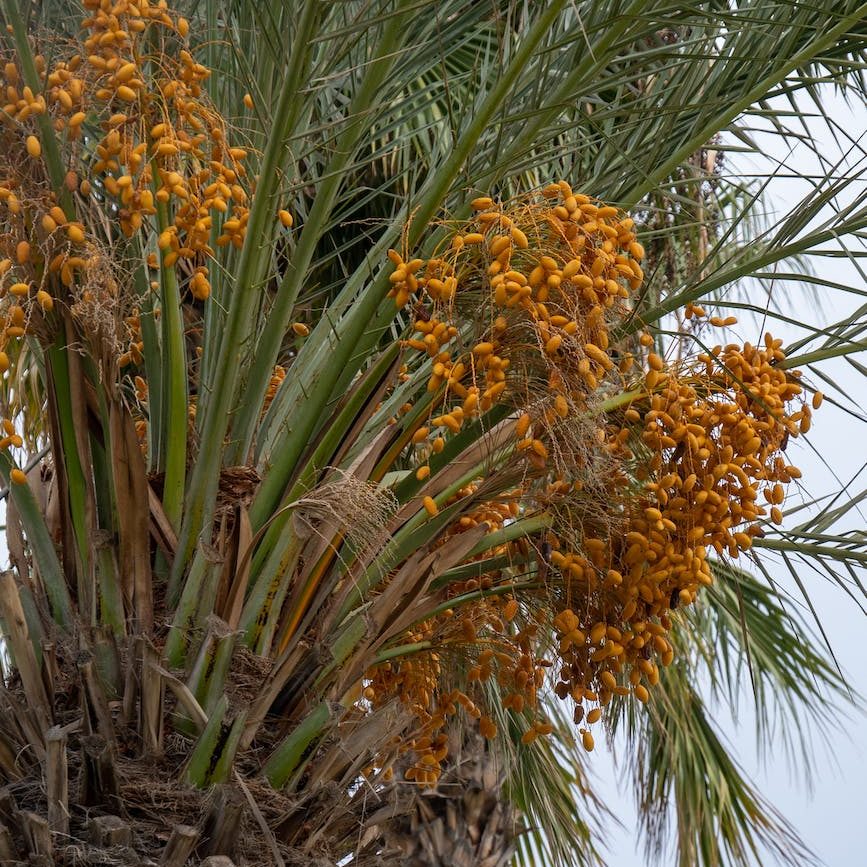
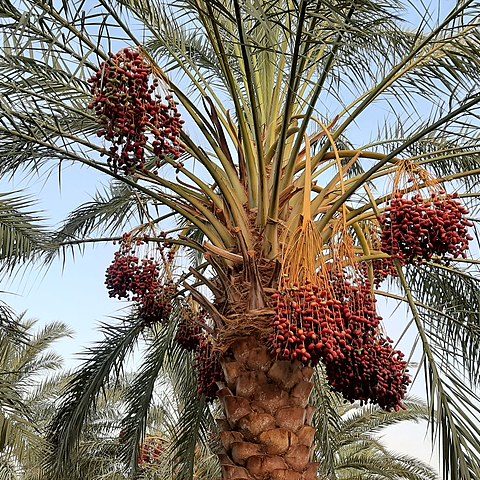
A desert dessert, sweet as honey and perfect for gardeners in arid climates, cultivating your own delectably sweet Date Palms offers a splendid opportunity to produce abundant crops of fresh dates, all while enjoying varieties not available commercially. Dates, whether enjoyed dried – offering a delightful sweetness and richness – or consumed fresh, exhibiting a milder taste with a subtle astringency, make for a delectable treat. Cherished throughout North Africa, the Middle East, and South Asia, Dates boast a rich history of cultivation spanning thousands of years. These versatile fruits find their way into delectable desserts like puddings and cakes, breads, and salads. Technically classified as drupes, Dates contain over 60% sugar by weight when dried, offering a delightful and natural sugar boost. Cultivating Dates at home further provides gardeners with the opportunity to savour varieties that are not commonly found in retail outlets. There are three commonly available varieties: the Medjool, a popular commercial variety known for its soft flesh and rich flavour; the Khadrawy, which has a milder taste with less sugar but a moister fruit; and the Honey Barhee, often considered the sweetest, with an exquisite flavour of honey and caramel. However, it is more prone to bruising and doesn’t store as well. Thriving in the arid landscapes of hot, dry tropical Deserts, the Date Palm possesses specific requirements and tolerances. Date Palms are remarkably resilient, ranking among the most salt-tolerant fruiting plants, alongside Coconuts. Additionally, they exhibit tolerance to robust winds and harsh drought conditions, although fruiting may be notably affected. Indigenous to hot, dry climates with low humidity and rainfall, Date Palms necessitate substantial irrigation during the fruiting stage, reaching up to 300 litres per tree to simulate conditions akin to access to the water table. It flourishes in slightly alkaline soils with superb drainage, conditions commonly found in deep sandy loams prevalent in desert environments. These dioecious trees, with distinct male and female plants, only reveal their gender during flowering, a process that can extend beyond 5 years for seedling-grown specimens. Cold tolerance remains somewhat ambiguous, with varying sources citing figures ranging from -11 degrees Celsius during dormancy to others indicating a general range of -4 to -5 degrees Celsius. To promote airflow and reduce the risk of disease, it’s advisable to prune away dead growth and spent flowers. Similar to how the coconut symbolizes the tropical coast, the Date Palm stands as an icon of the Desert Oasis – a lush haven contrasting the arid and relentless sand dunes. Its crown of slender, feather-like fronds gracefully arches, extending up to 6 meters in length. The Date Palm’s slender, columnar trunk is rough due to the presence of old, dry frond bases clinging to the trunk. Plants can attain an imposing height, ranging between 15-30 metres. Luckily given thier stature, Date Palms are generally low-maintenance. However, occasional interventions such as hand pollination and the application of nets to shield fruits from pests may be necessary. With an extensive root system reaching up to 6 metres deep to access groundwater and spreading widely, Date Palms prove to be enduring choices. Yet, their extensive roots can pose challenges for plumbing systems, making them a potential concern for long-term planting choices. Date Palms boast high ornamental value, presenting impressive clusters of flowers and subsequent fruit, making them an ideal choice for harsh, exposed arid locations where you desire to cultivate a productive tree. Growing Dates at home not only allows you to relish a diverse array of varieties but also proves cost-effective, making it a rewarding endeavor for any gardening enthusiast.
Please reach out to us (Contact & Socials) if you come across any broken links, incorrect details, or if you represent an online nursery that sells the products mentioned above.

 Hortiforum