Ecomare– CC BY-SA 4.0 – Wikimedia CommonsCornelis Johannes (Kees) van Leeuwen – Pexels
General Info – Cranberry
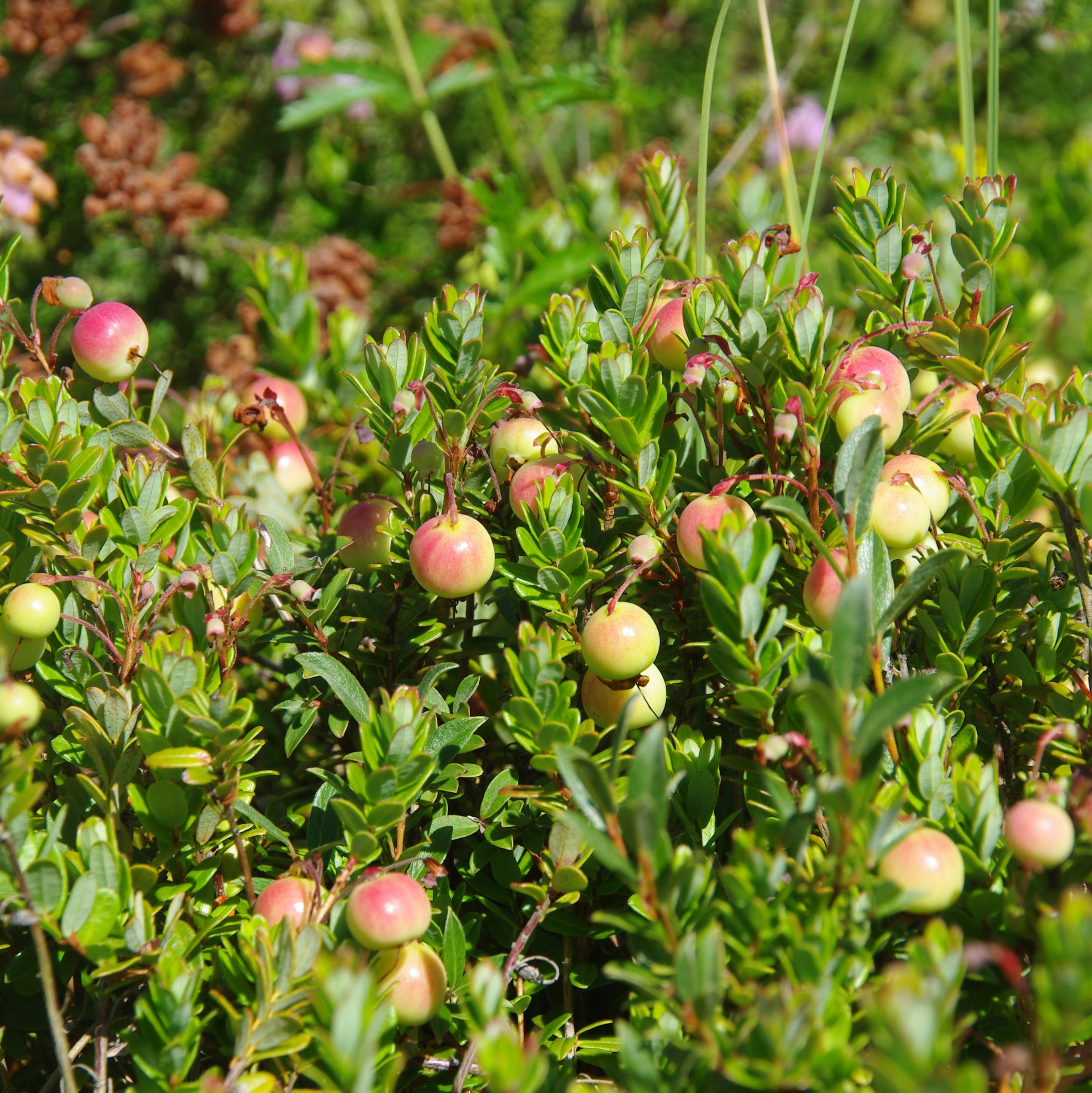
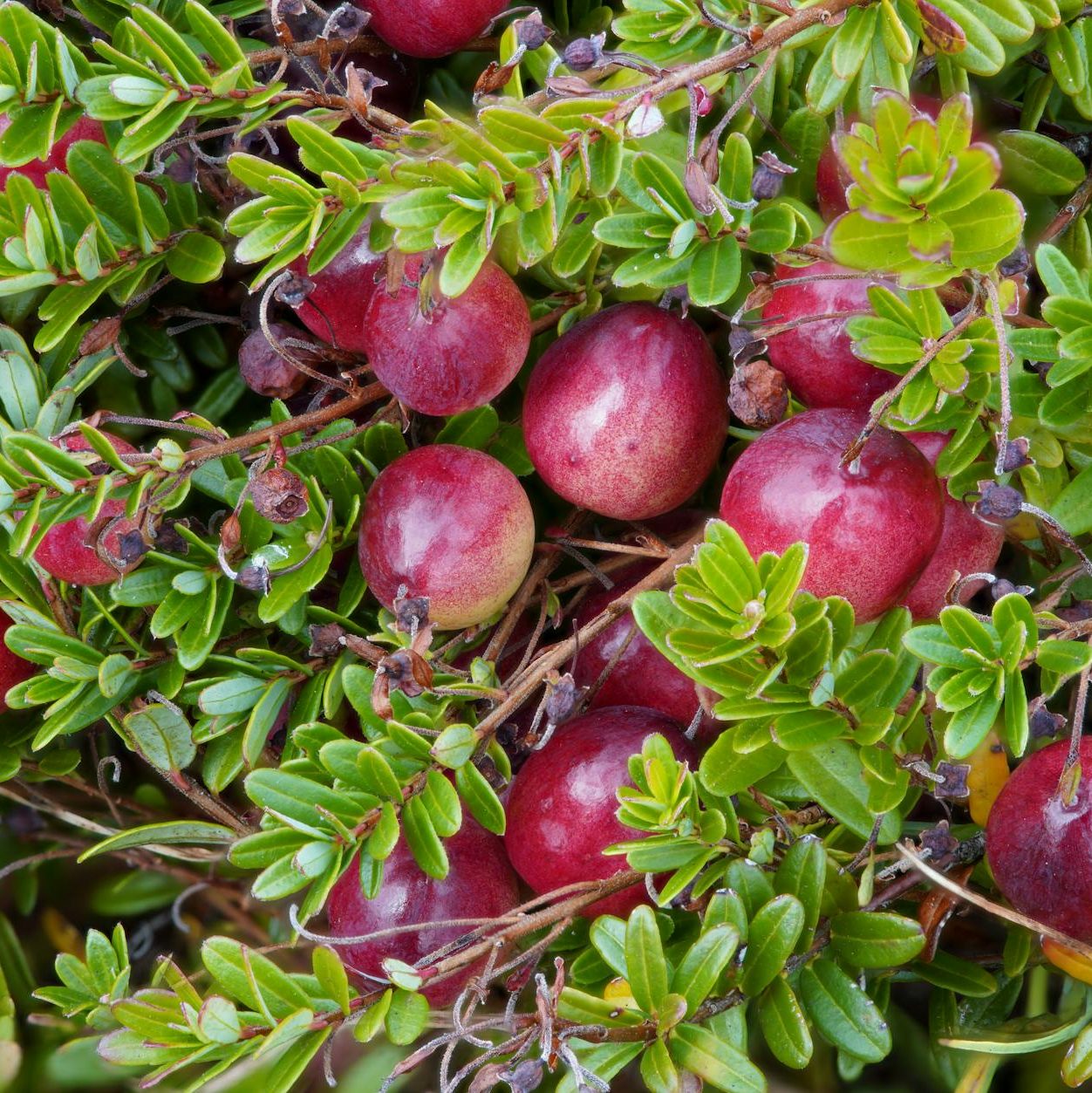
Native to the acidic peat bogs of North America, the Cranberry is a ground-level trailing shrub best known for its small, red, tart berries. An iconic fruit of North America, the Cranberry bears naturally tart and acidic fruits roughly the size of a Blueberry, to which they are related to being in the Ericaceae family. Cranberries do not sweeten during the ripening process, as they mature from white to a vibrant red colour. The tart fruits are notably high in antioxidants and Vitamin C, and are overwhelmingly processed into a variety of different, delightful products. Dried cranberries are frequently enjoyed as a popular snack, particularly in trail mixes; cranberry sauce holds an iconic and beloved status as a condiment during Thanksgiving and Christmas in North America, while cranberry juice is enjoyed across the globe. Cranberries thrive in cold temperate climates and are well-suited to highland and alpine regions of Australia, such as the Highlands of the Southern and Central Great Dividing Range, or much of Cool Temperate Tasmania. Plants require a minimum of 1000 chill hours, making them suitable only for high-chill climates. Native to the Peat Bogs and Swamps of North America, the Cranberry prefers highly acidic, moist soils, preferably in full sun but also being adaptive to partial shade. Plants can prefer well-draining soils but plentiful water and growers will sometimes add sand to soils to improve drainage and pest resistance. Gardeners might presume that Cranberry plants consistently grow submerged, but this perception arises from commercially cultivated plants undergoing two submerged periods – the first occurring during winter, where the water acts as a protective layer, and the second during harvest when fields are flooded to enable the buoyant berries to effortlessly float to the surface for convenient collection. Cranberry plants are slow-growing and may take up to five years before fruiting, but are long-lived despite their small size, producing for over 100 years once mature. Cranberries are perennial shrubs that create a low-lying, spreading ground cover, reaching a modest height of 20-30cm but extending several meters in width, forming a natural green carpet or living mulch. Their compact size and expansive width make them ideal for container or raised bed cultivation, allowing vines to gracefully sprawl over edges. Notably, foliage is evergreen but matures in colour throughout the seasons, with the small, glossy leaves maturing from a dark green in summer to a coppery-red in autumn-winter. The drooping flowers exhibit a delicate pink-white hue. Ideal for ground cover in a moist, slightly shaded area in any cool to cold temperate garden, cranberries with their sharp, flavorful fruits are a true culinary delight.
Please reach out to us (Contact & Socials) if you come across any broken links, incorrect details, or if you represent an online nursery that sells the products mentioned above.

 Hortiforum